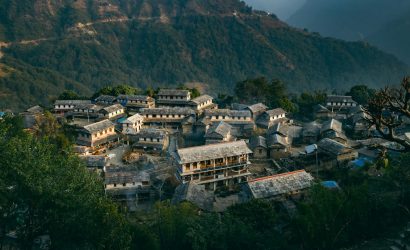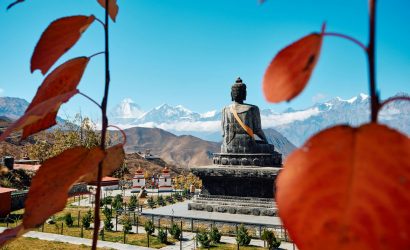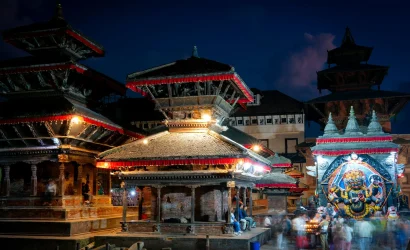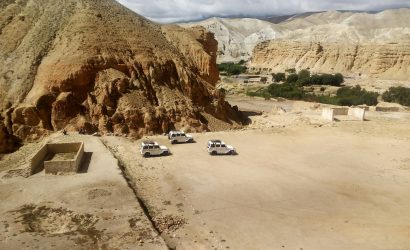

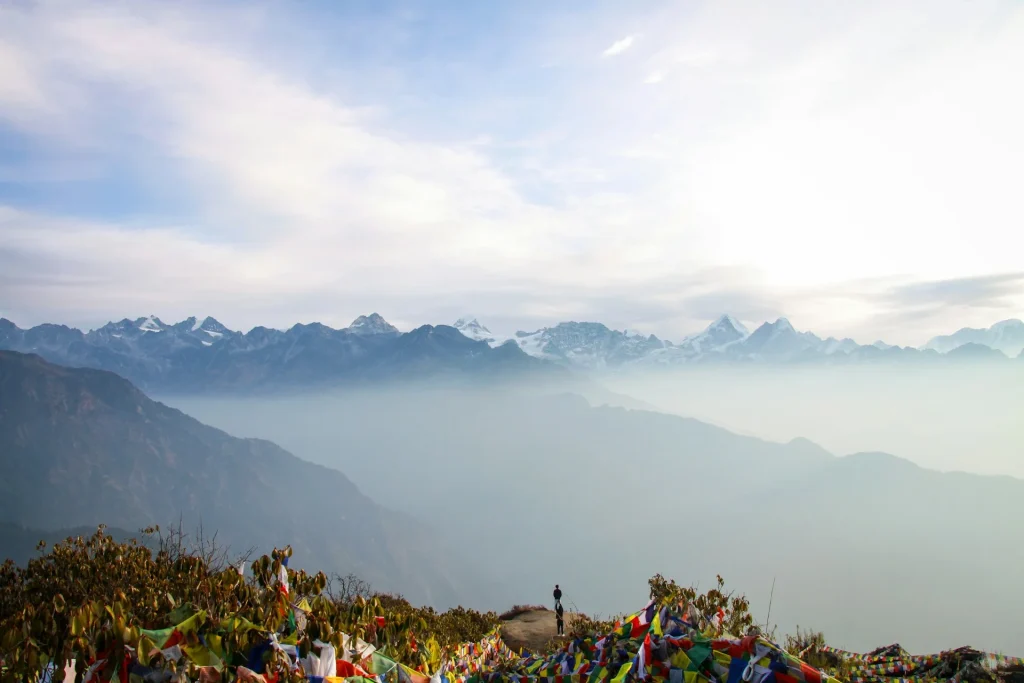
Mera Peak, at 6,476 meters (21,247 feet), is the highest officially designated trekking peak in Nepal. Located in the remote Hinku Valley, east of the main Everest trekking corridor, it offers a genuine high-altitude mountaineering experience without requiring advanced technical climbing skills.
This 15-day Mera Peak climbing package is designed for trekkers with good fitness who want to break the 6,000-meter barrier. The approach takes you through the Hinku Valley, passing through forests and alpine pastures before reaching glaciated terrain. The climb itself is primarily a high-altitude glacier trek with a short steeper section near the summit.
Trek Trove Nepal organizes this expedition with experienced guides, proper acclimatization, and all necessary logistics. The US$2,075 price covers permits, Lukla flights, accommodation, meals, guide services, and porter support.
Quick Facts Table
| Trip Fact | Detail |
|---|---|
| Package Name | Mera Peak Trek – 15 Days |
| Duration | 15 Days |
| Price | US$2,075 per person |
| Max Altitude | 6,476 m (21,247 ft) – Mera Peak Summit |
| Grade | Alpine PD (Peu Difficile) – moderately difficult |
| Start/End | Kathmandu / Kathmandu |
| Flight | Kathmandu–Lukla–Kathmandu (included) |
| Permits | NMA Climbing Permit + Makalu Barun National Park + Local fees (included) |
| Accommodation | Teahouses + tents at High Camp |
| Meals | Breakfast, lunch, dinner (included) |
| Best Seasons | Spring (March–May) & Autumn (September–November) |
| Group Size | 2–12 persons |
Mera Peak Climbing – 15 Days Overview
This 15-day Mera Peak climbing expedition combines trekking through the Hinku Valley with a summit attempt on Nepal’s highest trekking peak. The journey starts with a flight from Kathmandu to Lukla, followed by a trek through Sherpa villages and alpine terrain to Khare, the last settlement before the climb.
From Khare, the route ascends to Mera Peak Base Camp at approximately 5,300–5,360 meters and then to High Camp at around 5,800 meters. The summit attempt begins in the early morning hours, with the climb taking 6–9 hours from High Camp to the summit.
The 15-day itinerary includes built-in acclimatization days to help climbers adjust to the altitude. While the climbing is technically straightforward – graded PD on the Alpine scale – the altitude and long summit day make it physically demanding.
What Makes Mera Peak Different from a Normal Trek
Mera Peak is not a trekking trail. The approach involves trekking, but the summit phase involves high-altitude mountaineering.
Key differences:
- Glacier travel – The route above Base Camp crosses the Mera Glacier, requiring roped team movement
- Mountaineering equipment – Crampons, ice axe, harness, helmet, and jumar are used
- Fixed ropes – A short fixed rope section near the summit is ascended using a jumar
- High Camp – Climbers spend a night in tents at approximately 5,800 meters before the summit attempt
- Summit day – A 10–14 hour day at extreme altitude, starting before dawn
The technical requirements are modest – basic crampon and ice axe use for glacier travel, and ascending a fixed rope – but the altitude and cold demand serious preparation.
Why Choose the 15-Day Mera Peak Itinerary
Fifteen days is the minimum practical duration for a Mera Peak climbing expedition that includes proper acclimatization. Shorter itineraries may rush the approach, increasing altitude sickness risk and reducing summit chances.
The 15-day package provides:
- Gradual altitude gain – The trek through the Hinku Valley allows the body to adapt slowly
- Acclimatization days – Built-in rest days at Khare and other key elevations
- Summit buffer – The schedule includes flexibility for weather and flight delays
- Recovery time – Adequate rest between trekking days
A rushed itinerary might save a day or two on paper, but the altitude does not respond to scheduling pressure. This 15-day Mera Peak climbing package prioritises safe acclimatisation and realistic summit preparation.
Why Book with Trek Trove Nepal
Trek Trove Nepal is a Nepal-based trekking and peak climbing agency with extensive experience organising Himalayan expeditions. Our approach to Mera Peak climbing is professional, safety-focused, and transparent.
- Licensed guides – All expeditions are led by government-licensed climbing guides
- Permit processing – We handle all permits, including NMA climbing permits and Makalu Barun National Park entry
- Local expertise – Our team knows the Hinku Valley, the route, and the conditions
- Transparent pricing – US$2,075 covers permits, flights, accommodation, meals, guide, and porter services
- Safety focus – Proper acclimatisation, experienced guides, and realistic summit planning
- No hidden costs – What we quote is what you pay
We do not exaggerate summit success rates or make unrealistic promises. We provide honest information, professional guidance, and genuine support throughout your Mera Peak climbing expedition.
Expedition Highlights
Detailed 15-Day Itinerary
Route Overview
The route follows a classic approach through the Hinku Valley: Kathmandu → Lukla → Paiya → Panggom → Kothe → Thagnak → Khare → Mera Base Camp → Mera High Camp → Mera Peak Summit → return via the same route.
Day-by-Day Itinerary
Day 1: Kathmandu to Lukla (2,860 m) – Trek to Paiya (2,730 m)
Flight from Kathmandu to Lukla (30–40 minutes). Trek from Lukla to Paiya through forests and small settlements. Trekking: 3–4 hours.
Day 2: Paiya to Panggom (2,850 m)
Trek through rhododendron and pine forests, crossing streams and ascending gradually. Trekking: 5–6 hours.
Day 3: Panggom to Ningsow (2,863 m)
Continue through the Hinku Valley, passing through small villages and cultivated fields. Trekking: 5–6 hours.
Day 4: Ningsow to Chhatra Khola (3,150 m)
Trek along the Hinku River, entering deeper forest with views of Mera Peak appearing ahead. Trekking: 5–6 hours.
Day 5: Chhatra Khola to Kothe (3,550 m)
Gradual ascent through alpine forest to the village of Kothe, with views of Mera Peak becoming clearer. Trekking: 5–6 hours.
Day 6: Kothe to Thagnak (4,350 m)
Trek above the tree line into high alpine terrain. The valley opens up with Mera Peak dominating the view. Trekking: 5–6 hours.
Day 7: Thagnak to Khare (5,045 m)
Short trek to Khare, the last village before the climbing section. Rest and prepare for the climb. Trekking: 3–4 hours.
Day 8: Acclimatisation Day at Khare (5,045 m)
Rest day at Khare for acclimatisation. Technical training: crampon use, ice axe handling, jumar technique, and rope team movement.
Day 9: Khare to Mera Base Camp (5,300–5,360 m)
Trek from Khare to Base Camp on the glacier moraine. Overnight in tents. Trekking: 3–4 hours.
Day 10: Base Camp to Mera High Camp (5,800 m)
Ascend from Base Camp to High Camp, crossing glacier terrain. Overnight in tents at High Camp. Trekking: 5–6 hours.
Day 11: Summit Day – Mera Peak (6,476 m) – Descend to Khare
Pre-dawn start (2:00–3:00 AM) from High Camp. Climb across the Mera Glacier and ascend the final snow slope to the summit. Return to High Camp, then descend to Khare. Climbing: 8–12 hours round trip.
Day 12: Contingency Day
Buffer day for weather, summit conditions, or flight delays. If the summit was not possible on Day 11, a second attempt may be made.
Day 13: Khare to Kothe (3,550 m)
Descend from Khare back to Kothe, retracing the route through the valley. Trekking: 5–6 hours.
Day 14: Kothe to Lukla (2,860 m)
Continue descending through the Hinku Valley to Lukla. Trekking: 6–7 hours.
Day 15: Lukla to Kathmandu
Morning flight from Lukla to Kathmandu. Transfer to hotel. Expedition ends.
Daily Trekking Distance & Hours Table
| Day | Route | Trekking Hours |
|---|---|---|
| Day 1 | Kathmandu → Lukla → Paiya | 3–4 hrs |
| Day 2 | Paiya → Panggom | 5–6 hrs |
| Day 3 | Panggom → Ningsow | 5–6 hrs |
| Day 4 | Ningsow → Chhatra Khola | 5–6 hrs |
| Day 5 | Chhatra Khola → Kothe | 5–6 hrs |
| Day 6 | Kothe → Thagnak | 5–6 hrs |
| Day 7 | Thagnak → Khare | 3–4 hrs |
| Day 8 | Acclimatisation at Khare | – |
| Day 9 | Khare → Base Camp | 3–4 hrs |
| Day 10 | Base Camp → High Camp | 5–6 hrs |
| Day 11 | Summit Day (High Camp → Summit → Khare) | 8–12 hrs |
| Day 12 | Contingency Day | – |
| Day 13 | Khare → Kothe | 5–6 hrs |
| Day 14 | Kothe → Lukla | 6–7 hrs |
| Day 15 | Lukla → Kathmandu | Flight |
Altitude Profile
| Location | Elevation |
|---|---|
| Kathmandu | 1,400 m |
| Lukla | 2,860 m |
| Paiya | 2,730 m |
| Panggom | 2,850 m |
| Kothe | 3,550 m |
| Thagnak | 4,350 m |
| Khare | 5,045 m |
| Mera Base Camp | 5,300–5,360 m |
| Mera High Camp | 5,800 m |
| Mera Peak Summit | 6,476 m |
Mera Peak Height and Summit Information
Mera Peak has three summits: Mera North (6,476 m), Mera Central (6,461 m), and Mera South (6,065 m). Most guided expeditions target Mera Central or Mera North. The standard climbing permit covers the summit attempt.
The summit offers one of the most spectacular mountain views in the Himalaya. From the top, climbers can see five of the world’s six highest mountains: Everest (8,848 m), Lhotse (8,516 m), Makalu (8,485 m), Cho Oyu (8,201 m), and Kanchenjunga (8,586 m).
Mera Peak Climbing Difficulty
Alpine Grade: PD (Peu Difficile)
Mera Peak is graded PD on the Alpine scale, which translates as “a little difficult”. This places it above the easiest grade but below truly technical climbs.
What Makes It Challenging
- Altitude – At 6,476 m, oxygen is roughly 47% of sea level. Climbers do not use supplemental oxygen
- Summit day duration – 8–12 hours of continuous effort at extreme altitude
- Cold – Temperatures can drop to -15°C to -30°C or lower with wind chill
- Glacier travel – Roped movement across crevassed terrain
- Fixed rope section – A short steep section near the summit (~40–45 degrees) requires using a jumar
What Does NOT Require Advanced Skills
The technical skills – crampon use, ice axe handling, jumar technique – are taught during the training day at Khare.
Who Can Climb Mera Peak?
Previous Experience Requirements
Mera Peak does not require previous mountaineering experience. However, prior high-altitude trekking experience (above 4,000–5,000 m) is strongly recommended. Experience with:
- Multi-day trekking at altitude
- Carrying a daypack for 5–6 hours daily
- Sleeping in basic teahouse or tent accommodation
- Cold weather conditions
If you have trekked to Everest Base Camp (5,364 m) or similar altitudes, you have a good foundation for Mera Peak.
Fitness and Physical Preparation
Physical fitness is the most important factor for success on Mera Peak. The altitude affects everyone, but a well-conditioned body copes better with the demands of summit day.
Recommended fitness level:
- Cardiovascular endurance – Ability to trek for 6–8 hours with elevation gain
- Strength – Leg strength for steep sections and glacier travel
- Stamina – Capacity for a 10–14 hour summit day
Training suggestions:
- Regular walking or hiking with a loaded daypack (5–8 kg)
- Hill training with elevation gain of 500–1,000 m
- Cardiovascular exercise: running, cycling, swimming (3–4 times per week)
- Strength training for legs and core
- Practice walking in mountaineering boots before departure
Start training at least 3–4 months before the expedition.
Technical Skills and Equipment
Skills Taught During the Expedition
All technical skills required for Mera Peak climbing are taught during the training day at Khare:
- Crampon technique – Walking on snow and ice with crampons
- Ice axe use – Self-arrest and balance
- Jumar ascending – Using an ascender on fixed ropes
- Roped team movement – Glacier travel procedures
- Rappelling – Descending fixed ropes (if required)
No prior experience with these skills is necessary, but familiarity with outdoor activities and comfort with heights is helpful.
Equipment Overview
Mera Peak climbing requires both personal trekking gear and technical mountaineering equipment. Technical equipment can often be rented in Kathmandu or Khare.
Personal trekking equipment (bring or rent):
- Mountaineering boots (insulated, crampon-compatible, rated to -30°C)
- Trekking boots for the approach
- Sleeping bag (rated -20°C minimum)
- Down jacket (heavy, -20°C to -25°C rated)
- Base layers (merino wool or synthetic)
- Insulated mid-layers
- Waterproof shell jacket and trousers
- Trekking poles
- Headlamp with spare batteries
- Sunglasses (UV protection, Category 4)
- Sun hat and warm hat
- Gloves (multiple pairs, including insulated and waterproof)
- Daypack (30–40 L)
- Duffel bag for porter carriage
- Personal medical kit
- Water bottles or hydration system
- Sunscreen and lip balm
Technical climbing equipment (rent or bring):
- Crampons (step-in or strap-on)
- Ice axe (60 cm)
- Climbing harness
- Helmet (UIAA approved)
- Ascender/Jumar
- Locking carabiners
- Prusik cords or slings
Agency-provided equipment (typically):
- Ropes
- Fixed ropes
- Group climbing gear
- Tents at Base Camp and High Camp
- Kitchen and dining equipment at camps
Confirm exact equipment inclusions with Trek Trove Nepal before departure.
Acclimatization Strategy
Acclimatisation is the single most important factor in Mera Peak climbing success. The 15-day itinerary is designed to allow gradual altitude gain with built-in rest days.
How Acclimatization Works in This Itinerary
- Day 1–7: Gradual ascent from 2,860 m (Lukla) to 5,045 m (Khare) over 7 days
- Day 8: Full rest day at Khare for acclimatisation and technical training
- Day 9–10: Ascent to Base Camp and High Camp with overnight stays
- Day 11: Summit attempt from High Camp, then descent to lower altitude
Key Principles
- Slow ascent – The itinerary does not push altitude gain too quickly
- Rest days – Built-in rest at Khare allows the body to adjust
- Hydration – Drink 3–4 litres of water daily at altitude
- Sleep – Quality sleep is critical for acclimatisation
- Listen to your body – Report any symptoms to your guide immediately
Altitude Sickness
Altitude sickness can affect anyone, regardless of fitness level. Common symptoms include headache, nausea, fatigue, and loss of appetite.
Warning signs requiring immediate attention:
- Persistent headache not relieved by medication
- Nausea and vomiting
- Severe fatigue or confusion
- Shortness of breath at rest
- Cough producing frothy sputum
If symptoms occur, the guide will assess the situation. Descent is the primary treatment for altitude sickness. Safety decisions on summit day are made by the guide, not the climber.
Mera Peak Base Camp
Mera Peak Base Camp is located at approximately 5,300–5,360 meters on the glacier moraine. The camp is established in tents, with a kitchen tent and dining tent provided by the expedition. From Base Camp, the route continues across the glacier to High Camp.
Mera Peak High Camp
Mera Peak High Camp is located at approximately 5,800 meters on a rocky ridge above Base Camp. It is the final camp before the summit attempt.
What to expect at High Camp:
- Tents on snow or rock
- Very cold temperatures at night
- Limited facilities – this is a high-altitude camp, not a teahouse
- Early dinner and immediate rest before the pre-dawn summit start
- Minimal oxygen – movement is slow and deliberate
The night at High Camp is short and uncomfortable, but it positions climbers for the summit attempt.
Mera Peak Summit Day
Summit day is the most demanding day of the expedition.
Timeline
- 1:00–2:00 AM: Wake up at High Camp, light breakfast, prepare gear
- 2:00–3:00 AM: Depart High Camp
- 4:00–6:00 AM: Cross the Mera Glacier in the dark (headlamps on)
- 6:00–8:00 AM: Ascend the final snow slope towards the summit ridge
- 8:00–10:00 AM: Reach the summit (depending on conditions and pace)
- 9:00–11:00 AM: Begin descent from the summit
- Afternoon: Return to High Camp, pack, descend to Khare
What the Climbing Route Is Like
The route from High Camp to the summit involves:
- Glacier travel – Crossing the Mera Glacier roped together as a team
- Snow slopes – Gradients averaging 30–40 degrees
- Fixed rope section – A steeper section (~40–45 degrees) near the summit, ascended using a jumar
- Summit ridge – A narrow snow ridge leading to the highest point
Physical Demands
- 8–12 hours of continuous effort
- Extreme altitude (6,000–6,476 m) with ~47% oxygen
- Very cold temperatures (-15°C to -30°C or colder with wind chill)
- Early morning start with limited sleep
- Mental resilience is as important as physical fitness
Descent
After reaching the summit, climbers descend to High Camp, pack equipment, and continue down to Khare. The descent is physically taxing on tired legs and requires concentration, especially on the glacier.
Weather and Summit Conditions
Temperature
- Lower elevations (Lukla–Khare): Daytime 10°C to 20°C, nighttime near freezing
- High Camp (5,800 m): Nighttime -10°C to -20°C
- Summit day: -15°C to -30°C or colder with wind chill
Weather Patterns
- Spring (March–May): Warmer temperatures, more stable conditions
- Autumn (September–November): Clear skies, excellent visibility, colder nights
- Winter (December–February): Very cold, possible snow, fewer climbers
- Monsoon (June–August): Wet, poor visibility, not recommended
Summit windows are typically best in the early morning before winds build after 10:00–11:00 AM.
Best Time for Mera Peak Climbing
Season Comparison Table
| Season | Months | Pros | Cons |
|---|---|---|---|
| Spring | March–May | Warmer temperatures, stable weather, established logistics | Busiest season, higher permit costs |
| Autumn | September–November | Clear skies, excellent visibility, stable conditions | Colder nights, shorter summit windows |
| Winter | December–February | Fewer climbers | Very cold, snow, limited services |
| Monsoon | June–August | Lower prices | Wet, poor visibility, not recommended |
Recommended Seasons
Most climbers choose spring (March–May) or autumn (September–November) for the best combination of weather, visibility, and climbing conditions. Spring offers warmer temperatures; autumn offers the clearest mountain views.
Transportation and Lukla Flight Information
Kathmandu–Lukla Flight
The expedition includes a round-trip flight between Kathmandu and Lukla. Flights operate from Kathmandu’s domestic terminal (or Ramechhap during peak season) and take approximately 30–40 minutes.
Flight Uncertainty
Lukla flights are weather-dependent. Fog, cloud, and wind can cause delays or cancellations, particularly in spring and autumn.
What happens if flights are delayed?
- The 15-day itinerary includes some flexibility
- Buffer days are built into the schedule
- In case of significant delays, the itinerary may be adjusted
- Trek Trove Nepal monitors flight conditions and communicates updates
Baggage Limitations
Lukla flights have baggage weight limits (typically 10–15 kg for checked luggage plus 5 kg hand luggage). Excess baggage may incur additional charges.
Accommodation
- Kathmandu: Standard hotel (twin/double sharing) – 2 nights (pre and post expedition)
- Trekking route (Lukla–Khare): Teahouses / lodges – basic but comfortable, twin/double rooms
- Base Camp and High Camp: Tents (provided by Trek Trove Nepal)
- Khare: Lodge or tented camp depending on season and group size
Accommodation on the trekking route is basic. Teahouses offer simple rooms with shared bathroom facilities. At higher altitudes, facilities become more limited.
Meals & Drinking Water
Included Meals
- Breakfast, lunch, and dinner are included during the trekking and climbing portion of the expedition
- Meals in Kathmandu are not included (except as specified)
- Typical meals: dal bhat, noodles, pasta, rice dishes, soup, bread, eggs, tea, coffee
Drinking Water
- Bottled water is available along the route (purchase cost not included)
- Boiled water or water purification tablets are recommended
- Trek Trove Nepal provides guidance on safe water sources
Wi-Fi, Electricity and Connectivity
- Wi-Fi: Available in some teahouses along the route (fee applies). Not available at Base Camp or High Camp
- Electricity: Limited charging facilities in teahouses (fee may apply). No electricity at Base Camp or High Camp – bring power banks
- Mobile network: Limited coverage in the Hinku Valley. Ncell and NTC have some coverage at lower elevations
- Satellite phone: Available for emergency use through the guide (emergency only)
Permits and Climbing Requirements
Required Permits
Mera Peak climbing requires three permits:
- NMA Climbing Permit – Issued by the Nepal Mountaineering Association, authorising the summit attempt
- Makalu Barun National Park Entry Permit – Covers the trek through the conservation area
- Local area fee – Charged by the Rural Municipality in the Hinku Valley
Permit Costs (Approximate)
- Spring (March–May): NMA permit ~USD 350 per climber
- Autumn (September–November): NMA permit ~USD 175 per climber
- Makalu Barun National Park: ~USD 30
- Local area fee: ~USD 15–20
Note: Permit costs are subject to change. Trek Trove Nepal handles all permit arrangements and includes them in the US$2,075 package price.
Important: Permits Are Not Issued to Individuals
NMA climbing permits are only issued to registered trekking agencies, not to individual climbers. A licensed guide is mandatory for all Mera Peak climbing attempts. Independent, unguided climbs are not legally permitted.
Mera Peak Climbing Equipment Checklist
Personal Clothing
| Item | Details |
|---|---|
| Base layer (top & bottom) | Merino wool or synthetic, 2–3 pairs |
| Mid-layer fleece | 1–2, for insulation |
| Insulated jacket | Down or synthetic (heavy) |
| Waterproof shell jacket | Breathable, with hood |
| Waterproof shell trousers | Breathable, with full side zips |
| Trekking trousers | 1–2 pairs |
| Warm hat | Beanie or balaclava |
| Sun hat | With brim and neck flap |
| Gloves | Liner gloves + insulated gloves + waterproof outer gloves |
| Socks | Trekking socks + thick mountaineering socks |
| Gaiters | For snow and glacier travel |
Footwear
| Item | Details |
|---|---|
| Mountaineering boots | Insulated, crampon-compatible, rated to -30°C |
| Trekking boots | For the approach, comfortable and broken in |
| Camp shoes | Sandals or lightweight shoes for evenings |
Technical Climbing Gear
| Item | Details |
|---|---|
| Crampons | Step-in or strap-on, compatible with boots |
| Ice axe | 60 cm |
| Climbing harness | With gear loops |
| Helmet | UIAA approved |
| Ascender/Jumar | For fixed ropes |
| Locking carabiners | 2–3 |
| Prusik cords or slings | For safety |
Equipment (Personal)
| Item | Details |
|---|---|
| Sleeping bag | Rated to -20°C minimum |
| Sleeping pad | Insulated (if not provided) |
| Daypack | 30–40 L |
| Duffel bag | For porter carriage |
| Trekking poles | Adjustable |
| Headlamp | With spare batteries |
| Sunglasses | Category 4 UV protection |
| Sunscreen | SPF 50+ |
| Lip balm | With SPF |
| Water bottles | 2 x 1 L or hydration system |
| Thermos | For hot drinks on summit day |
| Personal medical kit | Including blister treatment, pain relief, altitude medication |
| Power bank | For charging devices |
| Camera | Optional |
Equipment Typically Provided by Agency
- Ropes and fixed ropes
- Group climbing gear
- Tents at Base Camp and High Camp
- Kitchen and dining equipment at camps
- Group first aid kit
Confirm exact equipment inclusions with Trek Trove Nepal before departure.
US$2,075 Price & Cost Breakdown
Package Includes
| Included | Details |
|---|---|
| Permits | NMA climbing permit, Makalu Barun National Park entry, local area fees |
| Flights | Kathmandu–Lukla–Kathmandu (round trip) |
| Accommodation | Teahouses during trek, tents at Base Camp and High Camp |
| Meals | Breakfast, lunch, dinner during trekking and climbing (BLD) |
| Guide | Government-licensed climbing guide |
| Porters | Porter service for group and personal luggage (up to specified limit) |
| Training | Technical training at Khare (crampons, ice axe, jumar, rope work) |
| Group equipment | Ropes, fixed ropes, camping equipment (tents, kitchen) |
| First aid | Group first aid kit |
| Emergency | Satellite phone for emergency communication |
Package Excludes
| Excluded | Details |
|---|---|
| International flights | To/from Nepal |
| Nepal visa | Available on arrival |
| Travel insurance | Mandatory – must cover high-altitude climbing (above 6,000 m), helicopter rescue, and medical evacuation |
| Personal equipment | Mountaineering boots, crampons, ice axe, harness, helmet, jumar, sleeping bag, clothing, etc. |
| Drinking water | Bottled water, boiled water, or purification tablets |
| Wi-Fi/phone charges | At teahouses |
| Charging fees | For electronics at teahouses |
| Tips | For guides, porters, and staff (optional but customary) |
| Meals in Kathmandu | Breakfast, lunch, dinner in Kathmandu |
| Emergency evacuation | Helicopter rescue or evacuation costs |
| Personal expenses | Souvenirs, snacks, laundry, etc. |
Optional Services / Customization
Trek Trove Nepal offers additional services and customization options for the Mera Peak climbing expedition:
- Private guide – Dedicated guide for solo climbers or small groups
- Helicopter return – Return from Lukla to Kathmandu by helicopter (additional cost)
- Extended itinerary – Additional acclimatisation or rest days
- Equipment rental – Technical gear rental in Kathmandu or Khare
- Single supplement – Private room in Kathmandu and teahouses (subject to availability)
Contact Trek Trove Nepal to discuss customization options and pricing.
Responsible Mountain Travel
Environmental Responsibility
- Carry all non-biodegradable waste out of the mountains
- Use established trails and campsites
- Minimise campfire use
- Respect wildlife and vegetation
Cultural Respect
- Dress modestly in villages and monasteries
- Ask permission before photographing people
- Respect prayer flags, mani stones, and religious sites
- Support local economies by buying local products and services
Safety
- Follow your guide’s instructions at all times
- Do not push beyond your limits
- Report any health concerns immediately
- Carry travel insurance that covers high-altitude climbing and helicopter rescue
Practical Climbing Tips
- Start training early – Begin physical preparation at least 3–4 months before departure
- Break in your boots – Mountaineering boots should be worn well before the expedition to prevent blisters
- Pack light but complete – Bring everything on the equipment list, but avoid excess weight
- Hydrate – Drink 3–4 litres of water daily at altitude
- Eat – Force yourself to eat even when appetite is low
- Listen to your guide – The guide’s decisions on summit day are final
- Pace yourself – Walk slowly, breathe deliberately
- Sleep well – Rest is critical for acclimatisation
- Stay positive – Mental resilience is as important as physical fitness
- Enjoy the journey – The Hinku Valley and mountain views are extraordinary, regardless of summit success
Frequently Asked Questions
1. What is Mera Peak?
Mera Peak is the highest officially designated trekking peak in Nepal, standing at 6,476 meters (21,247 feet). It is located in the Hinku Valley, east of the Everest region.
2. How high is Mera Peak?
Mera Peak has three summits: Mera North at 6,476 m, Mera Central at 6,461 m, and Mera South at 6,065 m. Most expeditions target Mera Central or Mera North.
3. What is Mera Peak climbing?
Mera Peak climbing involves a multi-day trek through the Hinku Valley followed by a high-altitude summit attempt. The climb includes glacier travel, crampon use, and ascending a short fixed rope section.
4. How difficult is Mera Peak?
Mera Peak is graded PD (Peu Difficile) on the Alpine scale – moderately difficult. The technical demands are modest, but the altitude (6,476 m) and long summit day make it physically demanding.
5. Can a beginner climb Mera Peak?
Yes, with good fitness and proper preparation. No previous mountaineering experience is required. Technical skills are taught during the expedition. However, prior high-altitude trekking experience is strongly recommended.
6. Do I need previous climbing experience?
No. Mera Peak is suitable for climbers with little or no previous experience using an ice axe and crampons. Skills are taught at Khare before the summit push.
7. Do I need previous high-altitude trekking experience?
Previous experience above 4,000–5,000 m is strongly recommended. Treks like Everest Base Camp (5,364 m) or similar altitudes provide useful acclimatisation and endurance experience.
8. What is the 15-day itinerary?
The itinerary includes a flight to Lukla, trekking through the Hinku Valley to Khare, acclimatisation, ascent to Base Camp and High Camp, summit day, and descent. Full details are provided in the itinerary section above.
9. Is 15 days enough?
Fifteen days is the minimum practical duration for proper acclimatisation and summit preparation. The itinerary includes built-in acclimatisation days and a contingency day for weather or flight delays.
10. How much does Mera Peak climbing cost?
This 15-day Mera Peak climbing package costs US$2,075 per person. The price includes permits, flights, accommodation, meals, guide, porters, and group equipment.
11. What is included in the US$2,075 price?
The package includes NMA climbing permit, Makalu Barun National Park entry, local fees, Kathmandu–Lukla flights, teahouse and tent accommodation, meals (BLD), licensed guide, porters, technical training, group equipment, and first aid.
12. What is excluded?
Exclusions: international flights, Nepal visa, travel insurance, personal equipment (boots, crampons, ice axe, harness, helmet, etc.), drinking water, Wi-Fi/charging fees, tips, meals in Kathmandu, emergency evacuation, and personal expenses.
13. Are permits included?
Yes, all required permits (NMA climbing permit, Makalu Barun National Park entry, and local area fees) are included in the package price.
14. Are Kathmandu–Lukla flights included?
Yes, round-trip flights between Kathmandu and Lukla are included.
15. Is climbing equipment included?
Group climbing equipment (ropes, fixed ropes, tents) is included. Personal technical equipment (boots, crampons, ice axe, harness, helmet, jumar) is not included but can be rented.
16. Are guides included?
Yes, a government-licensed climbing guide is included. Licensed guides are mandatory for Mera Peak climbing.
17. Are porters included?
Yes, porter service for group and personal luggage is included (up to specified weight limits).
18. What is the highest altitude?
The highest point is Mera Peak summit at 6,476 meters (21,247 feet).
19. How does acclimatisation work?
The itinerary gradually increases altitude over 7 days to reach Khare (5,045 m), with a full rest day at Khare for acclimatisation. The body adapts to reduced oxygen levels through slow ascent and adequate rest.
20. What is Mera Peak High Camp?
High Camp is located at approximately 5,800 meters, the final camp before the summit attempt. Climbers spend one night in tents at High Camp before the pre-dawn summit start.
21. What is summit day like?
Summit day starts at 2:00–3:00 AM from High Camp. Climbers cross the Mera Glacier and ascend the final snow slope to the summit. The round trip takes 8–12 hours at extreme altitude in very cold conditions.
22. How long is summit day?
Summit day typically takes 8–12 hours from High Camp to the summit and back to High Camp or Khare.
23. What equipment do I need?
Personal equipment includes mountaineering boots, crampons, ice axe, harness, helmet, jumar, sleeping bag, down jacket, clothing layers, headlamp, and personal medical kit. A full checklist is provided above.
24. Do I need crampons?
Yes. Crampons are required for glacier travel and snow/ice sections above Base Camp.
25. Do I need an ice axe?
Yes. An ice axe is required for balance and self-arrest on snow slopes.
26. Do I need to know how to use a jumar?
Yes, but the skill is taught during the training day at Khare before the summit push.
27. Will training be provided?
Yes. Technical training (crampon use, ice axe handling, jumar ascending, rope team movement) is provided at Khare before the summit attempt.
28. What is the best time to climb Mera Peak?
The best seasons are spring (March–May) and autumn (September–November). Spring offers warmer temperatures; autumn offers the clearest views.
29. What is the weather like?
Lower elevations are mild during the day and cold at night. At High Camp and on summit day, temperatures can drop to -15°C to -30°C or lower with wind chill.
30. How cold does it get?
At High Camp and on summit day, temperatures range from -15°C to -30°C, sometimes colder with wind chill.
31. What happens if flights are delayed?
The itinerary includes flexibility for flight delays. If flights are significantly delayed, the itinerary may be adjusted. Trek Trove Nepal monitors conditions and communicates updates.
32. What happens if weather prevents the summit attempt?
Summit attempts depend on weather and safety conditions. If conditions are unsafe, the guide will decide not to proceed. A second attempt may be made on the contingency day (Day 12) if conditions improve.
33. Where do climbers stay?
Teahouses/lodges during the trekking portion, tents at Base Camp and High Camp, and a hotel in Kathmandu.
34. What food is available?
Typical meals include dal bhat, noodles, pasta, rice dishes, soup, bread, eggs, tea, and coffee. Meals are included during the trekking and climbing portion.
35. Is Wi-Fi available?
Wi-Fi is available at some teahouses along the route (fee applies). No Wi-Fi at Base Camp or High Camp.
36. What is the altitude sickness risk?
Altitude sickness can affect anyone, regardless of fitness. The itinerary is designed to minimise risk through gradual acclimatisation. Guides monitor climbers for symptoms and will take appropriate action if needed.
37. How fit do I need to be?
Excellent cardiovascular fitness is the most important factor for success. You should be able to trek for 5–7 hours with elevation gain, and be prepared for a 10–14 hour summit day.
38. How should I train?
Start training 3–4 months before departure. Include regular hiking with a loaded daypack, hill training, cardiovascular exercise (running, cycling, swimming), and strength training for legs and core.
39. Can solo travelers book?
Yes, solo travelers can book. Single supplement may apply for private rooms (subject to availability). Group departures allow solo climbers to join a team.
40. Can beginners join?
Yes, beginners with good fitness and proper preparation can join. Previous mountaineering experience is not required.
41. Can the itinerary be customized?
Yes, the itinerary can be customised. Contact Trek Trove Nepal to discuss options such as additional acclimatisation days, private guiding, or helicopter return.
42. Why book with Trek Trove Nepal?
Trek Trove Nepal is an experienced Nepal-based agency with licensed guides, transparent pricing, proper permit handling, and a safety-focused approach. We provide honest information and professional support throughout your expedition.
Book Your Mera Peak Climbing Expedition
Mera Peak Trek – 15 Days
US$2,075 per person
Ready to climb the highest trekking peak in Nepal? Contact Trek Trove Nepal to check availability, confirm departure dates, discuss equipment requirements, and customise your itinerary.
What to do next:
- Contact us – Send an inquiry with your preferred dates and group size
- Confirm availability – We will check departures and confirm your booking
- Prepare – We will provide a detailed equipment list, training guidance, and pre-departure information
- Arrive in Kathmandu – Your Mera Peak climbing expedition begins
Contact Trek Trove Nepal:
- Phone: (977) 985-116273
All Mera Peak climbing expeditions are subject to availability, permit confirmation, and weather conditions. Book early to secure your preferred departure date.