
If you have three days in Nepal and want a genuine Himalayan trekking experience without committing to a two-week itinerary, the Ghandruk Trek is one of the most practical options available from Pokhara. This short trek takes you on foot into the Annapurna Conservation Area to the Gurung village of Ghandruk, at roughly 2,012 meters, with direct views of Annapurna South, Machhapuchhre, Gangapurna, and Hiunchuli.
-
Hotel
-
Kathmandu
-
Spring, Autumn
-
Guided
-
BLD
-
Drive
Ghandruk Trek
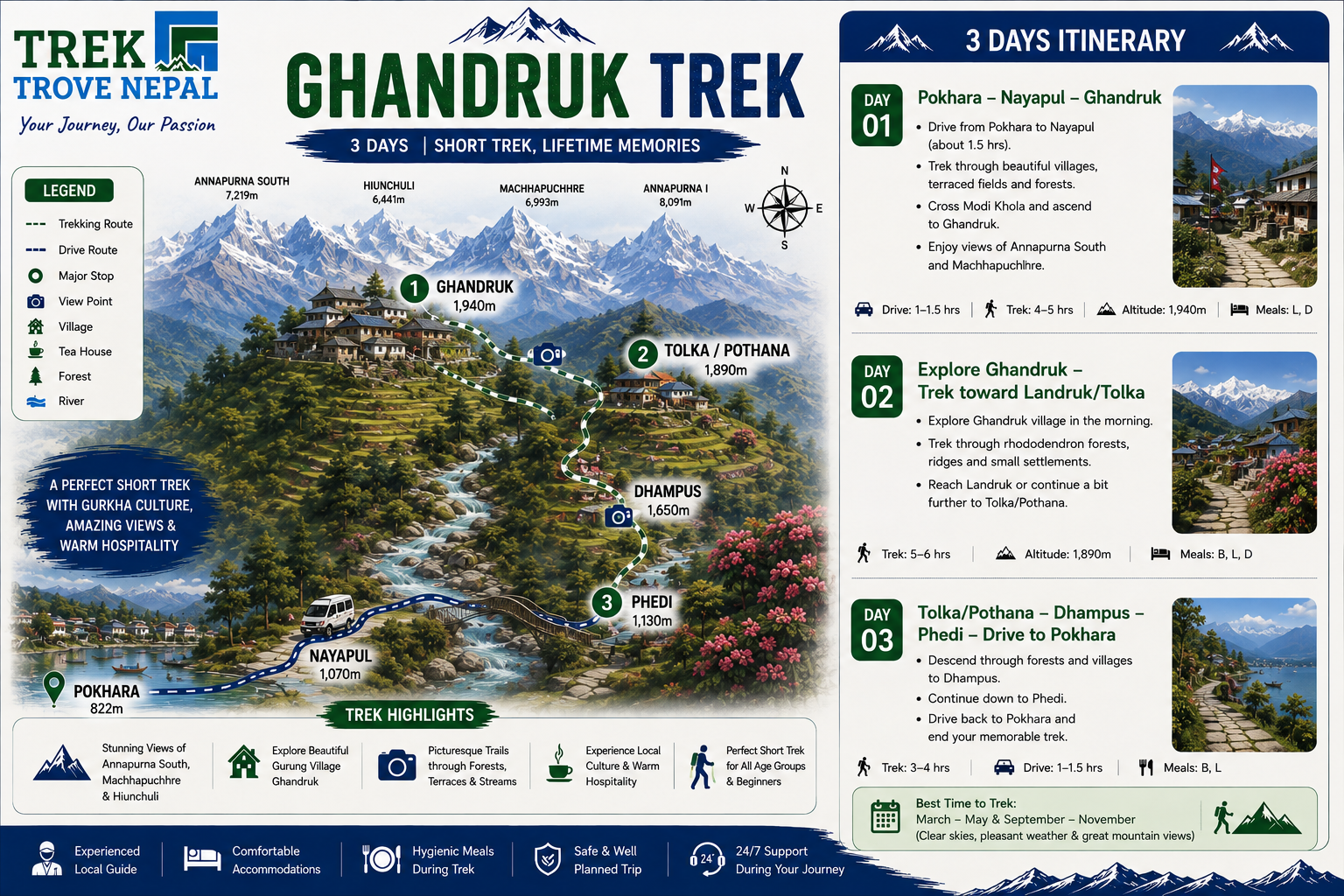
Trek Trove Nepal runs this as a fully organized 3-day package at US$295 per person, covering permits, accommodation, meals on the trail, guide, and ground transportation.
This page explains exactly what the 3-day Ghandruk Trek involves — the daily walking, the route, where you sleep, what’s included in the price, and what to expect from the trail and the weather — so you can decide if it’s the right trek for your trip.
Quick Facts about Ghandruk Trek
| Detail | Information |
|---|---|
| Trip Name | Ghandruk Trek – 3 Days |
| Region | Annapurna Region, Nepal |
| Duration | 3 Days |
| Price | US$295 per person |
| Trek Style | Tea house / lodge trek |
| Starting Point | Pokhara (drive to Nayapul) |
| Ending Point | Pokhara |
| Maximum Altitude | Ghandruk, approx. 2,012 m |
| Difficulty | Easy to Moderate |
| Group Size | Private or small group (customizable) |
| Best Season | March–May, September–November |
| Permits Required | ACAP, TIMS |
| Accommodation | Trekking lodges / tea houses |
| Meals | Breakfast, lunch, dinner during trek |
3 Day Ghandruk Trek Overview
This itinerary is built around a straightforward out-and-back-style loop from Pokhara: drive to the roadhead, walk in to Ghandruk over one to two days, spend time in the village, then walk out through a neighboring village before driving back to Pokhara.
It’s a route that has been used by Annapurna-region trekking operators for years because it fits into a short window without cutting corners on the actual trekking experience — you still walk on stone-paved trails, climb through forest, and sleep in mountain lodges rather than hotels.
Because Ghandruk sits at a relatively low elevation for the Annapurna region, altitude is not a significant concern on this trek, which is part of why it works well as a short package for travelers who don’t have time for the longer Annapurna Base Camp or Annapurna Circuit routes.
Why Choose the Ghandruk Trek
- Short time commitment. Three days is enough to complete a real trek with an overnight in a genuine mountain village, without needing a week or more of leave.
- Close to Pokhara. Ghandruk is about 32 km north-west of Pokhara, so travel time to and from the trailhead is short compared to treks that start further from the city.
- Cultural depth, not just scenery. Ghandruk is one of the largest and best-preserved Gurung settlements in the Annapurna region, with stone houses, narrow paved lanes, and a community museum documenting Gurung history and the Gurkha military tradition.
- Mountain views without high-altitude risk. You get close views of Annapurna South, Machhapuchhre, and Hiunchuli without trekking above 2,100–2,500 meters.
- Good entry point to the Annapurna region. For travelers who want to sample Annapurna trekking before committing to a longer trip in future, this is a low-risk way to do it.
Why Book with Trek Trove Nepal
Arranging permits, transport, guide, and lodge accommodation independently is possible but time-consuming, particularly for a short trip where you don’t want to lose a day sorting logistics. Trek Trove Nepal handles the ACAP and TIMS paperwork, arranges the guide and transport from Pokhara, and pre-confirms lodge accommodation along the route.
If weather or trail conditions require an adjustment to the itinerary, having a guide from a Nepal-based agency on the ground gives you a practical backup rather than having to problem-solve alone.
3-Day Ghandruk Trek Itinerary Overview
Day 1: Pokhara – Nayapul – Ghandruk
Drive from Pokhara to Nayapul (roughly 1 to 1.5 hours by private or shared vehicle). From Nayapul, the trek begins along the Modi Khola valley to Birethanti, where the ACAP checkpoint is located, then climbs steadily on stone steps and forest trail toward Ghandruk. Walking time is approximately 4 to 5 hours. Overnight in a trekking lodge in Ghandruk (approx. 2,012 m).
Day 2: Explore Ghandruk – Trek toward Landruk/Tolka
Morning free to walk through Ghandruk village, visit the Gurung Museum, and take in mountain views before the trail descends. The trek continues down toward the Modi Khola, crosses toward Landruk, and climbs again toward Tolka or Pothana, passing through terraced fields and forest. Walking time is approximately 5 to 6 hours. Overnight in a lodge in Tolka or Pothana.
Day 3: Tolka/Pothana – Dhampus – Phedi – Drive to Pokhara
A shorter final trekking day, descending and traversing to Dhampus village, then down to Phedi, where a private vehicle meets the group for the drive back to Pokhara. Walking time is approximately 2 to 3 hours, followed by roughly 1 hour of driving.
Route Overview
Pokhara → (drive) → Nayapul → Birethanti → Ghandruk → Landruk → Tolka/Pothana → Dhampus → Phedi → (drive) → Pokhara
The route stays within the lower Annapurna foothills throughout, never approaching the Annapurna Sanctuary or high-altitude terrain.
Daily Walking Distance & Hours
| Day | Route | Walking Time | Approx. Elevation Change |
|---|---|---|---|
| 1 | Nayapul → Birethanti → Ghandruk | 4–5 hrs | ~1,065 m → ~2,012 m |
| 2 | Ghandruk → Landruk → Tolka/Pothana | 5–6 hrs | Descent then re-ascent, net change varies |
| 3 | Tolka/Pothana → Dhampus → Phedi | 2–3 hrs | Gradual descent to ~1,130 m |
Altitude Profile
| Location | Approximate Altitude |
|---|---|
| Pokhara | 822 m |
| Nayapul | ~1,070 m |
| Birethanti | ~1,065 m |
| Ghandruk | 2,012 m |
| Landruk | ~1,565 m |
| Tolka / Pothana | ~1,700–1,900 m |
| Dhampus | ~1,650 m |
| Phedi | ~1,130 m |
The trek’s highest point, Ghandruk, sits well below the altitude where mountain sickness becomes a meaningful concern, which is one reason this route is used as a beginner-friendly introduction to Annapurna trekking.
Ghandruk Village Experience
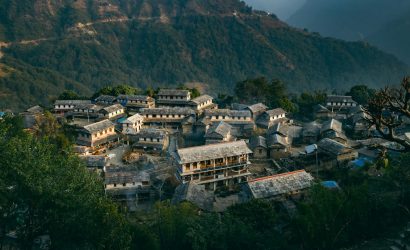
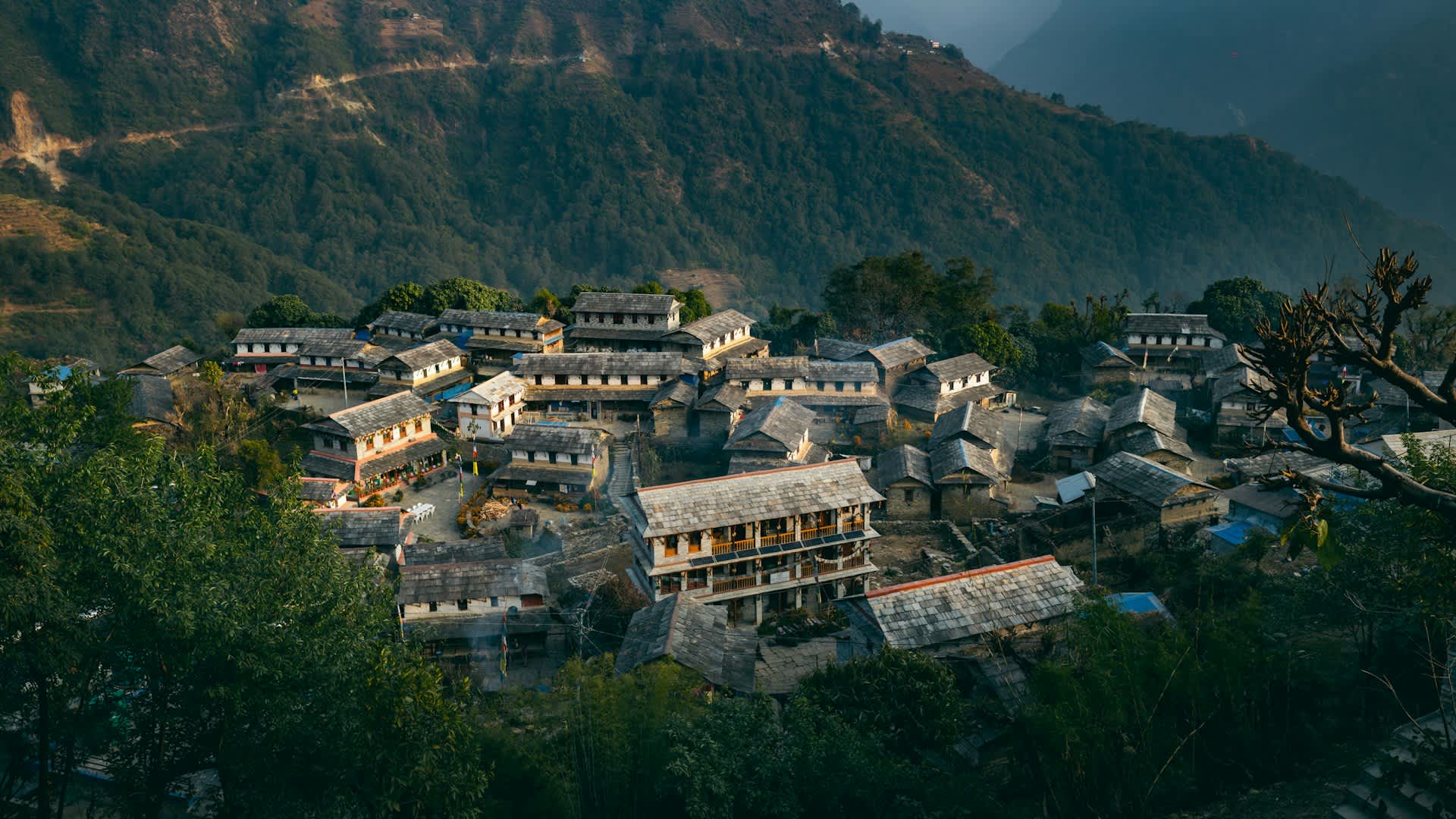
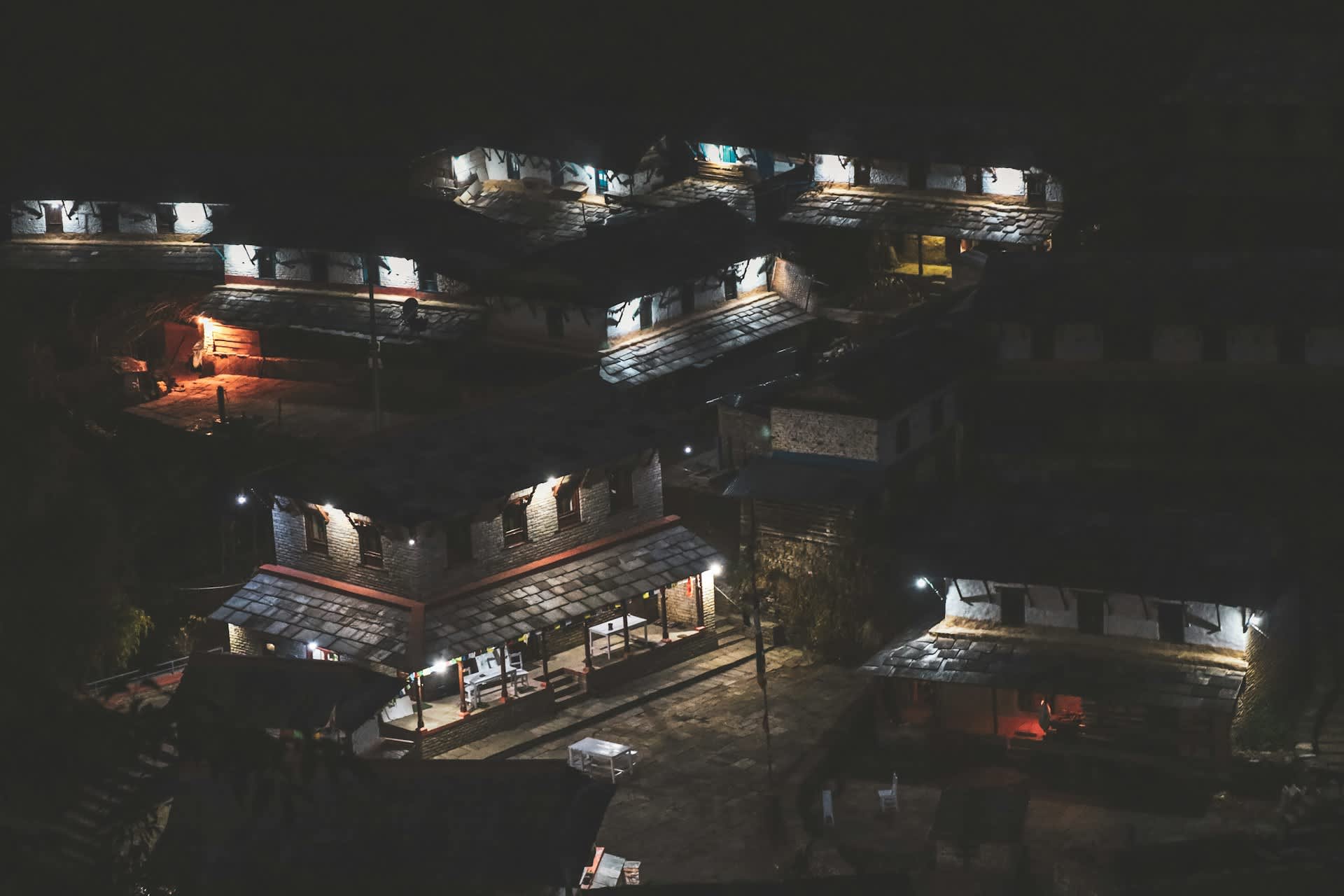
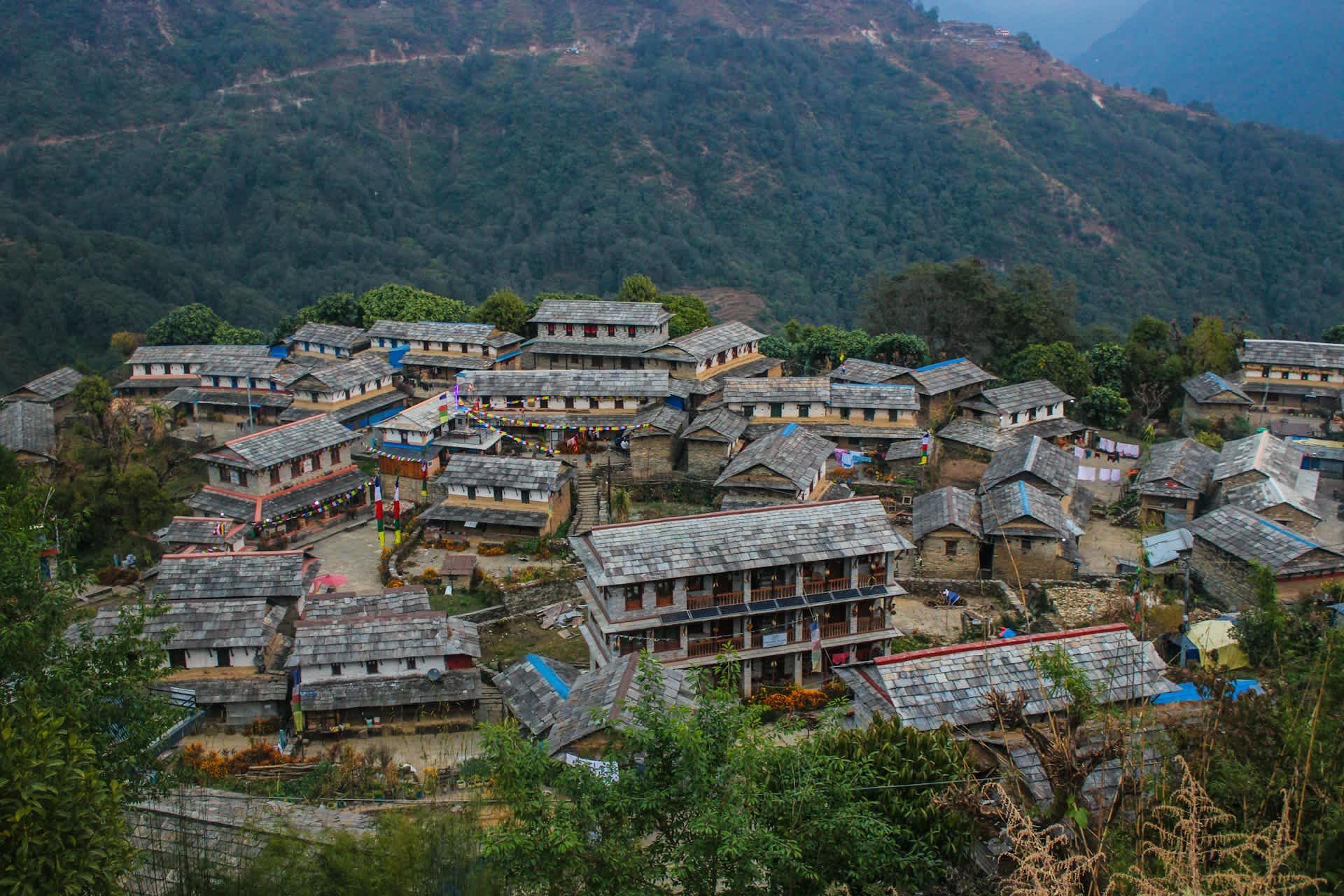
Ghandruk is not simply an overnight stop — it’s the destination this trek is built around. The village has stone-paved streets, closely packed traditional Gurung houses with slate roofs, and small shops and tea houses lining the main paths.
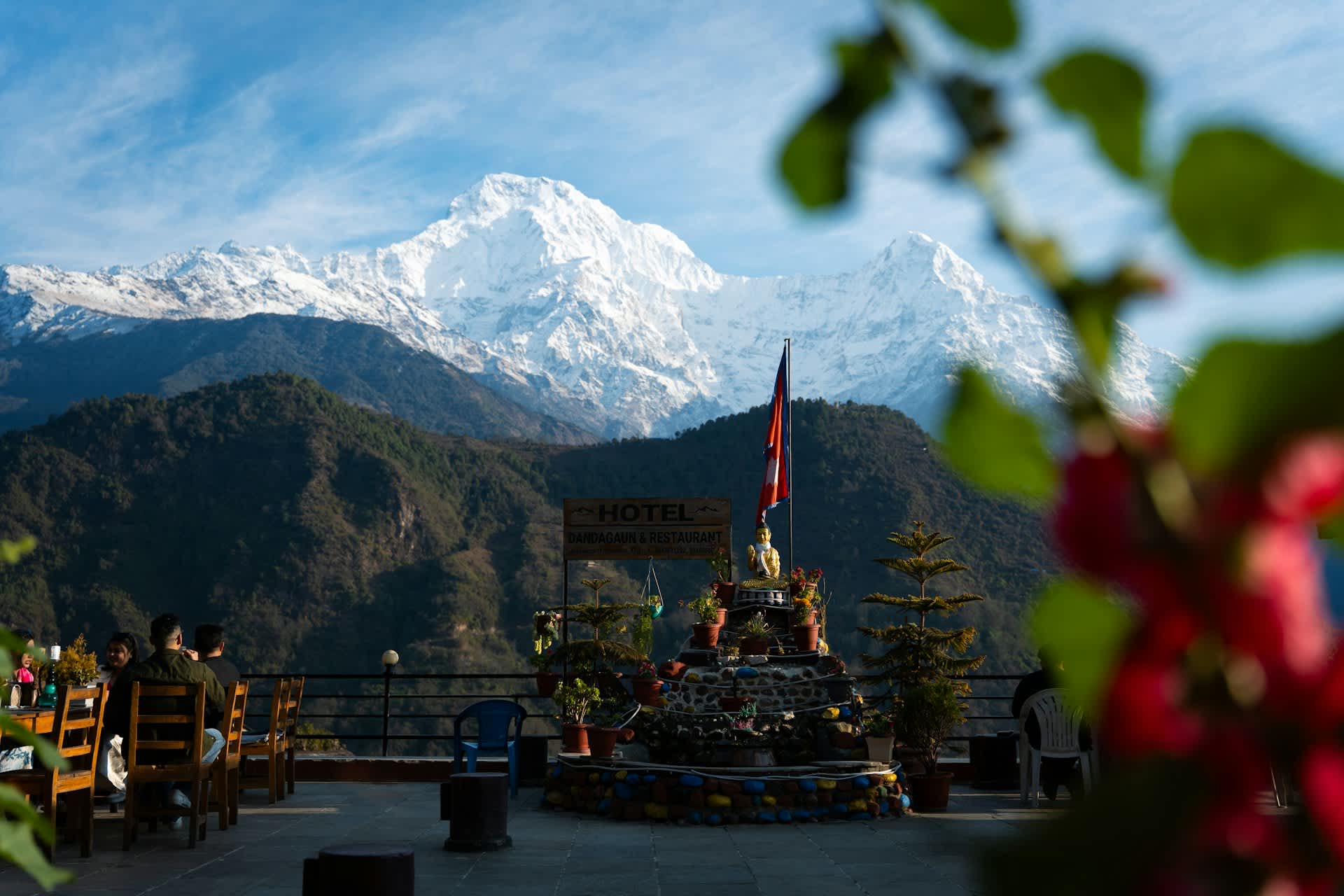
It sits at an elevation Wikipedia lists as 2,012 meters, and from the village you can look directly across the valley at Annapurna South, Machhapuchhre, Gangapurna, and Hiunchuli — no additional climb is required to see these peaks.
Ghandruk also functions as a key stop on routes toward the Annapurna Base Camp and Annapurna Circuit, and a gateway toward Poon Hill, so you’re walking on established, well-maintained trekking infrastructure rather than an obscure path.
A community-run museum in the village documents Gurung culture, traditional dress, and the region’s long history of Gurkha military service — worth 30–45 minutes if it’s open when you pass through.
Gurung Culture and Local Life
Ghandruk is one of the largest Gurung settlements in Nepal, and daily life here still runs on farming: terraced fields around the village are used to grow corn, millet, wheat, and potatoes, and most households keep livestock. Lodges in the village are typically family-run, and meals are prepared using a mix of local and trekker-standard menus.
Walking through the village in the early morning or evening, when residents are moving livestock or working the terraces, gives a more accurate picture of daily Gurung life than a scheduled cultural show would.
Mountain Views
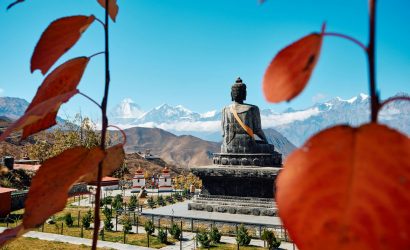
On clear days from Ghandruk and the surrounding trail, you can see Annapurna South, Machhapuchhre (Fishtail), Hiunchuli, and Gangapurna. Visibility is best in the early morning before cloud builds up over the ridgelines, which typically happens from late morning onward, especially outside the driest months.
Cloud cover, haze, or precipitation can reduce or block mountain views on any given day — this is normal for the region and not something any operator can guarantee around.
Trek Difficulty
The Ghandruk Trek is rated easy to moderate. The trail is well-established and mostly stone-paved or dirt path, but it is not flat: expect sustained uphill sections on stone steps on Day 1 into Ghandruk, a steep descent and re-ascent on Day 2 crossing the Modi Khola valley, and a more gradual downhill on Day 3.
None of this requires technical skill, but several hours of walking on uneven ground and stairs each day is real physical effort, particularly for anyone unused to hiking.
Fitness Requirements
No prior trekking experience is required. A reasonable baseline of fitness — being able to walk continuously for 4–5 hours with breaks — is enough to complete this trek comfortably. Trekking poles are useful on the stone steps, particularly for the descents.
Altitude Information
Maximum altitude on this route is Ghandruk at 2,012 m. This is below the range where altitude sickness is a common concern, so no acclimatization days are built into the itinerary. Trekkers with pre-existing respiratory or cardiovascular conditions should still consult a doctor before any high-elevation travel.
Best Time to Trek
Season Comparison
| Season | Months | Conditions |
|---|---|---|
| Spring | March – May | Warm days, cooler mornings, rhododendron blooming at mid-altitude, generally good visibility |
| Summer/Monsoon | June – August | Frequent rain, leech activity on lower trails, cloud cover often blocks mountain views |
| Autumn | September – November | Considered the most reliable season: stable weather, clear skies, good mountain visibility |
| Winter | December – February | Cold mornings and evenings, generally clear daytime skies, occasional snow at higher points on the route |
Weather Overview
Ghandruk’s elevation keeps temperatures moderate year-round compared to higher Annapurna trekking routes. Daytime temperatures in spring and autumn are typically comfortable for walking in layers; mornings and evenings are cooler, especially at Ghandruk and Tolka.
Monsoon season (June–August) brings regular afternoon rain and increases the chance of overcast conditions obscuring mountain views. Winter is generally dry with clear daytime skies but cold nights.
Transportation from Pokhara
The trek starts and ends with private vehicle transport arranged by Trek Trove Nepal: Pokhara to Nayapul at the start, and Phedi (or Dhampus, depending on final trail conditions) back to Pokhara at the end. Driving time from Pokhara to Nayapul is roughly 1 to 1.5 hours on paved road.
Transportation from Kathmandu
This package begins in Pokhara. If you’re arriving from Kathmandu, you’ll need to get to Pokhara first — by domestic flight (around 25–30 minutes) or by tourist bus/private vehicle (roughly 6–8 hours by road).
Trek Trove Nepal can help arrange this connection on request; ask when booking if you need this added to your plans.
Accommodation
Accommodation throughout the trek is in trekking lodges (tea houses), typically on a twin-sharing basis. Rooms are simple — usually a bed, blanket, and shared or basic attached bathroom facilities — which is standard for this altitude range in the Annapurna region. Hot showers, where available, are usually charged separately by the lodge.
| Night | Location | Accommodation Type |
|---|---|---|
| Night 1 | Ghandruk | Trekking lodge, twin-share |
| Night 2 | Tolka / Pothana | Trekking lodge, twin-share |
Meals & Drinking Water
Breakfast, lunch, and dinner are included during the trekking days, served at the lodges you stay in or pass through. Menus typically include Nepali dal bhat, noodle and rice dishes, soups, and simple Western options like pancakes or toast.
Bottled and boiled water are available for purchase at lodges along the route; carrying a reusable bottle and water purification tablets or a filter is a practical way to reduce plastic waste and cost.
Permits / Entry Requirements / Fees
Two permits are required for this trek:
- ACAP (Annapurna Conservation Area Permit) — required since the route runs entirely within the Annapurna Conservation Area.
- TIMS Card (Trekkers’ Information Management System) — a standard safety and tracking document required for trekking in this region.
Trek Trove Nepal arranges both permits as part of the package price. You’ll need a couple of passport-sized photos and your passport details in advance to process these.
Packing Checklist
| Category | Items |
|---|---|
| Clothing | Moisture-wicking base layers, fleece or warm mid-layer, waterproof/windproof jacket, trekking trousers, warm hat, sun hat |
| Footwear | Broken-in hiking boots, comfortable socks, sandals for evenings at lodges |
| Gear | Daypack, trekking poles (optional but useful), headlamp with spare batteries, reusable water bottle |
| Health | Personal first aid kit, sunscreen, sunglasses, any personal medication |
| Documents | Passport, passport photos, travel insurance details |
| Extras | Power bank, cash in Nepali rupees for personal purchases, basic toiletries |
Cost Breakdown
The US$295 per-person price reflects a standard tea-house 3-day itinerary with a guide, permits, transport, and meals during the trek. What you pay for:
| Cost Component | Covered |
|---|---|
| ACAP + TIMS permit fees | Yes |
| Guide (English-speaking) | Yes |
| Ground transport Pokhara–Nayapul / return | Yes |
| Lodge accommodation (2 nights) | Yes |
| Meals during trek (B, L, D) | Yes |
| Porter | Available on request, additional cost |
Optional Services
- Porter service for luggage
- Extra nights in Pokhara before or after the trek
- Airport transfers in Kathmandu or Pokhara
- Extension to a longer Annapurna itinerary (e.g., adding Poon Hill or Jhinu Danda hot spring)
Responsible Trekking
Ghandruk sits within the Annapurna Conservation Area, and part of the ACAP fee goes toward conservation and local infrastructure in the region. Trek Trove Nepal asks trekkers to stay on marked trails, dispose of waste properly (carry out what you carry in where lodge bins aren’t available), and support local lodges and shops along the route rather than bringing all supplies from Pokhara.
Practical Travel Tips
- Carry small denomination Nepali rupees — card payment is unreliable on the trail.
- Confirm your departure date at least a few days ahead so permits can be processed.
- Pack layers rather than one heavy jacket — temperature swings between morning and midday are significant.
- Charge devices in Pokhara before departure; charging at lodges is often a paid service.
- If you’re combining this with a longer Nepal itinerary, build in one buffer day in Pokhara in case of transport delays.
Book the Ghandruk Trek – 3 Days
If you have three days available in the Pokhara area and want a real Himalayan trekking experience — mountain views, a traditional Gurung village, and genuine tea-house trekking — the Ghandruk Trek is a practical way to fit that in.
Contact Trek Trove Nepal to check availability, confirm departure dates, and discuss any adjustments to the itinerary for your group size, fitness level, or travel dates.
Ghandruk Trek Highlights
- Overnight in Ghandruk village itself — not just a lunch stop or viewpoint, but a full night in one of the Annapurna region's largest and best-preserved Gurung settlements, at roughly 2,012 m.
- Direct views of four named peaks from the village — Annapurna South, Machhapuchhre (Fishtail), Hiunchuli, and Gangapurna are all visible from Ghandruk itself on clear days, with no extra climb required.
- Stone-paved trail the entire route — the Nayapul–Birethanti–Ghandruk section follows a maintained stone-step path used for decades by trekkers heading toward Annapurna Base Camp and Poon Hill, so the trail underfoot is well-built, not improvised.
- A working farming village, not a staged one — terraced fields around Ghandruk are actively farmed for corn, millet, wheat, and potatoes, and most households keep livestock; walking through in early morning or evening puts you alongside actual daily routines.
- The Gurung Museum in Ghandruk — a community-run collection covering traditional Gurung dress, tools, and the region's long history of Gurkha military service, usually a 30–45 minute stop.
- A river-valley walk along the Modi Khola — Day 1 and Day 2 both track sections of this valley, passing smaller streams and forest cover rather than open road.
- A second village on the way out — the Day 2–3 route through Landruk and Tolka/Pothana to Dhampus means you see more than one Gurung settlement, not just Ghandruk and back.
- Short enough to combine with other plans — because it starts and ends in Pokhara within 3 days, it fits into a trip that also includes other Pokhara activities (boating on Phewa Lake, paragliding, etc.) without eating up your whole Nepal itinerary.