



Introduction
In the southern plains of Nepal, where the air is warmer and the landscape opens into wide agricultural fields, lies Janakpur, a city that pulses with devotion and ancient memory. Here, in the heart of Mithila, stands the Janaki Mandir, a grand temple dedicated to Goddess Sita, also known as Janaki. For millions of Hindus, this is not merely a heritage site; it is the sacred land of Sita’s birth, the place where she is believed to have been found by King Janaka, and where, according to the Ramayana tradition, she married Lord Rama. The air around the temple carries the scent of marigolds, the sound of bells, and the constant murmur of pilgrims.
A Janaki Mandir Tour from Kathmandu is a journey from the hill capital to the spiritual heart of the Terai. It is an opportunity to step into one of the most important Hindu pilgrimage destinations in Nepal, to walk through a temple complex that reflects both Mughal and Rajput architectural influences, and to experience the living culture of Mithila. For pilgrims, it is a chance for darshan and prayer. For cultural travelers, it is a window into a distinct regional identity, famous for its vibrant art, unique cuisine, and deep-rooted traditions.
The journey from Kathmandu to Janakpur can be made by a short domestic flight or a longer road trip through the Terai. Whether you have two days or three, this tour can be tailored to your interests and pace. It combines sacred sightseeing, cultural exploration, and the warmth of Mithila hospitality. It is a pilgrimage and a discovery, a journey to a place where myth and everyday life are woven together.
This page provides a complete guide to planning your Janaki Mandir tour from Kathmandu, including itineraries, transportation options, cultural context, and practical travel advice. All schedules and access details should be confirmed before departure, as they may change.
Why Visit Janaki Mandir from Kathmandu?
Kathmandu is the gateway to the Himalayas, but Nepal’s spiritual geography extends far beyond the high mountains. Janakpur offers a different kind of sacred landscape, one rooted in the plains and in the epic Ramayana. Here are the key reasons to include Janaki Mandir in your Nepal journey.
A Major Hindu Pilgrimage Destination
Janaki Mandir is one of the most revered temples in Nepal, dedicated to Goddess Sita. It is a central site for devotees of Rama and Sita, particularly for those from Nepal and northern India. The temple is the focal point of the Janakpur Dham pilgrimage circuit.
Deep Ramayana Connection
Janakpur is traditionally identified as the capital of the ancient kingdom of Mithila, ruled by King Janaka. According to Hindu tradition, Sita was discovered by King Janaka while plowing a field and later married Lord Rama here. This narrative makes Janakpur a living epic location for millions.
Unique Architecture
The Janaki Mandir is distinct from the pagoda-style temples of Kathmandu. Its white marble facade, domed pavilions, and ornate arches reflect a blend of Mughal and Rajput architectural styles, sometimes called “Mughal-Rajput” or “Mithila style.” It is a visual departure from the hill temples and a striking landmark.
Living Mithila Culture
Janakpur is the heartland of Mithila culture, known for its distinctive art, language, music, and cuisine. Visitors can see Mithila paintings, meet artisans, and experience a cultural identity that has been preserved for centuries.
Practical Accessibility from Kathmandu
Janakpur is connected to Kathmandu by direct domestic flights, which take about 25–30 minutes of flying time, although airport procedures add time. A road journey is also possible, offering a scenic cross-section of Nepal from the hills to the plains.
A Quieter Pilgrimage Experience
Compared to the bustling shrines of Kathmandu or the high-altitude journey to Muktinath, Janakpur often offers a more relaxed, spacious pilgrimage experience. The temple complex is large, and the town is manageable.
Whether you are a devout pilgrim, a lover of art and architecture, or a traveler seeking to understand Nepal’s cultural diversity, Janaki Mandir is a compelling destination.
Janaki Mandir Tour Highlights
- Janaki Mandir: Explore the grand white marble temple dedicated to Goddess Sita, a masterpiece of Mithila architecture.
- Ram Mandir: Visit the nearby temple dedicated to Lord Rama, an essential part of the Janakpur Dham circuit.
- Ram Sita Vivah Mandap: See the pavilion that commemorates the marriage of Rama and Sita, a key site for Ramayana devotees.
- Dhanush Sagar & Ganga Sagar: Visit the sacred ponds that form part of Janakpur’s ritual landscape, often used for bathing and ceremonies.
- Mithila Culture: Experience the living traditions of the Mithila people, from their language and dress to their vibrant festivals.
- Mithila Art & Painting: Observe or purchase traditional Mithila paintings, known for their intricate patterns and natural pigments.
- Local Markets: Wander through Janakpur’s bazaars, where religious items, handicrafts, and local sweets are sold.
- Spiritual Atmosphere: Absorb the constant hum of devotion, bells, and chanting that fills the temple complex from early morning until night.
- Photography Opportunities: Capture the unique architecture and daily rituals from permitted areas, always respecting worshippers.
3 Days / 2 Nights Janaki Mandir Tour from Kathmandu
This is the recommended itinerary for travelers who want a comfortable, unhurried visit to Janakpur.
Day 1: Kathmandu to Janakpur
Your journey begins with pickup from your hotel in Kathmandu. If you are traveling by flight, you will be transferred to the domestic airport for the short flight to Janakpur. Upon arrival at Janakpur Airport, you will be met by your local guide and driven to your hotel. After check-in and some rest, the afternoon is free for initial exploration.
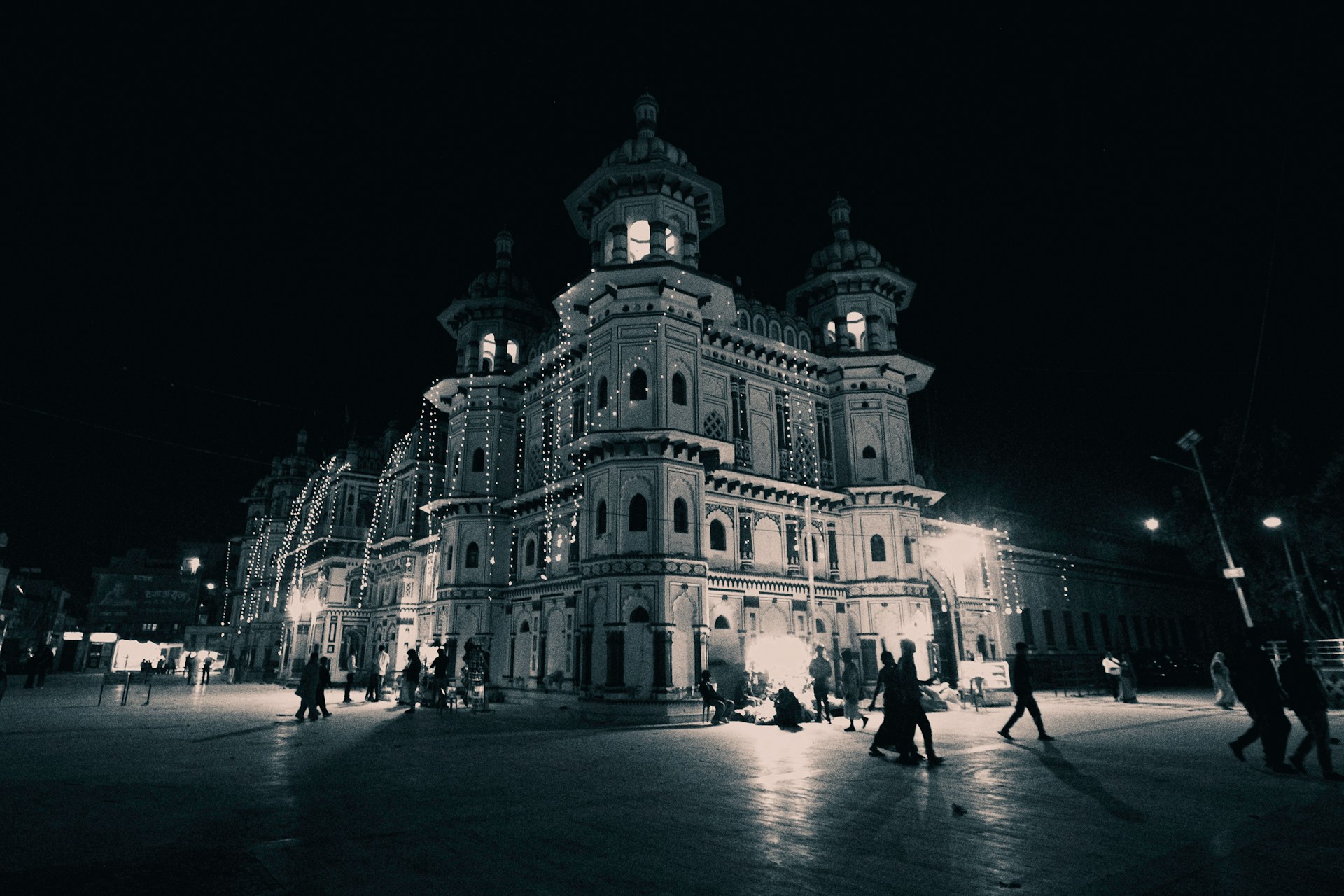
Depending on your arrival time and energy, you may take a first walk to the Janaki Mandir complex to observe the evening atmosphere. The temple is especially beautiful as the light fades and lamps are lit. You can walk around the outer courtyards, watch devotees, and absorb the spiritual energy. Overnight in Janakpur.
Note: The actual schedule depends on flight availability, weather, and road conditions. For road travel, departure is typically early morning to allow time for the drive and some sightseeing upon arrival.
Day 2: Janakpur Pilgrimage & Cultural Sightseeing
Today is dedicated to the sacred and cultural sites of Janakpur. After breakfast, you will visit the main Janaki Mandir. Your guide will explain the temple’s architecture, religious significance, and the Ramayana connection. You will have time for personal prayer and darshan (for Hindu devotees) or quiet observation.
Next, visit the Ram Mandir and the Ram Sita Vivah Mandap, where the divine marriage is commemorated. The Vivah Mandap is an important site, especially during the Vivah Panchami festival.
After lunch, visit Dhanush Sagar and Ganga Sagar, two sacred ponds associated with the Ramayana narrative. These sites are often used for ritual bathing and are surrounded by smaller shrines.
In the afternoon, experience Mithila culture. You may visit a local art workshop to see Mithila paintings being created, or walk through a traditional neighborhood to observe daily life. The evening is free for rest, shopping, or another visit to the temple for the evening aarti if available.
Day 3: Janakpur to Kathmandu
After breakfast, you may have time for a final morning visit to the temple or a short walk through the local market for last-minute souvenirs. Depending on your flight or road schedule, you will be transferred to Janakpur Airport for the return flight to Kathmandu, or begin your drive back.
Upon arrival in Kathmandu, you will be dropped at your hotel. The tour ends with memories of a deeply meaningful journey.
2 Days / 1 Night Janaki Mandir Tour
For travelers with limited time, a compact 2-day/1-night tour is possible. The experience will be more condensed, and the pace will be faster.
Flight-Based Option
- Day 1: Morning flight from Kathmandu to Janakpur. Arrive, check in, and head directly to Janaki Mandir. Spend the afternoon visiting Ram Mandir, Vivah Mandap, and the sacred ponds. Evening at the temple or market.
- Day 2: Early morning optional temple visit for sunrise prayers. After breakfast, transfer to the airport for a late morning or early afternoon flight back to Kathmandu.
Road-Based Option
- Day 1: Depart Kathmandu very early by private vehicle. The drive takes much of the day, arriving in Janakpur by late afternoon or early evening. You will only have time for a brief temple visit in the evening.
- Day 2: Morning visit to Janaki Mandir and one or two nearby sites. After lunch, begin the long drive back to Kathmandu, arriving late at night.
Important: The road-based 2-day tour involves extensive driving and limited sightseeing time. We generally recommend the flight option or a 3-day itinerary for a more meaningful visit.
Janakpur Day Tour from Kathmandu
A same-day return from Kathmandu to Janakpur is technically possible only by flight, subject to current flight schedules. It is a very rushed experience and is generally not recommended for a meaningful pilgrimage or cultural visit.
If you choose a day trip:
- Take the first flight from Kathmandu to Janakpur.
- Spend approximately 4–6 hours in Janakpur, visiting Janaki Mandir, Ram Mandir, and maybe Vivah Mandap.
- Take an afternoon or early evening flight back to Kathmandu.
This option is suitable only for travelers with extreme time constraints who wish to have darshan at Janaki Mandir and return immediately. It does not allow time to explore Mithila culture or the wider Janakpur area at a comfortable pace.
We recommend at least one overnight stay to appreciate Janakpur fully.
Kathmandu to Janakpur: Flight vs Road
| Option | Travel Experience | Time Consideration | Best For | Advantages | Considerations |
|---|---|---|---|---|---|
| Flight | Short domestic flight, often with mountain views on clear days | About 25–30 minutes flying time, plus airport transfers and waiting | Pilgrims with limited time, families, senior travelers, those who prefer comfort | Fast, comfortable, maximizes time in Janakpur | Subject to weather and flight delays, higher cost, must adhere to schedule |
| Private Vehicle | Scenic road journey through hills, river valleys, and the Terai plains | Long, typically 6–9+ hours depending on traffic, road works, and stops | Travelers who enjoy road journeys, those wanting flexibility, groups | Private, can stop for photos/tea, flexible departure | Tiring, lengthy, road conditions vary, less sightseeing time on short tours |
| Tourist/Public Bus | Budget road travel, shared vehicle | Longest option; may be slower than private vehicle due to stops | Budget travelers, those wanting a local experience | Inexpensive, authentic local travel | Limited comfort, fixed schedule, least flexibility |
Please note: Travel times are approximate and can be significantly affected by traffic, weather, road construction, and other factors. Always confirm current conditions before departure.
How to Travel from Kathmandu to Janakpur
By Air
Domestic flights operate between Kathmandu’s Tribhuvan International Airport and Janakpur Airport. Several airlines offer this route, with multiple flights per day during peak season. The flight is short, and on clear days, you may see the Himalayan range to the north. You should arrive at the airport at least one hour before departure. We can arrange flight tickets and airport transfers as part of your package.
By Private Vehicle
A private vehicle offers the most flexibility. The route typically descends from Kathmandu through the Mahabharat range and into the Terai, passing through towns like Dhulikhel, Sindhuli, and Bardibas. It is a long but interesting drive that shows the dramatic change in landscape. Stops can be made for meals, rest, and photography. The vehicle remains with you in Janakpur for local transfers.
By Bus
Public and tourist buses serve the route between Kathmandu and Janakpur. This is the most economical option but also the least comfortable, especially for long journeys. Bus services vary in quality; some offer air conditioning and reserved seats, while others are basic. We can advise on suitable bus options if you prefer this mode.
Janaki Mandir
The Janaki Mandir is the centerpiece of Janakpur and one of the most striking temples in Nepal. Dedicated to Goddess Sita, it stands as a magnificent example of Mithila architecture, with influences from Mughal and Rajput styles. The temple is built of white marble, giving it a luminous appearance, especially in sunlight. Its three-tiered structure includes domed pavilions, arched windows, and ornate turrets.
The temple complex is large, with a central courtyard and surrounding structures. Devotees enter through a grand gate and approach the inner sanctum where the idol of Sita is worshipped. The temple is a place of continuous devotion; bells ring, priests chant, and pilgrims offer flowers, sweets, and prayers.
Visitor Note: The main sanctum is open to all visitors, but visitors should dress modestly and follow temple rules. Photography may be restricted inside the main sanctum. Always follow the guidance of temple staff and your guide.
Sita, Janaki & the Ramayana Tradition
According to Hindu tradition, Janakpur is the ancient city of Mithila, ruled by King Janaka. The Ramayana narrates that King Janaka found a baby girl in a furrow while plowing a field. He named her Sita, meaning “furrow,” and she became his daughter, also known as Janaki, “daughter of Janaka.”
When Sita reached marriageable age, King Janaka held a swayamvara (a ceremony where a princess chooses her husband). Lord Rama won the contest by lifting and stringing the divine bow of Shiva. The marriage of Rama and Sita is one of the central events of the Ramayana, and Janakpur is revered as the place where this divine union took place.
Devotees believe that visiting Janaki Mandir and the Vivah Mandap brings blessings for marriage, family harmony, and spiritual merit. The Ramayana is a sacred text for millions, and Janakpur’s role in it makes the city a focal point of devotion.
Important: The Ramayana is a religious and literary epic. Its narratives are matters of faith and tradition, not necessarily verifiable historical events. Visitors are encouraged to appreciate the cultural and spiritual significance without imposing a historical framework.
Ram Sita Vivah Mandap
The Ram Sita Vivah Mandap is a pavilion located near the Janaki Mandir. It is traditionally believed to be the spot where the marriage of Rama and Sita took place. The structure is a covered platform with pillars, often decorated with images depicting scenes from the Ramayana.
Pilgrims visit the Vivah Mandap to offer prayers for marital harmony and to honor the divine couple. The site is especially important during the festival of Vivah Panchami, which commemorates the marriage and draws thousands of devotees.
The pavilion is smaller than the main temple but has a deep emotional significance. It is a place of quiet reflection and prayer.
Ram Mandir
Ram Mandir is another important temple in Janakpur, dedicated to Lord Rama. It is located near the Janaki Mandir and is part of the Janakpur Dham pilgrimage circuit. The temple is simpler in design than Janaki Mandir but holds great religious importance.
Devotees visit Ram Mandir to offer prayers to Rama, often after visiting Janaki Mandir. The pairing of Sita and Rama temples reflects the inseparable bond between the divine couple in Hindu devotion. The temple is also a center of activity during Ram Navami and other festivals.
Dhanush Sagar & Ganga Sagar
Dhanush Sagar and Ganga Sagar are two sacred ponds located near the Janaki Mandir. They are part of the ritual landscape of Janakpur and are often used for bathing and religious ceremonies.
Dhanush Sagar (Bow Lake) is associated with the bow of Shiva that Rama broke during the swayamvara. It is believed to hold the remnants of the divine bow, although this is a matter of faith.
Ganga Sagar is a larger pond, and its name evokes the Ganges. Pilgrims may take a holy dip in these ponds, especially on auspicious days. The area around the ponds is peaceful, with steps leading down to the water and smaller shrines nearby.
Visitors should be respectful of those bathing or performing rituals.
Mithila Culture
Janakpur is the cultural capital of the Mithila region, which spans parts of Nepal and northern India. The Mithila people have a distinct language (Maithili), traditional dress, music, and artistic heritage. Their culture is ancient and has been preserved through generations.
Mithila society is known for its strong artistic traditions, especially painting, which is often done by women on the walls and floors of homes during festivals and rituals. The region is also famous for its distinctive cuisine, which includes dishes made with rice, lentils, seasonal vegetables, and local spices.
Visitors to Janakpur can experience Mithila culture through art workshops, village walks, local food, and festivals. The culture is not a relic; it is a living, evolving tradition that continues to shape daily life.
Mithila Art & Painting
Mithila painting, also known as Madhubani art in India, is one of the most recognizable art forms of the region. Traditionally, women painted geometric patterns, deities, and natural motifs on the walls of their homes using natural pigments. Over time, the art form has moved to paper and canvas, and it is now sold as a major cultural export.
The paintings are characterized by intricate lines, vibrant colors, and symbolic imagery. Common themes include the marriage of Rama and Sita, Hindu deities, the sun and moon, fish, peacocks, and scenes from daily life.
In Janakpur, visitors can visit local workshops and cooperatives where women create and sell Mithila paintings. Purchasing directly from artists supports the local economy and helps preserve this cultural heritage. When buying, look for authentic works rather than mass-produced imitations.
Festivals in Janakpur
Janakpur comes alive during religious festivals. These are times of great devotion, color, and crowds.
Vivah Panchami
Vivah Panchami, usually falling in November or December, celebrates the marriage of Rama and Sita. Janakpur is the epicenter of this festival. The city is decorated, processions are held, and the Vivah Mandap becomes the focus of elaborate ceremonies. Pilgrims from Nepal and India flood the city. It is a vibrant but crowded time to visit.
Ram Navami
Ram Navami, the birthday of Lord Rama, is another major festival. Devotees fast, sing bhajans, and visit the Ram Mandir and Janaki Mandir. The atmosphere is joyous and spiritual.
Chhath
Chhath is a major festival in the Mithila region, dedicated to the Sun God. It is observed with great fervor along the banks of ponds and rivers, including Dhanush Sagar and Ganga Sagar. Devotees offer prayers at sunrise and sunset. The festival usually occurs in October or November.
Holi and Diwali/Tihar
These pan-Hindu festivals are also celebrated with regional flair. Holi is particularly colorful in Janakpur, while Tihar brings lights and offerings.
Note: Festival dates are based on the lunar calendar and change each year. If you plan to visit during a festival, book well in advance and be prepared for large crowds and possible changes to temple access.
Best Time to Visit Janakpur
Janakpur lies in the Terai, which is generally warmer than Kathmandu.
Autumn (October–November)
This is one of the best times to visit. The weather is warm but not oppressive, skies are often clear, and the festival season (including Chhath and sometimes Vivah Panchami) adds cultural richness.
Winter (December–February)
Pleasant daytime temperatures make this a comfortable time for sightseeing. Mornings and evenings can be cool, so bring a light jacket. This is a good season for road travel.
Spring (March–April)
Temperatures begin to rise. March can be pleasant, but by late April, the heat becomes noticeable. The festival of Ram Navami often falls in this period.
Summer (May–June)
This is the hottest season, with daytime temperatures often exceeding 35°C (95°F). Sightseeing can be exhausting. Early mornings and evenings are the only comfortable times. We generally do not recommend this period for travel to Janakpur.
Monsoon (July–September)
Heavy rains can affect road travel and cause flooding in the Terai. The landscape is green and lush, but outdoor activities are limited. Flights may be delayed. Travel is possible but requires flexibility.
Overall Recommendation: October to March is the most comfortable period for most travelers.
Janakpur Weather
Janakpur has a humid subtropical climate. It is significantly hotter and more humid than Kathmandu. Summer temperatures can be extreme, while winter is mild. Monsoon brings heavy rainfall. Always check the current forecast before your trip, as conditions can change rapidly.
Who Is This Tour For?
Hindu Pilgrims
This is a deeply meaningful tour for devotees of Rama and Sita. The focus is on darshan, prayer, and visiting the sacred sites associated with the Ramayana.
Families
The tour can be family-friendly, especially with the flight option and a relaxed 3-day itinerary. Children can learn about Hindu epics and Mithila culture.
Couples
The spiritual and cultural atmosphere can be romantic and reflective. The marriage of Rama and Sita makes Janakpur a special place for couples seeking blessings.
Solo Travelers
Janakpur is safe and manageable for solo travelers. A guided tour provides company and context.
Senior Travelers
The flight option reduces travel fatigue. The temple complex is relatively flat, but walking and heat can be challenging. A slower pace is recommended.
Indian Travelers
Many Indian travelers visit Janakpur as part of a Ramayana circuit, often combined with a Nepal trip. The familiarity of the deities and the cultural ties make it a comfortable destination.
International Visitors
For non-Hindu travelers, Janakpur offers a fascinating glimpse into a living religious tradition and a distinct regional culture. It is less touristy than Kathmandu.
Cultural Travelers and Ramayana Enthusiasts
Those with an interest in the Ramayana, art, architecture, and cultural anthropology will find Janakpur endlessly engaging.
Janaki Mandir Tour for Pilgrims
We understand that a pilgrimage is not a standard tour. For Hindu pilgrims, this journey is an act of devotion. We offer:
- Flexible timing: We allow ample time for darshan and personal prayer without rushing you from site to site.
- Guide support: Our guides can explain rituals and temple etiquette, and help with logistics, but we do not claim special access or perform religious services.
- Festival assistance: If you plan to visit during Vivah Panchami or other festivals, we can arrange travel and accommodation, but be prepared for crowds.
- Combinations: We can combine Janakpur with other Nepal pilgrimage sites like Pashupatinath, Muktinath, or Lumbini to create a comprehensive yatra.
We respect the sanctity of your journey and aim to support it with practical, seamless arrangements.
Janaki Mandir Tour for Families
Janakpur can be a rewarding family destination. Children can learn about the Ramayana, see vibrant art, and experience a different part of Nepal.
Tips for families:
- Choose the flight option to avoid long drives.
- Opt for a 3-day itinerary to allow rest and flexibility.
- Visit temples early in the morning to avoid heat and crowds.
- Bring water, snacks, and hats.
- Explain the cultural and religious context to children in advance.
- Keep children close in crowded areas.
The relatively flat terrain and the open spaces around the temple complex make it manageable for families with children.
Janaki Mandir Tour for Senior Travelers
Senior travelers can enjoy Janakpur comfortably with some planning.
Recommendations:
- Fly rather than drive to save energy.
- Choose a 3-day itinerary with a relaxed pace.
- Avoid the hot summer months.
- Wear comfortable shoes and a hat.
- Take frequent rest breaks.
- Use private transportation for all transfers.
We can arrange wheelchairs or extra assistance if notified in advance, subject to local availability. Please inform us of any mobility concerns.
What to Wear at Janaki Mandir
Modest, respectful clothing is essential. Both men and women should cover their shoulders and knees.
- Women: Long skirts, trousers, or salwar kameez are appropriate. A shawl or dupatta can be useful.
- Men: Long trousers and a shirt or kurta are suitable.
- Footwear: Comfortable walking sandals or shoes that are easy to remove. Shoes must be removed before entering the main temple sanctum and some other areas.
Avoid tight, revealing, or offensive clothing. Dressing conservatively shows respect for the sacred atmosphere.
Visitor Etiquette
- Remove shoes before entering temple sanctums and certain courtyards.
- Do not touch sacred objects or statues unless you are a Hindu devotee performing worship.
- Ask permission before photographing people, including sadhus and priests.
- Photography may be restricted inside the main temple; follow signs and staff instructions.
- Keep your voice low and avoid disruptive behavior.
- Do not interrupt rituals or prayers.
- If you wish to make an offering, do so only at designated places and in accordance with temple customs.
- Keep the temple premises clean; do not litter.
- Respect the feelings of other devotees; if you are not participating in worship, stand aside and observe quietly.
What to Pack
- Modest, comfortable clothing
- Comfortable walking shoes (easy to remove)
- A light shawl or dupatta for covering shoulders if needed
- Water bottle
- Sunscreen
- Hat or cap
- Sunglasses
- Umbrella or rain jacket (monsoon season)
- Small day bag (subject to security checks)
- Personal medication
- Travel documents (passport, flight tickets)
- Camera (where permitted)
Janakpur Food & Local Cuisine
Janakpur offers a variety of local Mithila and Nepali cuisine. Food is an integral part of the cultural experience.
Dishes you may encounter:
- Dal bhat: The staple Nepali meal of lentil soup, rice, and vegetables.
- Mithila thali: A platter featuring regional specialties, often including rice, lentils, seasonal vegetables, and pickles.
- Bagiya: A steamed rice flour dumpling, often stuffed with lentils or jaggery.
- Tarua: Vegetables dipped in a gram flour batter and fried.
- Local sweets: Janakpur is known for sweets made from milk and sugar, often offered as prasad.
Choose clean, busy eateries for fresh food. If you have dietary restrictions, communicate clearly with the staff.
Janakpur Shopping
Janakpur is a good place to buy authentic Mithila art and handicrafts.
Items to look for:
- Mithila paintings: The most famous souvenir. Purchase directly from artists or cooperatives for authenticity.
- Handicrafts: Items made of clay, wood, and cloth.
- Religious items: Statues, malas, and puja items.
- Local textiles: Traditional fabrics and garments.
- Sweets and snacks: Popular local treats to take home.
Bargaining is common in local markets, but be respectful. Purchasing from local artisans ensures your money supports the community.
Janaki Mandir Tour Cost
We do not list a fixed price because each tour is customized. The cost depends on several factors:
- Transportation: Flight vs private vehicle vs bus. Flights are generally more expensive.
- Number of travelers: Private tours cost more per person for smaller groups.
- Number of nights: 2 nights cost more than 1 night.
- Hotel category: Budget guesthouse to heritage hotel.
- Guide services: Whether a local guide is included.
- Meals: How many meals are included.
- Sightseeing: Which sites and any entrance fees.
- Season: Peak festival times may be more expensive.
- Customization: Any additional destinations or activities.
Flight-based packages from Kathmandu will generally have a different cost structure from road-based packages. We provide transparent, itemized quotations. Contact us with your travel dates and preferences for a no-obligation price.
What’s Included
The following are typical inclusions; exact items will be confirmed in your booking summary.
- Kathmandu hotel pickup and drop-off
- Kathmandu–Janakpur transportation according to your selected option (flight, private vehicle, or bus)
- Janakpur accommodation for the specified nights
- Breakfast at the hotel (if included)
- Professional local guide (if selected)
- Sightseeing and temple visits as per itinerary
- Airport transfers in Janakpur and Kathmandu (if flight option)
- Government taxes and service charges (where applicable)
Some packages may exclude certain items; we will make all inclusions clear before booking.
What’s Not Included
- International airfare
- Nepal visa fees
- Travel insurance
- Personal expenses (shopping, drinks, snacks)
- Meals not specified in the itinerary
- Religious donations or offerings
- Tips for guide and driver
- Optional activities or additional sightseeing
- Any costs arising from delays, flight cancellations, road closures, or unforeseen events
Janakpur Tour Combinations
Kathmandu + Janakpur
A classic combination: explore Kathmandu’s heritage sites before or after your Janakpur pilgrimage. Ideal for first-time visitors to Nepal.
Janakpur + Muktinath
Combine the Sita-Rama pilgrimage with the high-altitude Muktinath temple, sacred to both Hindus and Buddhists. This requires a longer itinerary with flights and possibly a jeep journey.
Janakpur + Lumbini
Pair the birthplace of Sita (Janakpur) with the birthplace of the Buddha (Lumbini). A profound spiritual journey covering two major religious traditions.
Janakpur + Chitwan
Add a wildlife safari in Chitwan National Park to your cultural pilgrimage. The Terai location makes this combination geographically convenient.
Kathmandu + Janakpur + Pokhara
A full Nepal experience: heritage, pilgrimage, and natural beauty. Travel from Kathmandu to Janakpur, then to Pokhara for lakes and mountains.
Nepal Ramayana / Hindu Pilgrimage Tour
A longer tour covering multiple sites associated with the Ramayana and Hindu devotion, including Janakpur, Pashupatinath, and Muktinath.
Janakpur vs Other Pilgrimage Destinations
| Destination | Main Significance | Best For | Suggested Experience |
|---|---|---|---|
| Janakpur | Sita/Ramayana, Mithila culture | Ramayana devotees, cultural travelers | Janaki Mandir, Vivah Mandap, Mithila art |
| Pashupatinath (Kathmandu) | Lord Shiva, cremation ghats | Shiva devotees, spiritual seekers | Main temple, Bagmati River, evening aarti |
| Muktinath | Vishnu, liberation, combined Hindu-Buddhist site | Pilgrims seeking high-altitude yatra | Temple at 3,710m, natural springs, Mustang |
| Lumbini | Birthplace of Buddha | Buddhists, peace seekers | Maya Devi Temple, monastic zone |
| Kathmandu heritage sites | Living Hindu and Buddhist heritage | General cultural travelers | Durbar Squares, stupas, temples |
Each site has its own unique spiritual and cultural identity. Janakpur stands out for its intimate connection to the Ramayana and its vibrant Mithila culture.
Frequently Asked Questions
1. What is the Janaki Mandir Tour from Kathmandu?
It is a guided tour that takes you from Kathmandu to Janakpur to visit the sacred Janaki Mandir, dedicated to Goddess Sita. It includes transportation, accommodation, and sightseeing of other important sites like Ram Mandir and Vivah Mandap, along with Mithila cultural experiences.
2. Where is Janaki Mandir located?
Janaki Mandir is in Janakpur, a city in the Dhanusha District of southeastern Nepal, close to the Indian border. It is in the Terai plains and is the capital of the ancient Mithila region.
3. How do I travel from Kathmandu to Janakpur?
You can travel by flight or by road. Direct domestic flights operate between Kathmandu and Janakpur. By road, you can take a private vehicle or a bus. Flights are faster, while road travel offers scenic views and is more budget-friendly.
4. How far is Janakpur from Kathmandu?
The distance by road is approximately 225–250 kilometers, but the journey can take 6–9 hours due to road conditions and traffic. The flight is short, about 25–30 minutes of flying time.
5. Is it better to fly or drive from Kathmandu to Janakpur?
It depends on your priorities. Flying saves time and energy, making it ideal for short trips and senior travelers. Driving is more flexible and economical but tiring. For a 2-day tour, flying is strongly recommended. For a 3-day tour, either option works.
6. How many days are enough for Janakpur?
Two days and one night is the minimum for a meaningful visit if you fly. Three days and two nights allow a more relaxed pace and time for cultural exploration. A day trip is possible only by flight and is very rushed.
7. Can I visit Janaki Mandir as a day trip from Kathmandu?
Yes, by flight only. You would take an early morning flight, spend a few hours at the temple, and return by afternoon flight. It is not recommended if you want a deep pilgrimage or cultural experience.
8. What is the best time to visit Janaki Mandir?
The best time is October to March, when the weather is cooler and dry. The months of October–November also coincide with festivals like Chhath and Vivah Panchami, which are culturally rich but crowded. Avoid the extreme heat of May–June.
9. Why is Janaki Mandir important?
Janaki Mandir is important because it is dedicated to Goddess Sita and is located in Janakpur, traditionally believed to be her birthplace and the site of her marriage to Lord Rama. It is a major pilgrimage site for Hindus.
10. What is Janakpur famous for?
Janakpur is famous for Janaki Mandir, its association with the Ramayana, and its vibrant Mithila culture, especially Mithila painting. It is also known for its sacred ponds and the Vivah Mandap.
11. What is the connection between Janakpur and Sita?
According to Hindu tradition, Janakpur was the kingdom of King Janaka, who found baby Sita in a furrow and raised her as his daughter. She is therefore called Janaki. Janakpur is revered as her birthplace.
12. What is Vivah Panchami?
Vivah Panchami is a festival that celebrates the marriage of Rama and Sita. It is held on the fifth day of the waxing moon in the month of Margashirsha (November–December). Janakpur is the focal point of this festival, drawing huge crowds.
13. Can non-Hindus visit Janaki Mandir?
Yes, the temple is generally open to people of all faiths. However, visitors should dress modestly, follow temple rules, and be respectful of worshippers. Some inner sanctum areas may have restrictions; follow the guidance of temple staff.
14. What should I wear to Janaki Mandir?
Wear modest clothing that covers shoulders and knees. Both men and women should avoid shorts, tank tops, and revealing attire. Shoes must be easy to remove for entering the temple.
15. What should I bring for a Janaki Mandir visit?
Bring modest clothing, comfortable shoes, water, a hat, and sunscreen. A camera is okay in permitted areas. Carry a small bag for essentials and personal medication. Large bags may be subject to security checks.
16. How much does a Janaki Mandir Tour from Kathmandu cost?
The cost varies based on transportation (flight vs road), number of nights, hotel category, and inclusions. A flight-based package will generally be more expensive than a road-based one. Contact us for a customized quotation.
17. Can I customize the Janaki Mandir tour?
Yes, we fully customize the tour. You can choose your transportation, number of days, hotel, and additional destinations. We can also combine Janakpur with other Nepal pilgrimage sites like Muktinath or Lumbini.
18. Can senior travelers visit Janakpur comfortably?
Yes, especially with the flight option. The temple area is relatively flat, but heat and walking can be tiring. We recommend a 3-day itinerary with a private vehicle and rest breaks. Inform us of mobility needs.
19. Can I combine Janakpur with Muktinath?
Yes, a combined Janakpur + Muktinath pilgrimage is possible. It requires a longer itinerary and often a flight from Kathmandu to Pokhara or Jomsom for Muktinath. We can arrange a multi-day spiritual tour.
20. Can I combine Janakpur with Lumbini?
Yes, Janakpur and Lumbini can be combined. They are both in the Terai, and travel between them is possible by road or via Kathmandu. This combination offers a Hindu and Buddhist pilgrimage experience.
21. Can I combine Janakpur with Kathmandu sightseeing?
Absolutely. Most travelers include Janakpur as part of a wider Nepal itinerary that begins or ends with Kathmandu sightseeing. We can arrange a complete tour covering Kathmandu’s heritage and Janakpur’s pilgrimage sites.
22. What are the best places to visit in Janakpur?
The top sites are Janaki Mandir, Ram Mandir, Ram Sita Vivah Mandap, Dhanush Sagar, Ganga Sagar, and the Mithila art workshops. These cover the religious, cultural, and artistic highlights.
23. What is Mithila culture?
Mithila culture refers to the traditions of the Mithila region, spanning parts of Nepal and India. It includes the Maithili language, distinctive music, festivals, and the famous Mithila painting tradition. Janakpur is its cultural capital in Nepal.
24. What souvenirs can I buy in Janakpur?
Authentic Mithila paintings, handicrafts, religious items, local textiles, and sweets are popular souvenirs. Purchase from local artisans or cooperatives to support the community and ensure authenticity.
Why Book Your Janaki Mandir Tour With Us?
We are a Nepal-based travel company with extensive experience organizing pilgrimage and cultural tours across the country. We understand that a journey to Janaki Mandir is more than a vacation; it is a spiritual and cultural experience that requires sensitivity and care.
Our team offers:
- Deep local knowledge of Janakpur and the Mithila region
- Honest advice on flight vs road travel
- Comfortable, safe transportation
- Experienced guides who respect your faith and interests
- Flexible itineraries tailored to your pace
- Transparent pricing with no hidden costs
- Support for local businesses and artisans
We do not promise special temple access, guaranteed darshan, or religious services. We promise a well-organized, respectful, and enriching journey to one of Nepal’s most sacred places.
Plan Your Janaki Mandir Journey from Kathmandu
The journey from Kathmandu to Janakpur is a passage from the mountains to the plains, from the crowded streets of the capital to the serene courtyards of a temple that has drawn pilgrims for centuries. Whether you are a devotee seeking the blessings of Sita and Rama, a cultural traveler eager to discover Mithila art, or a family looking for a meaningful Nepal experience, Janakpur offers something rare: a living connection to one of the world’s great epics.
Let us help you plan the journey. Choose the speed of a flight or the unfolding scenery of a road trip. Stay one night or two. Add Kathmandu, Lumbini, or Muktinath. Our team will craft an itinerary that fits your time, budget, and spirit.
Contact us today to request a personalized quotation for your Janaki Mandir Tour from Kathmandu. Let the sacred land of Mithila welcome you.