

More than 2,500 years ago, in a quiet grove in the Terai plains of southern Nepal, Queen Maya Devi gave birth to Prince Siddhartha Gautama — the child who would become the Buddha. That grove is Lumbini, and today it stands as one of the four most sacred sites in Buddhism and a UNESCO World Heritage Site drawing pilgrims and travellers from across the world.
A Lumbini tour package takes you to the exact spot where it all began: the Maya Devi Temple, the Sacred Garden, the weathered Ashoka Pillar, and the still waters of the Puskarini Pond. Beyond the archaeological heart lies the monastic zone, where monasteries built by nations across the Buddhist world — Thailand, Myanmar, China, Sri Lanka, Vietnam and many more — sit side by side, each in its own distinctive architectural style.
This is a journey suited to Buddhist pilgrims, first-time visitors to Nepal, families, couples, senior travellers, and anyone drawn to history, culture, and quiet reflection. Our 3-day Lumbini tour package gives you unhurried time to experience the Sacred Garden, the monastic zone, and the ancient ruins of Kapilvastu — built around your pace, your interests, and the atmosphere of calm that makes this place unforgettable.
Why Choose Our Lumbini Tour Package?
Lumbini rewards travellers who understand its history and know how to move through its vast grounds. A well-organised tour turns a large, spread-out heritage site into a meaningful, comfortable experience. Here is what you can expect when you travel with us.
- Experienced local guides who explain the history, symbolism, and living traditions behind each site — not just the names of monuments.
- Well-planned itineraries that balance the Sacred Garden, monastic zone, and museum without leaving you rushed or exhausted.
- Comfortable transportation arranged for the long distances between Kathmandu, Pokhara, and Lumbini, and for getting around the sprawling site itself.
- Flexible private tours designed around your schedule rather than a fixed group timetable.
- Cultural and historical insight that connects Lumbini to the wider story of Siddhartha Gautama and the Buddhist world.
- Professional support before and during your trip, from planning to on-the-ground assistance.
- Transparent pricing with clear inclusions and exclusions, so there are no surprises.
- Customisable itineraries that can add Kapilvastu, Tilaurakot, or extensions to Kathmandu, Pokhara, and Chitwan.
- Safety and traveller assistance throughout your journey.
Highlights of the Lumbini Tour
Each stop in Lumbini offers something distinct — history, architecture, atmosphere, or a moment of stillness. Here is what your tour brings within reach.
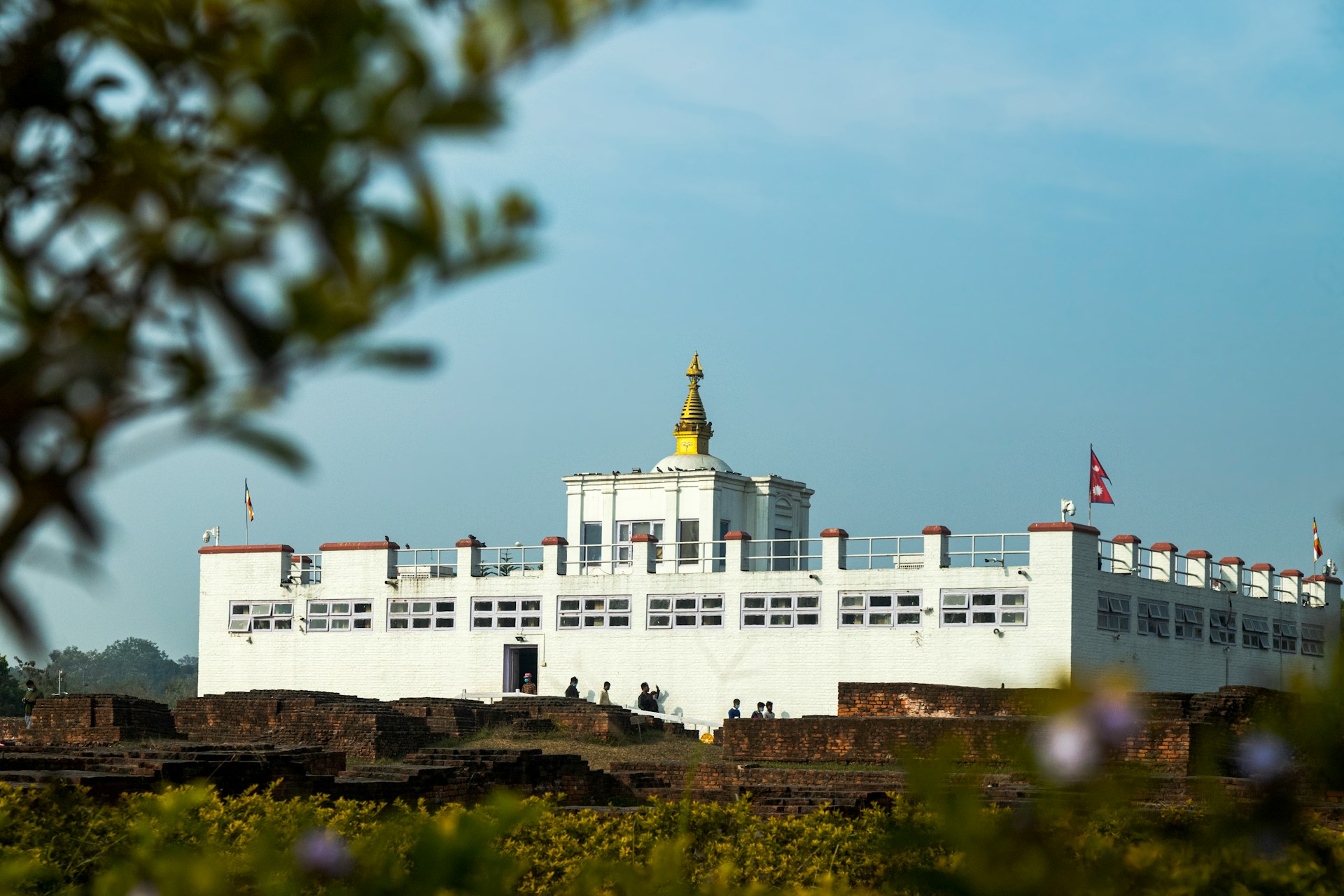
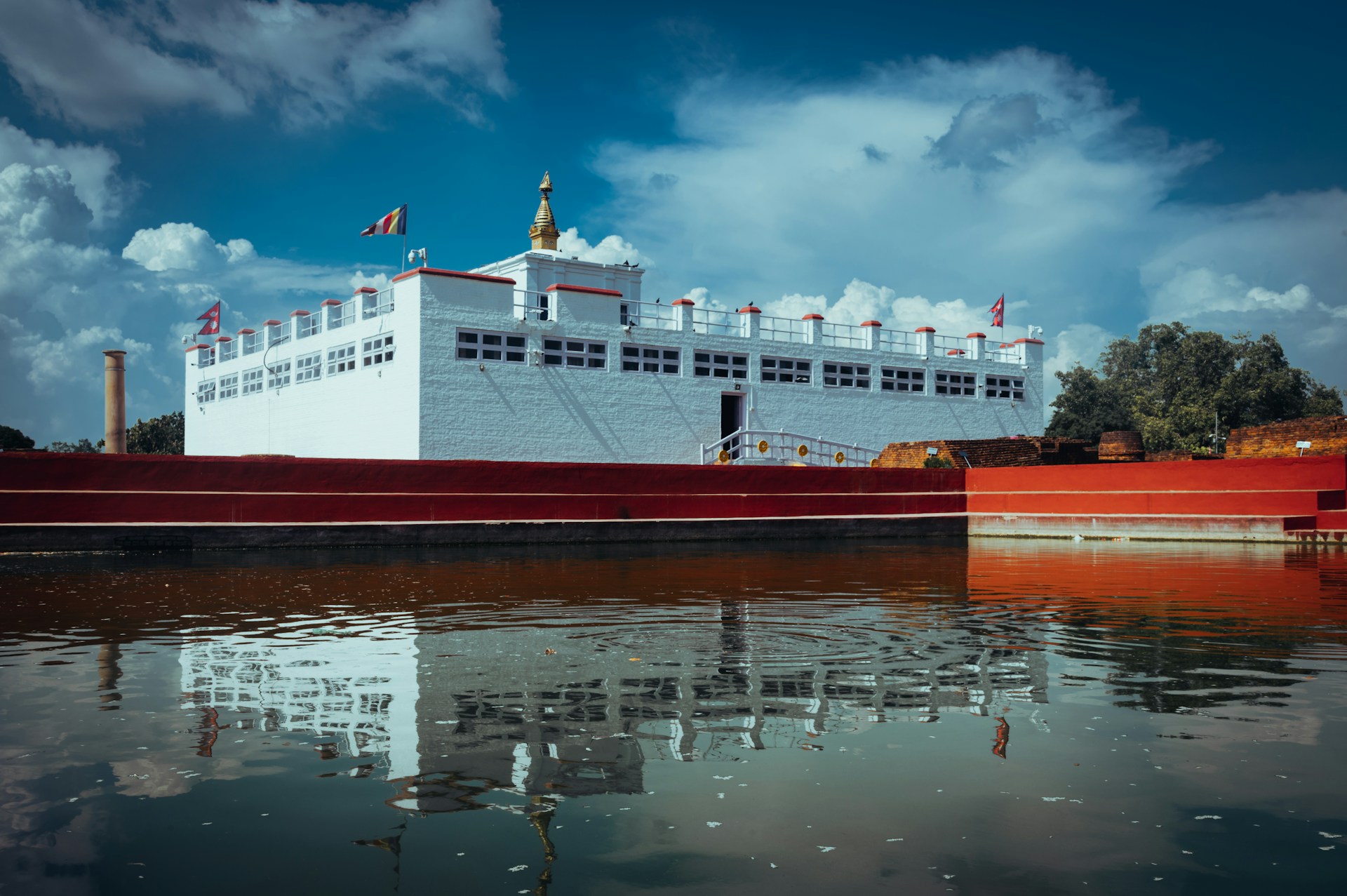
- Maya Devi Temple — stand at the marker stone believed to pinpoint the Buddha’s exact birthplace and see the ancient excavated ruins beneath the shrine.
- The Sacred Garden — walk the tranquil green heart of Lumbini where the most sacred monuments are gathered together.
- Ashoka Pillar — read about the inscription left by Emperor Ashoka in the 3rd century BCE, the epigraphic evidence that confirmed Lumbini as the Buddha’s birthplace.
- Puskarini (Sacred Pond) — see the pool where, by tradition, Queen Maya Devi bathed before the birth and the infant Buddha had his first bath.
- International Monastic Zone — explore a remarkable open-air gallery of monasteries, each reflecting the architecture and devotional style of a different Buddhist nation.
- Buddhist monasteries — step inside living centres of worship, meditation, and monastic life.
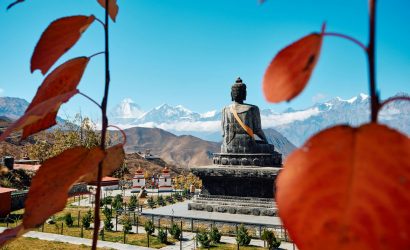
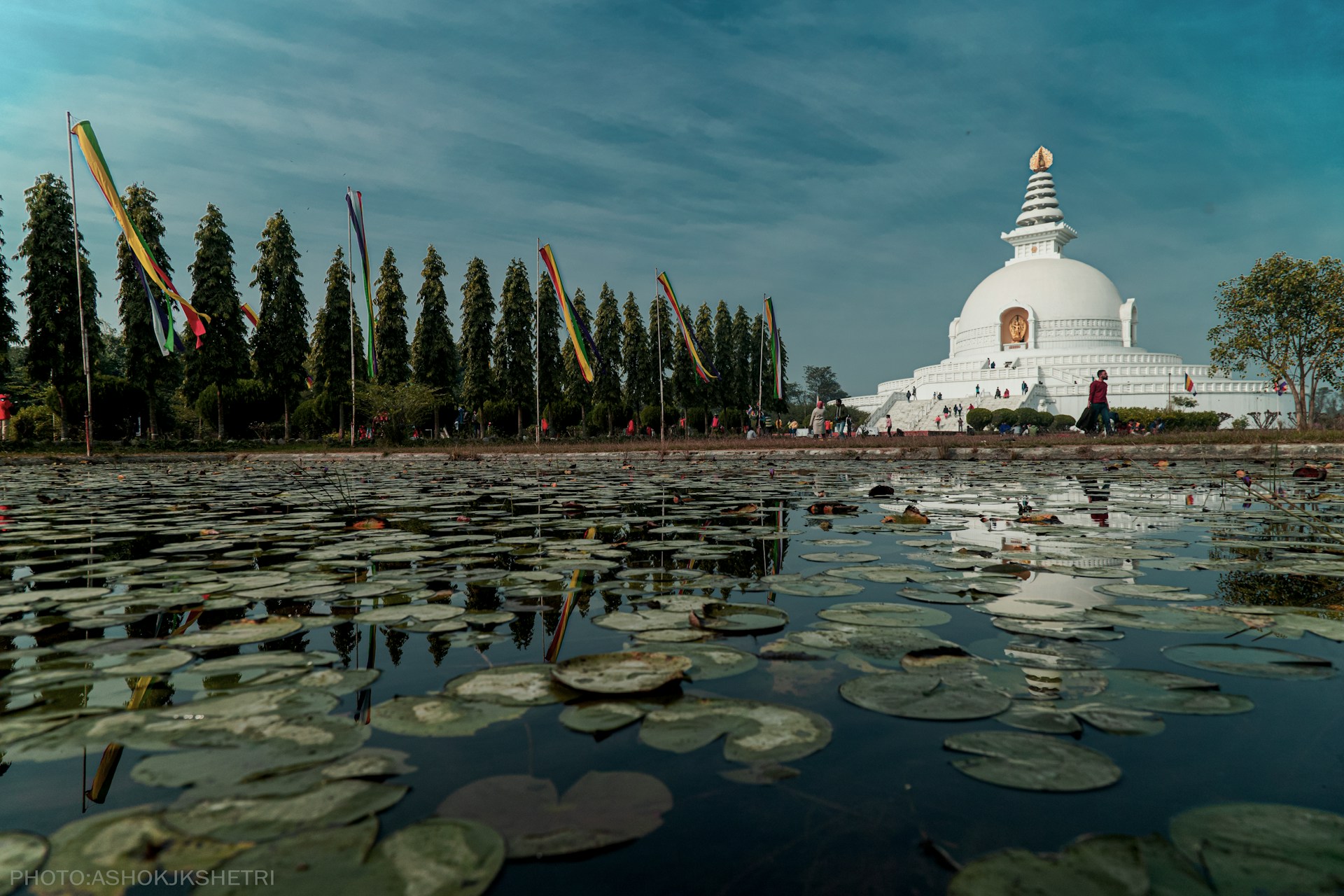
- World Peace Pagoda — visit the striking white stupa built as a symbol of global peace, set slightly apart in peaceful surroundings.
- Lumbini Museum — deepen your understanding through artefacts, models, and materials tracing the site’s history and archaeology.
- Local culture and villages — glimpse everyday life in the Terai, where farming communities live around one of the world’s great pilgrimage sites.
- Optional Kapilvastu / Tilaurakot visit — extend your journey to the ruins associated with the palace where Prince Siddhartha spent his early years.
Detailed 3-Day Lumbini Tour Itinerary
This 3-day package gives you time to absorb Lumbini properly — the sacred core, the full monastic zone, and the ancient ruins of Kapilvastu — without rushing. The flow below is described in general terms; exact timings, overnight choices, and inclusions depend on your starting point and will be confirmed in your personalised itinerary.
Day 1 — Arrival & the Sacred Garden
- Arrive in Lumbini / Bhairahawa (by domestic flight to Gautam Buddha International Airport, or by road) and settle in.
- In the afternoon, enter the spiritual heart of the site: the Maya Devi Temple, marking the Buddha’s exact birthplace, and the surrounding Sacred Garden.
- See the ancient Ashoka Pillar and the Puskarini (Sacred Pond) nearby.
- End the day with optional evening prayers or quiet reflection as the monasteries settle into calm.
- Overnight in the Lumbini area.
Day 2 — International Monastic Zone, Peace Pagoda & Museum
- Spend an unhurried day exploring the International Monastic Zone, where monasteries built by Buddhist nations across the world — Thailand, Myanmar, China, Sri Lanka, Vietnam and more — stand side by side in their own distinctive styles.
- Visit the striking white World Peace Pagoda, a symbol of global peace set in peaceful surroundings.
- Explore the Lumbini Museum to trace the site’s history and archaeology.
- Leave time for meditation, photography, and simply absorbing the atmosphere.
- Overnight in the Lumbini area.
Day 3 — Kapilvastu / Tilaurakot & Departure
- Take a morning excursion to Tilaurakot (ancient Kapilvastu), associated with the palace where the young Prince Siddhartha spent his early years, along with nearby archaeological sites.
- Return to Lumbini / Bhairahawa for departure — flying or driving onward, or continuing to Pokhara, Chitwan, or Kathmandu as arranged.
Meals, overnight accommodation, and exact routing depend on the package you select. We will confirm all details in your personalised itinerary.
What You Will Experience
Lumbini is felt as much as it is seen. From the moment you enter the Sacred Garden, the pace changes — traffic and noise give way to birdsong, prayer flags, and the low murmur of chanting drifting from the monasteries.
You will experience a spiritual atmosphere unlike anywhere else in Nepal: pilgrims circling the Maya Devi Temple, monks in robes of maroon, saffron, and grey, and butter lamps flickering in the shade. The Buddhist heritage here is not a museum piece but a living tradition, practised daily.
The ancient history is tangible — brick foundations excavated over decades, the Ashoka Pillar standing where an emperor once knelt, and archaeological layers reaching back millennia. The architecture of the monastic zone is a highlight in itself: a Thai monastery gleaming in gold, a Chinese temple with sweeping tiled roofs, a German-supported stupa, each an invitation to pause.
For those seeking calm, Lumbini offers space for meditation and quiet reflection among gardens, ponds, and shaded walkways. For photographers, the light on the World Peace Pagoda at dawn, the symmetry of the monasteries, and the faces of pilgrims provide endless material. And for pilgrims, this is the first of the four great sites of the Buddha’s life — a place that completes a lifelong spiritual journey.
Who Is This Tour For?
Lumbini welcomes a wide range of travellers, and our packages can be shaped for each.
| Traveller | Why Lumbini Suits You |
|---|---|
| Buddhist pilgrims | Visit the sacred birthplace of the Buddha, one of the four holiest sites in Buddhism. |
| First-time Nepal visitors | Experience Nepal’s cultural and spiritual depth beyond the mountains. |
| Families | Flat, walkable grounds and a calm environment suited to travelling with children. |
| Couples | A peaceful, reflective setting for a meaningful shared journey. |
| Senior travellers | Gentle terrain and flexible pacing; site vehicles ease the longer distances. |
| Solo travellers | A safe, contemplative destination with plenty to explore at your own rhythm. |
| Photographers | Striking architecture, atmospheric light, and expressive pilgrim life. |
| Culture & history enthusiasts | Layers of archaeology, epigraphy, and living tradition in one site. |
| Spiritual travellers | Space for meditation, reflection, and quiet away from the crowds. |
Best Time to Visit Lumbini
Lumbini sits in the low-lying Terai, so its climate differs from Nepal’s hill and mountain regions. In general, the cooler and drier months are the most comfortable for sightseeing, though the site can be visited year-round. Conditions vary from year to year — check a current forecast close to your travel dates.
| Season | Months (approx.) | What to Expect |
|---|---|---|
| Autumn | October–November | Widely considered the best time — clear skies, pleasant temperatures, and comfortable sightseeing. |
| Spring | February–April | Warm and generally pleasant early on, growing hotter toward late spring; good visibility. |
| Winter | December–January | Cool and comfortable by day; mornings can be cold and foggy in the Terai. |
| Monsoon / Summer | May–September | Hot and humid, with monsoon rains from roughly June onward; fewer crowds but travel can be affected by weather. |
In short: October to March generally offers the most comfortable weather for a Lumbini tour. If you travel in the monsoon or peak summer, plan for heat, humidity, and possible rain.
How to Reach Lumbini
Lumbini lies in Nepal’s southern Terai, near the town of Bhairahawa (Siddharthanagar) in Rupandehi District, close to the Indian border. Travellers reach it by road or by domestic flight; the practical choice depends on your starting point.
From Kathmandu
- By road: A long overland journey across the hills to the Terai — commonly around 8–9 hours or more by private vehicle or tourist bus, depending on road and traffic conditions. Some travellers break the trip in Pokhara or elsewhere.
- By air: Domestic flights connect Kathmandu with Gautam Buddha International Airport (Bhairahawa, BWA), followed by a short drive to Lumbini. Flying dramatically shortens the journey. Confirm current schedules and airlines when booking.
From Pokhara
- By road: A shorter overland route than from Kathmandu — commonly around 5–6 hours by private vehicle, depending on conditions. This makes it easy to combine Pokhara and Lumbini in one trip.
- By air: Domestic flights are also available on some routings via Bhairahawa; confirm availability.
Via Bhairahawa / Gautam Buddha International Airport (BWA)
Bhairahawa’s Gautam Buddha International Airport is the gateway to Lumbini, only a short drive from the Sacred Garden. It handles regular domestic flights (notably to and from Kathmandu and Pokhara). Direct international service has so far been limited and intermittent, with routes added and paused over time — so if you hope to fly in internationally, verify current, scheduled flights well before you book. Most international visitors still arrive via Kathmandu.
Tip: For most travellers, the smoothest option is a domestic flight from Kathmandu or Pokhara to Bhairahawa, then a short private transfer to Lumbini. We can arrange transport end to end.
Lumbini Tour Cost
The cost of a Lumbini tour package is not fixed — it is built from your choices. Rather than a single sticker price, think of it as a combination of the factors below.
- Number of travellers — private tours per person often cost less as group size grows.
- Number of days — a day tour, a two-day trip, and a three-day Kapilvastu extension differ significantly.
- Transportation — private vehicle, tourist bus, or domestic flights each carry different costs.
- Accommodation category — from simple guesthouses to higher-comfort hotels.
- Guide services — a dedicated English-speaking (or other language) guide.
- Meals — how many meals are included.
- Private vs. group tour — private tours offer flexibility; shared tours can reduce cost.
- Additional sightseeing — extensions to Kapilvastu/Tilaurakot, Pokhara, Chitwan, or Kathmandu.
Contact us for a customised Lumbini tour package and a current quotation based on your dates, group size, and preferences.
What’s Included
Typical inclusions — actual inclusions depend on the package you select and will be confirmed in your itinerary.
- Private tourist vehicle / transportation as per itinerary
- Experienced English-speaking guide (other languages on request, subject to availability)
- Accommodation (if applicable to the selected package)
- Airport / transport transfers (if applicable)
- Sightseeing as per the itinerary
- Applicable government taxes and service charges (where relevant)
What’s Not Included
- International airfare
- Nepal visa fees
- Personal expenses (laundry, phone, drinks, souvenirs, etc.)
- Travel insurance
- Tips and gratuities
- Meals not specified in the itinerary
- Optional activities and entrance fees not listed as included
- Anything not explicitly mentioned under “What’s Included”
Please review your final itinerary carefully — we will clearly confirm what is and is not included for your specific package.
Travel Tips for Lumbini
A little preparation makes a Lumbini visit smoother and more respectful of its sacred character.
- Dress modestly. Cover shoulders and knees, especially at temples and monasteries. Light, breathable clothing suits the Terai heat.
- Respect religious sites. Remove shoes where required, keep your voice low, and follow signs and local guidance. Do not touch or lean on shrines and artefacts.
- Ask before photographing monks, worshippers, or the interiors of active temples — some areas prohibit photography.
- Be ready to walk. The site is large; comfortable footwear is essential. Cycle-rickshaws and electric vehicles help cover longer distances.
- Stay hydrated and carry water, particularly in warmer months.
- Protect yourself from the sun with a hat, sunglasses, and sunscreen — much of the site is open.
- Slip-on footwear helps, since you’ll remove shoes at several shrines.
- Carry your travel documents and any required permits or tickets; keep a copy separately.
- Consider travel insurance that covers your full itinerary in Nepal.
- Travel responsibly — dispose of waste properly, support local communities, and tread lightly at this heritage site.
Frequently Asked Questions
What is included in a Lumbini Tour Package? Most Lumbini tour packages include private transportation, an experienced English-speaking guide, and guided sightseeing across the Sacred Garden and monastic zone. Accommodation, transfers, and meals may be included depending on the package. Inclusions vary, so always review your specific itinerary. International airfare, visa fees, insurance, and personal expenses are usually excluded.
How many days are enough for Lumbini? Three days is ideal for a complete, unhurried experience. It gives you time for the Sacred Garden and Maya Devi Temple, a full exploration of the international monastic zone and museum, and a visit to the ancient ruins of Kapilvastu/Tilaurakot — the deeper Buddhist and historical highlights that shorter visits usually miss.
What is the best time to visit Lumbini? October to March generally offers the most comfortable weather, with October and November especially pleasant. Winter days are cool and clear, though Terai mornings can be foggy. The monsoon and peak summer (roughly May–September) are hot and humid with rain. Check a current forecast close to your travel dates.
How do I travel from Kathmandu to Lumbini? You can travel by road — commonly around 8–9 hours or more by private vehicle or tourist bus — or by domestic flight to Gautam Buddha International Airport in Bhairahawa, followed by a short drive to Lumbini. Flying is far quicker. We can arrange either option and confirm current schedules.
Is Lumbini suitable for family travel? Yes. Lumbini’s flat, walkable grounds, calm atmosphere, and cultural richness make it well suited to families. The pace is gentle and the environment peaceful. Site vehicles and rickshaws help with longer distances, making it comfortable for children and older relatives alike.
What does the 3-day Lumbini package cover? Day 1 covers the Sacred Garden, Maya Devi Temple, Ashoka Pillar, and Sacred Pond. Day 2 explores the international monastic zone, World Peace Pagoda, and Lumbini Museum. Day 3 includes an excursion to Kapilvastu/Tilaurakot before departure. It’s a relaxed pace with time for reflection and photography throughout.
What are the main attractions in Lumbini? The highlights include the Maya Devi Temple (marking the Buddha’s birthplace), the Sacred Garden, the Ashoka Pillar, the Puskarini Pond, the International Monastic Zone with monasteries from many nations, the World Peace Pagoda, and the Lumbini Museum. Nearby Kapilvastu/Tilaurakot can be added.
Can I combine Lumbini with Kathmandu and Pokhara? Absolutely. Lumbini pairs naturally with Pokhara (a shorter road journey) and Kathmandu, and many travellers build a wider Nepal itinerary that also includes Chitwan. We can design a combined route that flows logically and suits your available time.
Is Lumbini suitable for senior travellers? Yes. The terrain is flat and the atmosphere unhurried, which suits older travellers well. Cycle-rickshaws and electric vehicles ease the longer walking distances across the site, and private tours allow a comfortable, flexible pace with rest as needed.
Can I customise a Lumbini tour package? Yes. Our Lumbini tours are fully customisable — you can adjust the number of days, choice of transport and accommodation, meals, and add-ons such as Kapilvastu, Pokhara, or Chitwan. Tell us your dates, group size, and interests, and we’ll tailor the itinerary and quotation.
What should I wear when visiting Buddhist sites? Dress modestly, covering shoulders and knees at temples and monasteries. Choose light, breathable clothing for the Terai heat, and slip-on footwear you can easily remove at shrines. Modest, respectful dress honours the sacred character of the site.
How much does a Lumbini tour cost? There’s no single fixed price — cost depends on group size, number of days, transport, accommodation, meals, and whether the tour is private or shared. Contact us with your details for a customised quotation reflecting current rates.
Explore More of Nepal
Pair your Lumbini journey with other destinations across the country:
- Nepal Tours — browse our full range of cultural and adventure itineraries.
- Kathmandu Tour — explore the valley’s UNESCO heritage sites and great stupas.
- Pokhara Tour — lakes, mountain views, and a natural pairing with Lumbini.
- Chitwan Tour — jungle safari and wildlife in Nepal’s Terai.
- Buddhist Pilgrimage Tour — connect Lumbini with Nepal’s wider Buddhist heritage.
- Nepal Cultural Tour — dive deeper into the country’s living traditions.
- Nepal Trekking Packages — for those combining pilgrimage with the mountains.
- Everest Base Camp Trek — Nepal’s iconic high-altitude adventure.
- Annapurna Base Camp Trek — accessible from Pokhara, close to Lumbini.
- Nepal Travel Guide — practical planning tips for your whole trip.
Plan Your Lumbini Journey With Us
Whether you are travelling for pilgrimage, cultural discovery, or a peaceful escape, our team can design a Lumbini tour around your schedule, interests, and budget. From a focused day tour to a three-day exploration of Lumbini and Kapilvastu, we handle the logistics so you can focus on the experience.
Contact our Nepal travel experts today to customise your Lumbini Tour Package and request a current quotation.