
-
Bus, Airlines
-
3 Star Hotel
-
5,416 metres
-
Kathmandu
-
Feb, Mar, Apr & May
-
Eco-Tour, Hiking
-
All meals during the trek
-
English, Spanish, French, Chinese
-
Easy to Moderate
-
2-15
-
12
-
65
Overview
Muktinath Darshan is one of Nepal’s most significant pilgrimage journeys, taking travelers to the sacred Muktinath Temple (3,710m) in the Mustang region — a site revered equally by Hindus and Buddhists. For Hindus, Muktinath (“place of liberation”) is one of the 108 Divya Desams, sacred Vishnu temples, and is believed to grant moksha (liberation from the cycle of rebirth) to those who visit. For Buddhists, it’s known as Chumig Gyatsa and holds deep significance as one of the 24 Tantric places in the Himalayan Buddhist tradition.
Unlike many Himalayan treks that are purely scenic, a trip to Muktinath is fundamentally a pilgrimage — though it also passes through some of Nepal’s most dramatic high-desert landscapes, with the Kali Gandaki Gorge, views of Dhaulagiri and Annapurna, and the arid, Tibetan-influenced culture of Upper Mustang along the way. It can be done as a fast-paced jeep/flight pilgrimage tour (as short as 3–4 days) or as part of the classic Annapurna Circuit trek (12–16 days), making it flexible for both devotees on a tight schedule and trekkers wanting the full Himalayan experience.
Why Visit Muktinath?
Sacred to two major religions: One of the few pilgrimage sites in the world equally significant to both Hindus and Buddhists.
Flexible trip style: Reachable by trek, jeep, or a combination of flight and drive — adaptable to time constraints and physical ability.
108 water spouts and eternal flame: The temple complex features 108 bull-head-shaped water spouts and a rare natural gas flame that burns alongside water, seen as a miraculous sign.
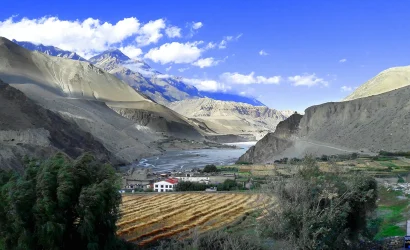
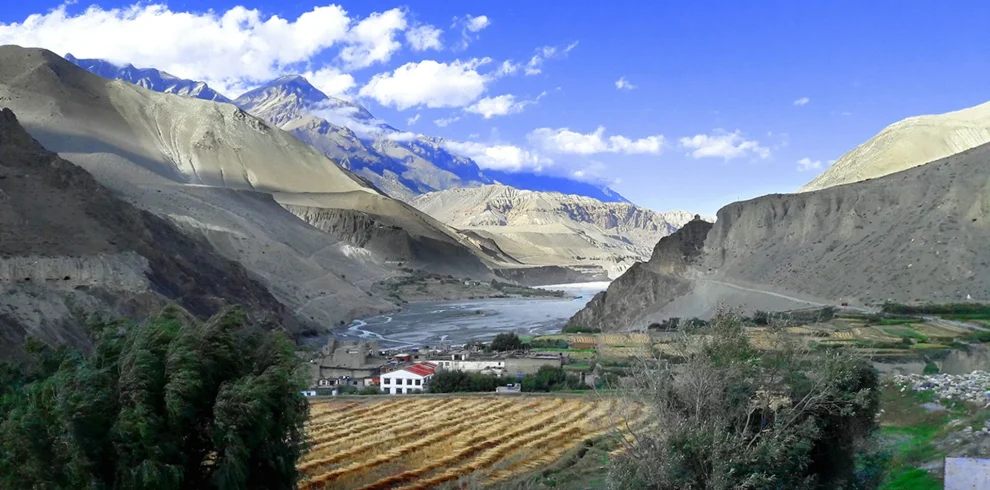
Dramatic Mustang scenery: Passes through the world’s deepest gorge (Kali Gandaki) with Dhaulagiri and Annapurna towering on either side.
Combinable with Annapurna Circuit: Can be trekked as the climactic high point of the full Annapurna Circuit for those wanting a complete trekking experience.
Accessible year-round: Unlike many high-altitude treks, Muktinath is reachable in most seasons, including winter, via jeep.
Difficulty Level
Overall Rating: Easy to Moderate (varies significantly by route chosen)
Muktinath’s difficulty depends heavily on how you choose to get there:
By jeep/drive (Easy):
Minimal physical exertion — mostly vehicle travel with short walks around the temple complex. Suitable for pilgrims of all ages and fitness levels, including elderly travelers, provided they’re comfortable with long, bumpy mountain roads and moderate altitude.
By flight + short trek (Easy–Moderate):
Fly to Jomsom, then trek 1–2 days to Muktinath (roughly 15km, gradual ascent). A good middle-ground option — limited walking with some altitude adjustment built in.
Via full Annapurna Circuit trek (Strenuous):
Reaching Muktinath from the Manang side involves crossing Thorong La Pass (5,416m), one of the highest and most demanding passes on any regularly trekked route in Nepal. This is a serious high-altitude trek requiring good fitness, prior trekking experience, and proper acclimatization over 10+ days before the pass crossing.
Key difficulty factors:
Altitude: Muktinath sits at 3,710m; Thorong La (if crossed) reaches 5,416m — a significant jump requiring careful acclimatization
Road conditions: The jeep route from Pokhara/Jomsom involves rough, unpaved mountain roads, especially beyond Jomsom
Weather exposure: Mustang is a high-desert region — strong winds are common in the afternoons, and temperatures swing sharply between day and night
Who is this trip suitable for?
Pilgrims and travelers of all fitness levels (via jeep/flight route), moderately fit trekkers wanting a shorter Mustang experience, and experienced trekkers seeking the full Annapurna Circuit with Thorong La crossing.
Altitude Sickness & Acclimatization
Because many travelers reach Muktinath quickly by flight or jeep, altitude sickness risk is real despite the trip’s relative accessibility — rapid ascent to 3,710m without gradual acclimatization is one of the more common causes of mild AMS on this route.
For jeep/flight travelers: Even though physical exertion is low, altitude gain is rapid. Watch for headache, nausea, and fatigue; avoid overexertion on arrival day and stay hydrated.
For Annapurna Circuit trekkers: Standard acclimatization protocols apply, with rest days built in around Manang (3,540m) before the push toward Thorong La (5,416m) — this is the most altitude-critical stretch of the entire circuit.
Prevention: Ascend gradually where possible, avoid alcohol, consider Diamox after consulting a doctor, and ensure travel insurance covers high-altitude evacuation.
Best Seasons to Visit
Autumn (September–November) — Best Overall
Clear skies, stable weather, and excellent mountain visibility. The most popular season for both trekking the Annapurna Circuit and jeep/flight pilgrimage trips.
Spring (March–May) — Excellent
Good visibility, moderate temperatures, and blooming rhododendrons at lower elevations en route. A strong alternative to autumn with fewer crowds.
Winter (December–February) — Accessible, Cold
Unlike many high-altitude treks, Muktinath remains reachable by jeep in winter (weather permitting), though Thorong La may close to trekkers due to snow. Jomsom flights can also face weather delays. Good option for jeep-only pilgrims avoiding peak-season crowds.
Monsoon (June–August) — Doable via Jeep, Difficult via Trek
Mustang lies in a rain shadow, so it receives far less monsoon rainfall than most of Nepal, making jeep travel relatively feasible. However, flight delays to Jomsom are common due to clouds, and trekking routes elsewhere on the Annapurna Circuit face monsoon conditions.
Route-specific note: Because Mustang sits in Annapurna’s rain shadow, it’s one of the few regions in Nepal reasonably visitable in the monsoon — a useful selling point for clients traveling in June–August.
Cost Breakdown
Option A: Jeep Tour from Pokhara (3–4 Days)
Item
Estimated Cost (USD)
Notes
Annapurna Conservation Area Permit (ACAP)
$30
Required for all routes into Mustang
TIMS Card
$20
Required
Private Jeep (Pokhara–Muktinath–Pokhara)
$250–350 total
Shared jeep options cheaper (~$40–60/person each way)
Accommodation (Jomsom/Muktinath)
$10–20/night
Basic guesthouses
Meals
$15–20/day
Standard mountain menu pricing
Guide (optional but recommended)
$25–30/day
Not strictly required for jeep tours
Estimated Total (per person, shared jeep)
$250–400
Based on shared transport
Option B: Flight + Short Trek from Pokhara (4–5 Days)
Item
Estimated Cost (USD)
Notes
Pokhara–Jomsom Flight (round trip)
$200–260
Subject to weather delays
ACAP + TIMS
$50
Same as above
Guide
$25–30/day
Recommended for trekking portion
Porter
$20–25/day
Optional
Accommodation & Meals
$20–30/day
Combined
Estimated Total (per person)
$450–600
Option C: Full Annapurna Circuit with Muktinath (12–16 Days)
Item
Estimated Cost (USD)
Notes
ACAP + TIMS
$50
Guide
$25–30/day
Essential for Thorong La crossing
Porter
$20–25/day
Recommended
Accommodation & Meals
$20–30/day
Rises near Thorong La
Return Transport (Jomsom flight or jeep from Muktinath side)
$200–260
Estimated Total (per person)
$900–1,300
Full circuit package
Note: Prices vary by group size, season, and service level. Private vehicle/guide arrangements cost more per person than shared/group options.
Detailed Itinerary
Option A: Jeep Tour (3–4 Days)
Day 1: Drive from Kathmandu to Pokhara (6–7 hours) or fly (25 minutes). Overnight in Pokhara.
Day 2: Early morning jeep drive from Pokhara to Muktinath via Jomsom (8–10 hours on rough mountain roads). Visit Muktinath Temple in the afternoon/evening. Overnight in Muktinath or Jomsom.
Day 3: Morning darshan at Muktinath Temple (if not done Day 2), explore the area, then drive back to Pokhara.
Day 4: Return to Kathmandu by drive or flight.
Option B: Flight + Short Trek (4–5 Days)
Day 1: Kathmandu to Pokhara.
Day 2: Early morning flight from Pokhara to Jomsom (25 minutes); short trek to Kagbeni or directly toward Jharkot.
Day 3: Trek from Kagbeni/Jharkot to Muktinath (4–5 hours), visit temple complex.
Day 4: Explore Muktinath and surrounding areas (Jharkot, Ranipauwa); trek/drive back to Jomsom.
Day 5: Flight back to Pokhara, then onward to Kathmandu.
Option C: Full Annapurna Circuit with Muktinath Darshan (12–16 Days)
Standard Annapurna Circuit route from Besisahar/Chame through Manang, crossing Thorong La Pass (5,416m) to reach Muktinath from the eastern side, followed by descent through Jomsom and either a flight or jeep back to Pokhara.
Accommodation & Food
Accommodation: Ranges from basic teahouses in Muktinath/Jomsom to more comfortable guesthouses in Jomsom (which sees more tourist infrastructure than most high-altitude trekking towns). Pokhara and Kathmandu offer full hotel range before/after the trip.
Food: Standard Nepali/Tibetan teahouse fare — dal bhat, noodle dishes, momos, soups — plus more varied options in Jomsom given its larger tourist base. Bottled and boiled water widely available, though purification tablets/filters are recommended for cost savings.
Permits Required
Annapurna Conservation Area Permit (ACAP) – $30 per person, required for all routes (jeep, trek, or flight) entering the Annapurna Conservation Area, which includes Muktinath and Mustang
TIMS Card – $20 per person
Note: Upper Mustang (further north of Muktinath, toward Lo Manthang) requires a separate special restricted-area permit — this is not needed for a standard Muktinath Darshan trip, only if extending further into Upper Mustang.
Packing List
Clothing
Warm layers (fleece, down jacket) — Mustang gets cold, especially mornings/evenings
Windproof outer layer — the region is known for strong afternoon winds
Comfortable walking shoes or trekking boots (hiking boots if doing the trek option)
Sun hat, sunglasses (high-altitude sun exposure is intense)
Warm hat and gloves
Gear
Daypack
Reusable water bottle + purification tablets
Basic first-aid kit, including altitude sickness medication if advised
Power bank (Jomsom/Muktinath have limited/paid charging)
Dust mask or buff (jeep roads can be dusty)
For Pilgrims Specifically
Comfortable clothing suitable for temple visits and any planned rituals
Cash in Nepali Rupees for temple donations/offerings
Light layers that can be removed easily (some rituals involve bathing in the 108 spouts, which is done partially clothed)
Cultural & Religious Significance
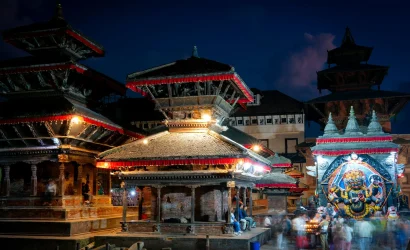
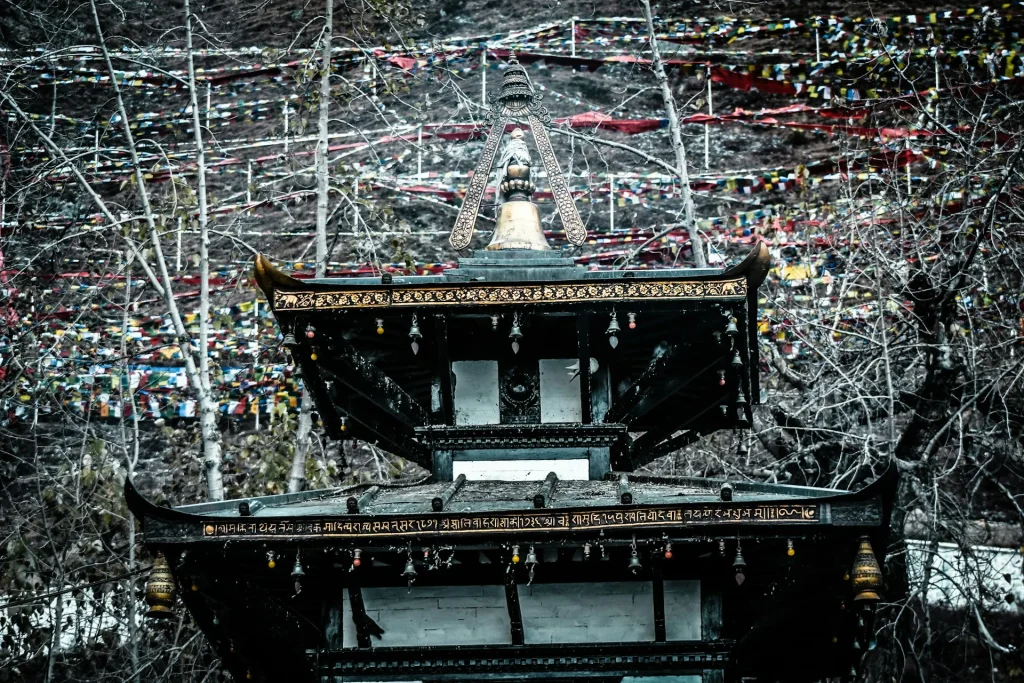
Muktinath — meaning “place of liberation” (Mukti = liberation, Nath = lord) — is one of the 108 Divya Desams, sacred Vishnu temples central to Vaishnavite Hindu tradition, and is considered one of the holiest pilgrimage sites in the Himalayas. The temple complex includes 108 bull-head-shaped stone spouts fed by natural spring water, where pilgrims traditionally bathe as an act of purification and spiritual liberation.
A distinctive feature of the site is the presence of a natural gas flame burning continuously beside a spring — the coexistence of fire and water is regarded as a sacred and rare phenomenon, reinforcing the site’s mystical reputation.
For Tibetan Buddhists, the site is known as Chumig Gyatsa (“Hundred Waters”) and is one of the 24 Tantric places associated with Buddhist pilgrimage traditions, particularly significant to the Nyingma and Kagyu lineages. The temple itself, along with the nearby Jwala Mai Temple (housing the eternal flame), is jointly maintained and visited by both religious communities — a rare example of shared sacred space in the Himalayan region.
Muktinath vs. Other Pilgrimage & Short Trips in Nepal
Trip
Duration
Max Altitude
Difficulty
Best For
Muktinath Darshan (Jeep)
3–4 days
3,710m
Easy
Pilgrims, limited time/fitness
Muktinath (Flight + Trek)
4–5 days
3,710m
Easy–Moderate
Balance of trekking + convenience
Muktinath via Annapurna Circuit
12–16 days
5,416m (Thorong La)
Strenuous
Full trekking experience
Gosaikunda Trek
7–9 days
4,380m
Moderate
Alpine lake pilgrimage
Manakamana Darshan
1 day
1,302m
Very Easy
Short pilgrimage near Kathmandu
Muktinath stands out among Nepal’s pilgrimage sites for its flexibility — it’s one of the few high-altitude sacred sites accessible to travelers with limited time or mobility (via jeep), while still offering a full high-altitude trekking challenge for those who want it (via Thorong La).
FAQs
Q: Can Muktinath be visited without trekking?
A: Yes. Muktinath is accessible by jeep from Pokhara via Jomsom, requiring minimal walking — making it suitable for pilgrims of all fitness levels and ages.
Q: How many days are needed for Muktinath Darshan?
A: A jeep tour from Pokhara takes 3–4 days round trip; a flight-plus-trek option takes 4–5 days; the full Annapurna Circuit route takes 12–16 days.
Q: Is Muktinath open year-round?
A: Yes, via jeep. Trekking routes (especially Thorong La) can close in heavy winter snow, but the jeep route through Jomsom generally remains accessible.
Q: Why is Muktinath significant to both Hindus and Buddhists?
A: It’s one of the 108 sacred Vishnu temples (Divya Desams) in Hindu tradition and one of the 24 Tantric pilgrimage sites in Tibetan Buddhism, making it a rare shared sacred site.
Q: What is the significance of the 108 water spouts?
A: Pilgrims traditionally bathe under all 108 spouts as an act of purification, believed to cleanse sins and aid spiritual liberation (moksha).
Q: Do I need a guide for a jeep tour to Muktinath?
A: Not strictly required for a jeep tour, though a guide adds cultural/religious context and helps navigate permits and logistics. A guide is strongly recommended for the trekking or Annapurna Circuit routes.
Q: What permits are required for Muktinath?
A: The Annapurna Conservation Area Permit (ACAP) and TIMS Card are required for all routes.
Q: Is Muktinath suitable for elderly travelers?
A: Yes, via the jeep route — it involves minimal walking, though the altitude and long drive on rough roads should still be considered for those with health conditions.
Highlights
- Trek to the world-famous Everest Base Camp
- Enjoy the amazing view of the Himalayas from Kala Patthar
- Travel through the Sherpa villages of Namche, Khumjung, Khunde, and Dingboche
- Visit Tengboche the biggest and oldest monastery n the region.