

-
Bus, Airlines
-
Home Stay
-
5,416 metres
-
Kathmandu
-
Feb, Mar, Apr & May
-
Eco-Tour, Hiking
-
All meals during the trek
-
English, Spanish, French, Chinese
-
Easy to Moderate
-
2-15
-
12
-
65
Overview
The Upper Mustang Trek ventures into one of Nepal’s most remote and culturally distinct regions — a former independent Buddhist kingdom that remained closed to foreigners until 1992, earning it the nickname “The Forbidden Kingdom.” Geographically and culturally more aligned with the Tibetan Plateau than the rest of Nepal, Upper Mustang is a high-altitude desert of wind-carved canyons, red-and-ochre cliffs, ancient cave dwellings, and centuries-old monasteries.
The trek’s centerpiece is Lo Manthang, the walled former royal capital, home to a centuries-old palace, monasteries, and a living Tibetan Buddhist culture that has remained largely unchanged for generations. Because Upper Mustang lies in the rain shadow of the Annapurna and Dhaulagiri ranges, it’s trekkable even during the monsoon season — a rare advantage that makes it a strong option for travelers visiting Nepal in June–August. As a restricted area, it requires a special permit and typically a minimum group arrangement, giving it a more exclusive, lower-traffic feel compared to Nepal’s more mainstream trekking routes.
Why Trek to Upper Mustang?
A former forbidden kingdom: Closed to outsiders until 1992, offering a rare, well-preserved Tibetan Buddhist culture found in few other accessible places
Trekkable in monsoon: Sits in the rain shadow of the Himalaya, making it one of the only major treks viable June–August
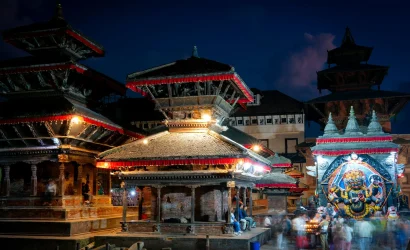
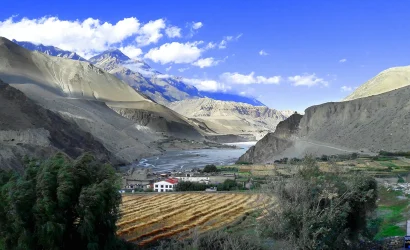
Dramatic desert landscapes: Wind-eroded canyons, red cliffs, and Tibetan-style chortens set this apart visually from Nepal’s greener trekking regions
Lo Manthang’s walled city: A genuine living heritage site with a centuries-old royal palace and monastery complex
Ancient sky caves: Mystery-shrouded cliffside cave dwellings, some dating back over 2,000 years, still being studied by archaeologists
Lower foot traffic: Restricted-area status keeps visitor numbers far lower than Everest or Annapurna routes
Jeep or trek options: Increasingly accessible by 4WD for those with time constraints, alongside the traditional trekking route
Difficulty Level
Overall Rating: Moderate
Upper Mustang is a high-altitude trek but without extreme elevations or technical passes, making it moderate overall — the challenge comes more from terrain, wind exposure, and remoteness than sheer altitude gain.
Key difficulty factors:
Altitude: Maximum elevation around 3,840m (Lo Manthang) to 4,010m at higher viewpoints — high but not extreme compared to passes like Thorong La or Cho La
Daily walking hours: 5–6 hours per day on average over varied but generally gentle terrain
Terrain: Rocky, arid trails with significant up-and-down over ridgelines; well-defined paths, no technical climbing
Wind exposure: Afternoons in Mustang are notoriously windy — treks are typically scheduled to cover ground in the mornings
Remoteness: Fewer teahouses and services than Everest/Annapurna, requiring more self-sufficiency and planning
Recommended fitness preparation:
4–6 weeks of cardio and endurance training
Practice hikes with a loaded daypack
Prior trekking experience helpful but not mandatory for the standard route
Who is this trek suitable for?
Trekkers with moderate fitness and some hiking background, culture-focused travelers prioritizing depth over physical extremity, and those seeking a monsoon-season Himalayan trek.
Altitude Sickness & Acclimatization
Upper Mustang’s elevations (up to ~3,840–4,010m) carry a real but comparatively lower altitude risk than treks reaching 5,000m+.
Symptoms to watch for: headache, fatigue, mild nausea, reduced appetite
Acclimatization approach: The itinerary below allows gradual elevation gain over several days, with Lo Manthang reached only after multiple nights at progressively higher villages
Prevention: Stay hydrated, ascend gradually, avoid overexertion in the first days, consider Diamox after medical consultation
Additional consideration: Wind and dust exposure can cause respiratory irritation separate from altitude — a buff or dust mask is recommended
Best Seasons to Trek
Summer/Monsoon (June–August) — Uniquely Excellent
Upper Mustang’s standout season. While the rest of Nepal is under monsoon rain, Mustang’s rain-shadow position keeps trails dry and skies often clear. A major selling point for clients traveling in these months when most other regions are unsuitable.
Autumn (September–November) — Excellent
Stable weather, good visibility, comfortable daytime temperatures. Popular season alongside spring.
Spring (March–May) — Excellent
Clear skies, moderate temperatures, though windier afternoons than autumn.
Winter (December–February) — Cold, Less Common
Access remains possible (unlike many high-altitude treks) since Mustang sees relatively low snowfall, but temperatures drop sharply, especially at night. Fewer teahouses may be operating.
Note on scheduling: Because of Mustang’s strong afternoon winds, trekking days are typically planned to cover the bulk of walking in the morning, regardless of season.
Cost Breakdown
Item
Estimated Cost (USD)
Notes
Restricted Area Permit (RAP)
$500 for first 10 days, +$50/day after
The dominant cost driver for this trek
Annapurna Conservation Area Permit (ACAP)
$30
Required in addition to RAP
TIMS Card
Not required for restricted areas with RAP
RAP supersedes TIMS for this route
Teahouse Accommodation
$10–15/night
Higher than Annapurna mainstream routes due to remoteness
Meals
$20–30/day
Prices rise with remoteness and imported goods
Guide (mandatory)
$30–35/day
Required by law for restricted areas
Porter
$20–25/day
Optional but recommended
Ground Transport (Pokhara–Jomsom or Kathmandu–Pokhara)
$200–260 (flight) or $30–60 (jeep/bus)
Flight faster, jeep cheaper
Estimated Total (per person, 10–12 day trek)
$1,800–2,500
Permit cost heavily influences total
Why Upper Mustang costs more than most treks: The $500 Restricted Area Permit (for the first 10 days, with a $50/day surcharge beyond that) is a fixed government fee designed to limit tourist numbers and fund regional development — this alone makes Upper Mustang one of the pricier treks in Nepal regardless of service level.
Group size impact: Per-person costs decrease meaningfully in larger groups, since guide costs and, in some cases, permit processing fees are shared. A minimum of 2 people is required to obtain the Restricted Area Permit.
Detailed Itinerary
Day 1: Kathmandu to Pokhara
Drive (6–7 hrs) or fly (25 min). Overnight in Pokhara.
Day 2: Pokhara to Jomsom (flight), trek to Kagbeni
Short scenic flight to Jomsom, then a 3-hour trek to Kagbeni (2,800m), the entry checkpoint for Upper Mustang.
Day 3: Kagbeni to Chele
5–6 hours, entering the restricted area proper. First taste of Mustang’s canyon terrain and eroded cliffs.
Day 4: Chele to Syangboche
5–6 hours, crossing two passes (Taklam La and Dajori La), gaining elevation gradually.
Day 5: Syangboche to Ghami
4–5 hours through high desert villages, passing one of Nepal’s longest mani walls.
Day 6: Ghami to Charang
4 hours, visiting Charang’s red monastery and old dzong (fort).
Day 7: Charang to Lo Manthang
4–5 hours, arriving at the walled city — the trek’s cultural centerpiece.
Day 8: Explore Lo Manthang
Full day visiting the royal palace, monasteries (Champa Lhakhang, Thubchen Gompa), and optionally the ancient sky caves nearby.
Day 9: Lo Manthang to Drakmar (or Ghami, route-dependent)
5–6 hours, beginning the return journey via an alternate route for varied scenery.
Day 10: Drakmar to Syangboche/Chhusang
5–6 hours descending back toward Kagbeni.
Day 11: Return to Jomsom via Kagbeni
4–5 hours back to Jomsom.
Day 12: Fly Jomsom to Pokhara, connect to Kathmandu
Return flights and transfer.
(Itinerary can be shortened via jeep support on sections, or extended with side trips to Tsarang, Ghar Gompa, or the Muktinath area.)
Accommodation & Food
Accommodation: Basic teahouses throughout, more limited in number and comfort than Annapurna or Everest routes given the region’s remoteness and lower visitor volume. Lo Manthang has the most developed lodging options in the region. Rooms are simple, often unheated outside common dining areas.
Food: Standard teahouse fare (dal bhat, noodles, soups, Tibetan bread), with noticeably higher prices than more accessible regions due to the cost of transporting goods into Mustang. Local specialties like Tibetan-style dishes and apple products (Mustang is known for apples) are worth trying in Kagbeni and Marpha.
Permits Required
Restricted Area Permit (RAP) – $500 per person for the first 10 days, plus $50/person/day beyond that; only issued to trekkers in groups of 2 or more, arranged through a registered trekking agency with a licensed guide
Annapurna Conservation Area Permit (ACAP) – $30 per person, required as the trek passes through the Annapurna Conservation Area en route to the restricted zone
Important note for clients: Unlike most treks in Nepal, Upper Mustang cannot be done independently — a licensed guide and agency arrangement is legally required to obtain the Restricted Area Permit. Solo trekkers must join or form a group of at least two.
Packing List
Clothing
Warm layers (fleece, down jacket) for cold mornings/nights
Strong windproof outer shell — essential given Mustang’s afternoon winds
Moisture-wicking base layers
Trekking trousers, warm hat, sun hat, gloves
Buff or scarf for dust/wind protection on the face
Footwear
Sturdy, broken-in trekking boots
Camp shoes for evenings
Gear
Sleeping bag rated to -10°C or lower (teahouses can be cold and under-heated)
Trekking poles
Headlamp with spare batteries
Daypack with rain/dust cover
Duffel bag for porter
Health & Safety
First-aid kit with altitude sickness medication
Water purification tablets or filter
High-SPF sunscreen and lip balm (intense high-altitude desert sun)
Personal medications
Miscellaneous
Power bank (limited/paid charging in remote villages)
Cash in Nepali Rupees (very limited ATM access beyond Jomsom)
Dust mask or buff for windy, dusty trail sections
Camera with extra batteries (cold drains batteries faster)
Cultural & Historical Significance
Upper Mustang was an independent kingdom until it was absorbed into Nepal in the 18th century, but it retained its own royal lineage and remained functionally autonomous in cultural terms until relatively recently — the last king (Raja) of Mustang held ceremonial status until his death in 2016. The region’s isolation, only opened to foreign trekkers in 1992, allowed its Tibetan Buddhist traditions, language (a Tibetan dialect), and architecture to remain remarkably intact.
Lo Manthang, the walled capital, houses a centuries-old royal palace and several significant monasteries, including Thubchen Gompa and Champa Lhakhang, known for their ancient murals and statuary. Nearby, the region’s mysterious sky caves — thousands of human-made caves carved into cliff faces, some containing manuscripts, artwork, and human remains dating back over 2,000 years — remain the subject of ongoing archaeological research, with their original purpose still debated among scholars.
The region’s religious and cultural life is closely tied to Tibetan Buddhism, with festivals such as Tiji Festival (held annually in Lo Manthang, typically in May) drawing both pilgrims and travelers to witness elaborate masked dances depicting the mythological victory of good over evil.
Upper Mustang vs. Other Restricted/Remote Treks in Nepal
Trek
Duration
Max Altitude
Difficulty
Permit Type
Upper Mustang Trek
10–12 days
3,840m
Moderate
Restricted Area Permit ($500+)
Muktinath (via Annapurna Circuit)
12–16 days
5,416m
Strenuous
ACAP + TIMS
Manaslu Circuit Trek
14–18 days
5,106m
Strenuous
Restricted Area Permit
Tsum Valley Trek
14–18 days
3,700m
Moderate–Strenuous
Restricted Area Permit
Gosaikunda Trek
7–9 days
4,380m
Moderate
Standard park permit
Upper Mustang stands out among Nepal’s restricted-area treks for its comparatively moderate altitude and terrain, making its highest costs and access restrictions more about cultural preservation than physical extremity — appealing to travelers who want a genuinely off-the-beaten-path experience without EBC- or Manaslu-level physical demands.
FAQs
Q: Why is Upper Mustang called the “Forbidden Kingdom”?
A: It remained closed to outside visitors until 1992 due to its politically sensitive location near the Tibet border and its historically independent status, preserving a distinct Tibetan Buddhist culture.
Q: Is a guide mandatory for Upper Mustang?
A: Yes. Unlike most treks in Nepal, a licensed guide and registered trekking agency are legally required to obtain the Restricted Area Permit.
Q: Can Upper Mustang be trekked during monsoon season?
A: Yes — it’s one of the best monsoon-season treks in Nepal, since the region sits in the rain shadow of the Annapurna and Dhaulagiri ranges.
Q: How difficult is the Upper Mustang Trek compared to Everest Base Camp?
A: Upper Mustang is less physically demanding, with a lower maximum altitude (~3,840m vs. EBC’s 5,364m) and no high mountain passes, though it involves several consecutive days of trekking.
Q: What is the Restricted Area Permit cost for Upper Mustang?
A: $500 per person for the first 10 days, plus $50 per person per day beyond that.
Q: Can I visit Upper Mustang by jeep instead of trekking?
A: Yes, jeep tours to Lo Manthang are increasingly available for those with limited time, though the Restricted Area Permit is still required regardless of transport method.
Q: What is the Tiji Festival?
A: An annual masked-dance festival held in Lo Manthang, typically in May, depicting the mythological triumph of good over evil — a major cultural draw for travelers timing their visit around it.
Q: Do I need prior trekking experience for Upper Mustang?
A: Not strictly necessary given the moderate difficulty, but general fitness and some hiking experience make the multi-day trek more comfortable.
Highlights
- Trek to the world-famous Everest Base Camp
- Enjoy the amazing view of the Himalayas from Kala Patthar
- Travel through the Sherpa villages of Namche, Khumjung, Khunde, and Dingboche
- Visit Tengboche the biggest and oldest monastery n the region.