


-
Hotel
-
Pokhara
-
Spring, Autumn
-
1,650 m
-
BLD
-
Drive
If you’re based in Pokhara and want a short trek that combines a Gurung village stay with one of the region’s best-known viewpoints, the Dhampus Sarangkot Trek covers both in three days.
The route runs from Phedi up to Dhampus village at around 1,650 m, then across to the Sarangkot area, which sits at roughly 1,590–1,600 m and looks straight down over Phewa Lake and Pokhara city. Trek Trove Nepal runs this as a 3-day package at US$180 per person, including a guide, lodge accommodation, and transport.
This page covers the actual daily walking, the route between Dhampus and Sarangkot, what’s included in the US$180 price, and what to expect from weather and mountain visibility, so you know exactly what you’re booking.
Quick Facts about Dhampus Sarangkot Trek
| Detail | Information |
|---|---|
| Trip Name | 3 Days Dhampus Sarangkot Trek |
| Region | Annapurna foothills, near Pokhara |
| Duration | 3 Days |
| Price | US$180 per person |
| Trek Style | Village lodge trek |
| Starting Point | Pokhara (drive to Phedi) |
| Ending Point | Sarangkot / Pokhara |
| Maximum Altitude | Dhampus, approx. 1,650 m |
| Difficulty | Easy to Moderate |
| Group Size | Private or small group (customizable) |
| Best Season | March–May, September–November |
| Permits Required | ACAP (entry fee applies within the conservation area) |
| Accommodation | Village lodge / guest house |
| Meals | Breakfast, lunch, dinner during trek |
3-Day Dhampus Sarangkot Trek Overview
This itinerary is built around two well-established hill villages northwest of Pokhara. It starts with a short drive to Phedi, then climbs on foot into Dhampus — a Gurung village used as a stop on longer Annapurna routes — before crossing lower ridgeline terrain toward Sarangkot, the hilltop best known locally for sunrise views and paragliding.
Because both villages sit under 2,000 m, this route avoids any altitude concerns and keeps daily walking to a manageable 3–6 hours, which is why it’s commonly booked by travelers who want a genuine trek without dedicating a week to it.
Why Choose the Dhampus Sarangkot Trek
- Two distinct experiences in one short trip. Dhampus gives you a traditional Gurung village stay with terraced farmland; Sarangkot gives you a hilltop viewpoint over Pokhara Valley and Phewa Lake — different terrain and different views on the same itinerary.
- Very close to Pokhara. The starting point, Phedi, is a short drive from Pokhara Lakeside, and the trek finishes back at Sarangkot or directly into the city.
- Manageable walking each day. No day on this route requires more than about 6 hours of walking, and one day is considerably shorter.
- Low altitude, low risk. The highest point, Dhampus at around 1,650 m, is well below where altitude sickness becomes a practical concern.
- A realistic add-on to a Pokhara stay. Because it’s short, it fits alongside other Pokhara activities — boating on Phewa Lake, paragliding from Sarangkot — without taking over your whole schedule.
Why Book with Trek Trove Nepal
Both Dhampus and Sarangkot can technically be visited independently by taxi and day-hike, but stitching together a proper 3-day trekking route with lodge bookings, a guide, and correctly timed transport takes local knowledge — particularly if you want to be in the right place for sunrise.
Trek Trove Nepal arranges the guide, lodge accommodation, and transport in advance and adjusts the itinerary on the ground if weather affects the plan.
Detailed 3-Day Itinerary
Day 1: Pokhara – Phedi – Dhampus
Short drive from Pokhara to Phedi (approx. 30 minutes). From Phedi, the trail climbs on stone steps through forest to Dhampus village. Walking time is approximately 2 to 3 hours. Overnight in a lodge in Dhampus (approx. 1,650 m), with an opportunity to view sunset over the Annapurna range depending on cloud cover.
Day 2: Dhampus – Naudanda – Sarangkot
Early start for sunrise views from Dhampus if the sky is clear, followed by breakfast. The trail descends from Dhampus, crosses lower ground near Naudanda, and climbs again toward Sarangkot. Walking time is approximately 4 to 6 hours. Overnight in a guest house in Sarangkot (approx. 1,590–1,600 m).
Day 3: Sarangkot Sunrise – Descend to Pokhara
Early departure to the Sarangkot viewpoint for sunrise over the Annapurna and Dhaulagiri ranges, weather permitting. After breakfast, descend on foot or by vehicle back into Pokhara, ending the trek.
Route Overview
Pokhara → (drive) → Phedi → Dhampus → Naudanda → Sarangkot → (walk/drive) → Pokhara
The route stays in the hill country immediately northwest of Pokhara and does not enter high-altitude terrain at any point.
Daily Walking Distance & Hours
| Day | Route | Walking Time | Approx. Elevation Change |
|---|---|---|---|
| 1 | Phedi → Dhampus | 2–3 hrs | ~1,130 m → ~1,650 m |
| 2 | Dhampus → Naudanda → Sarangkot | 4–6 hrs | Descent then re-ascent to ~1,590–1,600 m |
| 3 | Sarangkot → Pokhara | 1–2 hrs (or by vehicle) | ~1,600 m → ~822 m |
Altitude Profile
| Location | Approximate Altitude |
|---|---|
| Pokhara | 822 m |
| Phedi | ~1,130 m |
| Dhampus | ~1,650 m |
| Naudanda | ~1,430 m |
| Sarangkot | ~1,590–1,600 m |
Dhampus is the highest point on this route. This is a low elevation for the Annapurna region generally, which is why the trek carries minimal altitude risk and needs no acclimatization day.
Dhampus Village Experience
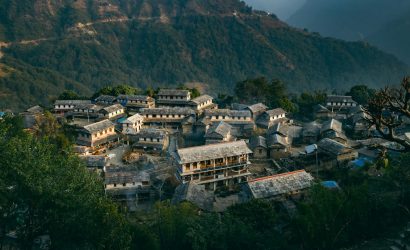
Dhampus is a Gurung village built along a ridge, with terraced rice and farmland spread below the settlement. Traditional stone and mud-brick houses line the paths, and from the village edge you get open views across the valley toward the Annapurna range on clear days.
It’s a working village rather than a set piece for tourism — expect to see farming activity, livestock, and everyday village routines alongside the lodges that serve trekkers passing through on this route or on the way to Annapurna Base Camp or Mardi Himal.
Sarangkot Experience
Sarangkot is a hilltop village and established viewpoint roughly 15–20 minutes by road from Pokhara Lakeside, which is why it’s also popular as a standalone day trip. On this trek, arriving on foot from Dhampus gives you the same viewpoint with the added context of the village walk beforehand.
Sarangkot is also a well-known paragliding launch site — you may see paragliders taking off nearby depending on wind conditions during your visit.
Sunrise and Mountain Views
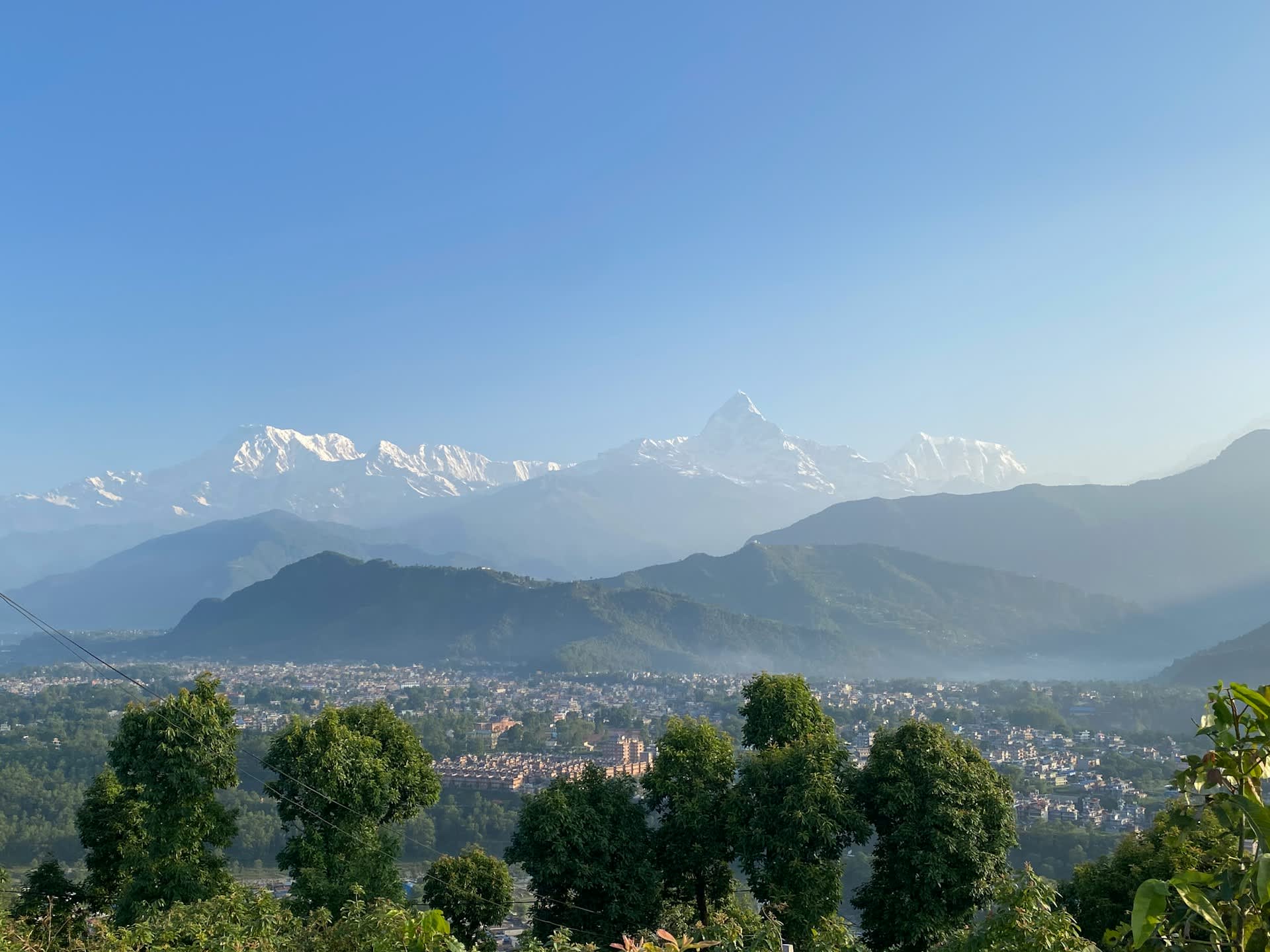
Sarangkot is best known locally for its sunrise viewpoint, with a short walk up to a viewing tower above the village. On clear mornings this delivers views toward Annapurna South, Machhapuchhre (Fishtail), Dhaulagiri, and sometimes Manaslu, along with Pokhara Valley and Phewa Lake below.
Cloud and haze are common, particularly outside the dry autumn and spring months, and can reduce or block the view entirely on any given morning — this is a normal feature of Himalayan foothill weather, not something a fixed departure date can guarantee around.
Trek Difficulty
The Dhampus Sarangkot Trek is rated easy to moderate. Day 1’s climb from Phedi to Dhampus is a sustained but short uphill on stone steps. Day 2 involves both descent and re-ascent as the trail drops toward Naudanda before climbing to Sarangkot — this is the most physically demanding day of the three.
Day 3 is largely downhill or covered by vehicle. None of the terrain is technical, but stone steps and uneven forest trail require reasonable footing and stamina.
Fitness Requirements
No prior trekking experience is required. Being able to walk for 3–4 hours at a time, including uphill sections, is sufficient preparation. This route is regularly used as a first trek for travelers new to hiking in Nepal.
Altitude Information
Maximum altitude is approximately 1,650 m at Dhampus. This is well below the range where altitude sickness becomes a practical concern, so no acclimatization is built into the itinerary.
Best Time to Trek
Season Comparison
| Season | Months | Conditions |
|---|---|---|
| Spring | March – May | Warm days, cooler mornings, generally good sunrise visibility |
| Summer/Monsoon | June – August | Frequent rain, clouds often obscure mountain views, trails can be slippery |
| Autumn | September – November | Most reliable season for clear skies and mountain visibility |
| Winter | December – February | Cold mornings, generally clear daytime skies, good sunrise conditions on clear days |
Weather Overview
Because both Dhampus and Sarangkot sit at relatively low elevation, temperatures are mild compared to higher Annapurna routes. Autumn and spring mornings are cool but generally clear, which improves the odds of a good sunrise at Sarangkot.
Monsoon season brings regular rain and persistent cloud cover that can block mountain views for days at a time. Winter is usually dry with cold early mornings.
Transportation from Pokhara
The trek starts with a short private or shared vehicle transfer from Pokhara to Phedi, roughly 30 minutes. At the end of the trek, the descent from Sarangkot back into Pokhara can be done on foot (roughly 1–2 hours) or by a short vehicle transfer, depending on time and preference — this is confirmed with your guide during the trek.
Accommodation
Accommodation is in local lodges and guest houses in Dhampus and Sarangkot, typically on a twin-sharing basis. Rooms are simple, in keeping with village-lodge standards in this part of the Annapurna foothills — a bed, blankets, and shared or basic attached bathroom facilities.
Sarangkot has more developed guest house options than Dhampus given its popularity as a standalone viewpoint destination.
| Night | Location | Accommodation Type |
|---|---|---|
| Night 1 | Dhampus | Village lodge, twin-share |
| Night 2 | Sarangkot | Guest house, twin-share |
Meals & Drinking Water
Breakfast, lunch, and dinner are included during the trek days, served at the lodges along the route. Menus typically include Nepali dal bhat, noodle dishes, soups, and simple Western options such as toast, eggs, and pancakes.
Bottled water is available for purchase in both Dhampus and Sarangkot; carrying a reusable bottle with purification tablets is a practical, lower-cost alternative.
Permits / Entry Requirements / Fees
The route passes through parts of the Annapurna Conservation Area, so an ACAP entry fee applies. Trek Trove Nepal arranges this as part of the package. Because this trek stays at lower elevations closer to Pokhara than routes like Ghandruk or Annapurna Base Camp, permit and checkpoint procedures are generally straightforward. You’ll need your passport details and passport-sized photos in advance.
Packing Checklist for Dhampus Sarangkot Trek
| Category | Items |
|---|---|
| Clothing | Moisture-wicking layers, light fleece or jacket, waterproof/windproof outer layer, trekking trousers, warm hat for sunrise |
| Footwear | Comfortable hiking shoes or boots, socks, sandals for evenings |
| Gear | Daypack, headlamp with spare batteries, reusable water bottle, camera or phone for sunrise views |
| Health | Sunscreen, sunglasses, personal first aid items, any personal medication |
| Documents | Passport, passport photos |
| Extras | Power bank, cash in Nepali rupees, basic toiletries |
Cost Breakdown
The US$180 per-person price covers a 2-night village lodge trek with a guide, transport, and meals during the trek.
| Cost Component | Covered |
|---|---|
| ACAP entry fee | Yes |
| Guide (English-speaking) | Yes |
| Ground transport Pokhara–Phedi | Yes |
| Lodge/guest house accommodation (2 nights) | Yes |
| Meals during trek (B, L, D) | Yes |
| Porter | Available on request, additional cost |
Optional Services
- Porter service for luggage
- Paragliding add-on at Sarangkot (arranged separately, weather dependent)
- Extra nights in Pokhara before or after the trek
- Airport transfers in Pokhara
Responsible Trekking
This route passes through farmland and village land actively used by local communities. Trek Trove Nepal asks trekkers to stay on marked trails, avoid disturbing farming activity, dispose of waste properly, and support local lodges and shops in Dhampus and Sarangkot rather than bringing all supplies from Pokhara.
Practical Travel Tips
- Sunrise at Sarangkot means an early wake-up — check the timing with your guide the evening before.
- Pack a warm layer even in warmer months; mornings at both Dhampus and Sarangkot are noticeably cooler than Pokhara.
- Carry small denominations of Nepali rupees for personal purchases along the route.
- If mountain views matter most to you, autumn (Sept–Nov) gives the best odds of clear skies.
- This trek pairs easily with a day or two of other Pokhara activities before or after — worth planning if it’s your first visit to the area.
Book the Dhampus Sarangkot Trek – 3 Days
If you want a short, low-altitude trek from Pokhara that combines a Gurung village stay with the Sarangkot viewpoint, this itinerary fits into three days without compromising on the actual trekking.
Contact Trek Trove Nepal to check availability, confirm departure dates, and arrange any adjustments for your group size or travel plans.