


-
Drive, Flight
-
Teahouse, Lodge
-
5,106 meters
-
Kathmandu
-
Sping, Autumn
-
Hiking, Peak Climbing
-
BLD
-
Moderate to Hard
-
2-20
The Manaslu Circuit is a restricted-area trek around Mount Manaslu, the world’s eighth-highest peak, crossing Larkya La Pass at approximately 5,106 meters before descending into the Annapurna region near Dharapani.
This 14-day itinerary is run as a group join trek — a scheduled departure that solo travelers and small groups can join together rather than booking a fully private trek. Trek Trove Nepal runs this package at US$750 per person, including permits, guide, accommodation, and meals during the trek.
This page explains what group joining actually means for this trek, the daily walking and altitude profile, what crossing Larkya La involves, and what the US$750 price covers — including the restricted-area permits this region specifically requires.
Quick Facts
| Detail | Information |
|---|---|
| Trip Name | Manaslu Circuit Group Join Trek – 14 Days |
| Region | Manaslu Conservation Area, Gorkha/Manang |
| Duration | 14 Days |
| Price | US$750 per person |
| Trek Style | Group join, tea house trek |
| Starting Point | Kathmandu (drive to Soti Khola/Machha Khola) |
| Ending Point | Dharapani (drive to Kathmandu) |
| Maximum Altitude | Larkya La Pass, approx. 5,106 m |
| Difficulty | Challenging (restricted area, high pass crossing) |
| Group Size | Scheduled group departure — confirm current size at booking |
| Best Season | March–May, September–November |
| Permits Required | Manaslu Restricted Area Permit (RAP), MCAP, ACAP |
| Accommodation | Tea houses / lodges |
| Meals | Breakfast, lunch, dinner during trek |
14-Day Manaslu Circuit Group Join Trek Overview
This itinerary follows the Budhi Gandaki River valley from Soti Khola up through Machha Khola, Jagat, Deng, Namrung, and Samagaon, gaining altitude gradually with built-in acclimatization days before the push over Larkya La Pass and down into Bimthang and Dharapani.
Because Manaslu is a restricted area requiring a licensed guide regardless of group size, running this as a group join departure spreads the fixed costs of guide and permit logistics across several travelers, which is reflected in the price.
What Is a Group Join Trek?
A group join trek means you book a seat on a scheduled departure rather than arranging a fully private trip. Trek Trove Nepal combines individual bookings and small groups into a single departure on a set date, sharing the guide, and in many cases porters, across the group.
This is a common and practical way to trek Manaslu, since the region’s restricted-area regulations require a licensed guide for every trekking party — joining a scheduled group lets you share that requirement’s cost rather than covering it alone.
How Group Joining Works
You book your place on a specific departure date, and Trek Trove Nepal fills the group from other bookings around the same date. You’ll typically be introduced to your fellow trekkers and guide in Kathmandu before departure, not mid-trail.
Accommodation is generally arranged on a twin-sharing basis within the group unless you specifically request a single room (where available, usually at extra cost).
Meals are ordered individually at each tea house, so dietary preferences aren’t a group-wide constraint. Exact current group sizes and confirmed departure dates should be checked directly with Trek Trove Nepal at the time of booking, since these vary by season and demand.
Why Choose a Group Join Manaslu Trek
- Lower cost than a fully private trek, since permit processing and guide costs are shared across the group.
- Built-in social experience. Trekking with others on a multi-day, physically demanding route is a genuine advantage for many solo travelers, particularly on a long trek like this one.
- A fixed departure date gives structure to your planning, compared to open-ended private arrangements.
- Everyone still gets individual guide attention where it matters — particularly around altitude monitoring, since the guide is responsible for the whole group’s safety on the pass crossing.
A group join trek does mean walking at a pace that works for the group as a whole, and following the guide’s timing decisions — particularly around the Larkya La crossing, where the whole group typically starts together for safety and logistical reasons.
Why Choose the 14-Day Itinerary
Fourteen days allows for the acclimatization days this route needs before Larkya La — rushing this trek increases altitude risk significantly given the pass’s elevation.
This itinerary isn’t the shortest possible Manaslu route, but it reflects a pace considered reasonably safe and sustainable for most trekkers with adequate fitness.
Why Book with Trek Trove Nepal
Manaslu’s restricted-area status means every trekking party needs an authorized agency to process permits and provide a licensed guide — this isn’t optional infrastructure, it’s a legal requirement enforced at checkpoints including Jagat and Philim.
Trek Trove Nepal handles the Restricted Area Permit, MCAP, and ACAP applications, arranges tea house accommodation along a route where availability can be limited in peak season, and provides guides experienced specifically with Larkya La’s pacing and weather patterns.
Detailed 14-Day Itinerary
Day 1: Kathmandu – Soti Khola
Drive from Kathmandu to Soti Khola (approx. 700 m), roughly 7 to 8 hours by road. Overnight in Soti Khola.
Day 2: Soti Khola – Machha Khola
Trek along the Budhi Gandaki valley to Machha Khola (approx. 900 m). Walking time approximately 6 to 7 hours.
Day 3: Machha Khola – Jagat
Continue along the river valley, crossing several suspension bridges, to Jagat (approx. 1,340 m), the first Restricted Area Permit checkpoint. Walking time approximately 6 to 7 hours.
Day 4: Jagat – Deng
Trek from Jagat to Deng (approx. 1,860 m), passing through Philim, a second permit checkpoint. Walking time approximately 6 to 7 hours.
Day 5: Deng – Namrung
Continue up the valley to Namrung (approx. 2,630 m), another checkpoint village. Walking time approximately 5 to 6 hours. The trail’s character starts shifting here, with more visible Tibetan-influenced architecture.
Day 6: Namrung – Samagaon
Trek to Samagaon (approx. 3,530 m), a large Tibetan-influenced village near Manaslu Base Camp. Walking time approximately 5 to 6 hours.
Day 7: Acclimatization Day in Samagaon
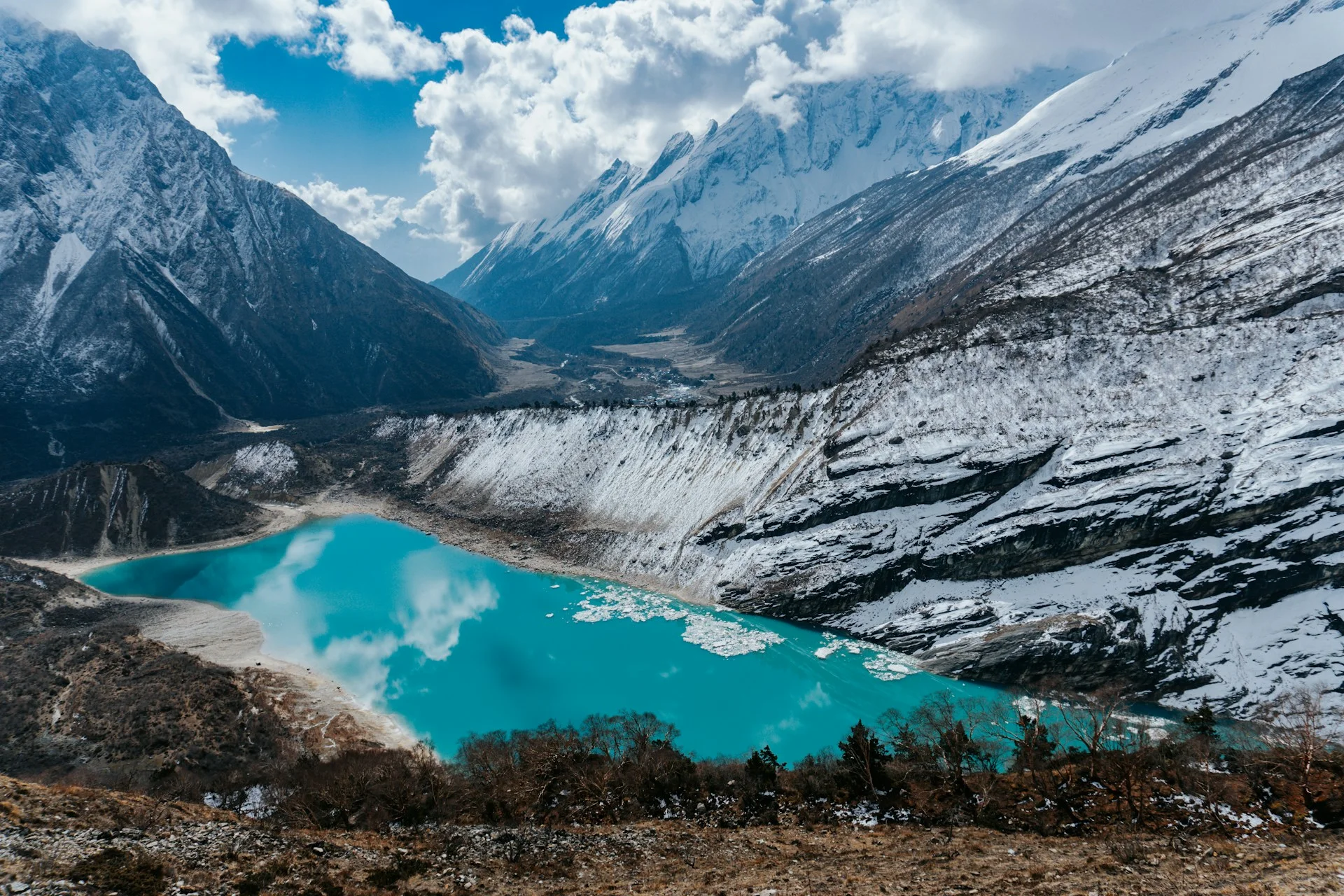
A rest and acclimatization day, with an optional side hike toward Manaslu Base Camp or Birendra Lake to aid altitude adjustment. No net altitude gain at the overnight stop.
Day 8: Samagaon – Samdo
Trek to Samdo (approx. 3,860–3,875 m), one of the last villages before the pass approach. Walking time approximately 3 to 4 hours — a shorter day intentionally built in for continued acclimatization.
Day 9: Samdo – Dharamsala (Larkya Phedi)
Trek to Dharamsala, also known as Larkya Phedi (approx. 4,460 m), the staging point for the pass crossing. Walking time approximately 4 to 5 hours. Basic tea house accommodation only — this is a functional overnight, not a village stop.
Day 10: Dharamsala – Larkya La Pass – Bimthang
An early start, typically before dawn, to cross Larkya La Pass (approx. 5,106 m), then descend to Bimthang (approx. 3,720 m). Walking time approximately 8 to 9 hours — the longest and most demanding day of the trek.
Day 11: Bimthang – Dharapani (or Tilije)
Descend from Bimthang toward Dharapani (approx. 1,860 m), re-entering forested terrain and rejoining the Annapurna Circuit trail network. Walking time approximately 6 to 7 hours.
Day 12: Dharapani – Drive toward Kathmandu / Besisahar
Road transfer from Dharapani, typically via Besisahar, toward Kathmandu. Depending on road conditions, this may take a full day.
Day 13: Buffer Day / Continue to Kathmandu
A built-in buffer day to account for possible delays on Days 9–12 due to weather or trail conditions around the pass, or continued road travel to Kathmandu if Day 12 doesn’t complete the journey.
Day 14: Kathmandu
Arrival in Kathmandu, ending the trek, with any remaining time free.
Route Overview
Kathmandu → Soti Khola → Machha Khola → Jagat → Deng → Namrung → Samagaon → Samdo → Dharamsala → Larkya La Pass (5,106 m) → Bimthang → Dharapani → Kathmandu
Daily Walking Distance & Hours
| Day | Route | Walking Time |
|---|---|---|
| 1 | Kathmandu → Soti Khola (drive) | — |
| 2 | Soti Khola → Machha Khola | 6–7 hrs |
| 3 | Machha Khola → Jagat | 6–7 hrs |
| 4 | Jagat → Deng | 6–7 hrs |
| 5 | Deng → Namrung | 5–6 hrs |
| 6 | Namrung → Samagaon | 5–6 hrs |
| 7 | Acclimatization day, Samagaon | Optional short hike |
| 8 | Samagaon → Samdo | 3–4 hrs |
| 9 | Samdo → Dharamsala | 4–5 hrs |
| 10 | Dharamsala → Larkya La → Bimthang | 8–9 hrs |
| 11 | Bimthang → Dharapani | 6–7 hrs |
| 12 | Dharapani → Besisahar/Kathmandu (drive) | — |
| 13 | Buffer / continue to Kathmandu | — |
| 14 | Kathmandu | — |
Altitude Profile
| Location | Approximate Altitude |
|---|---|
| Kathmandu | 1,400 m |
| Soti Khola | ~700 m |
| Jagat | ~1,340 m |
| Namrung | ~2,630 m |
| Samagaon | ~3,530 m |
| Samdo | ~3,860–3,875 m |
| Dharamsala (Larkya Phedi) | ~4,460 m |
| Larkya La Pass (highest point) | ~5,106 m |
| Bimthang | ~3,720 m |
| Dharapani | ~1,860 m |
Larkya La Pass Crossing
Larkya La, at approximately 5,106 meters, is the trek’s defining challenge and its highest point. The crossing day starts early — typically well before dawn — partly to cross before afternoon winds pick up and partly because the full day, including the descent to Bimthang, runs 8 to 9 hours.
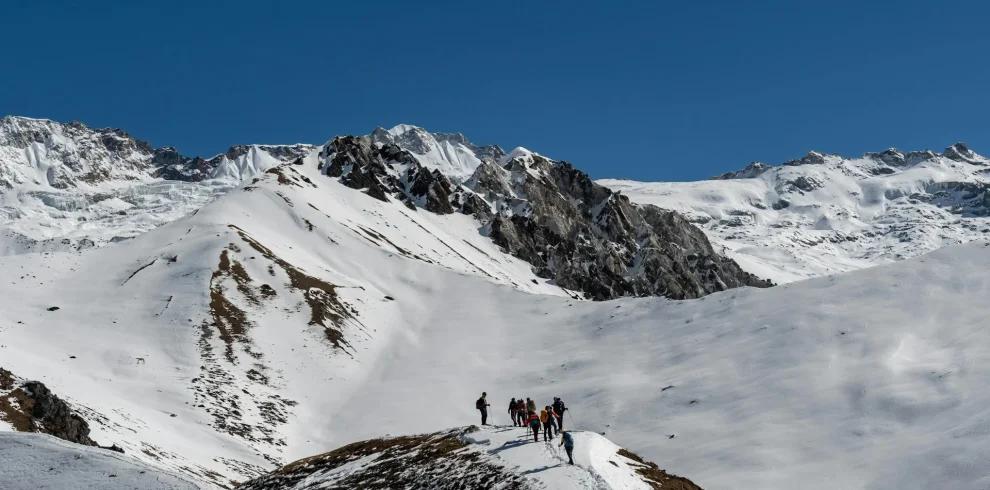
The approach from Dharamsala climbs steadily over rocky, sometimes icy terrain; snow and ice are common on the pass itself even outside winter, and the descent toward Bimthang is steep in sections.
Cold and wind exposure at the top are significant — this is a genuinely demanding day physically and requires being properly equipped for sub-zero conditions regardless of season.
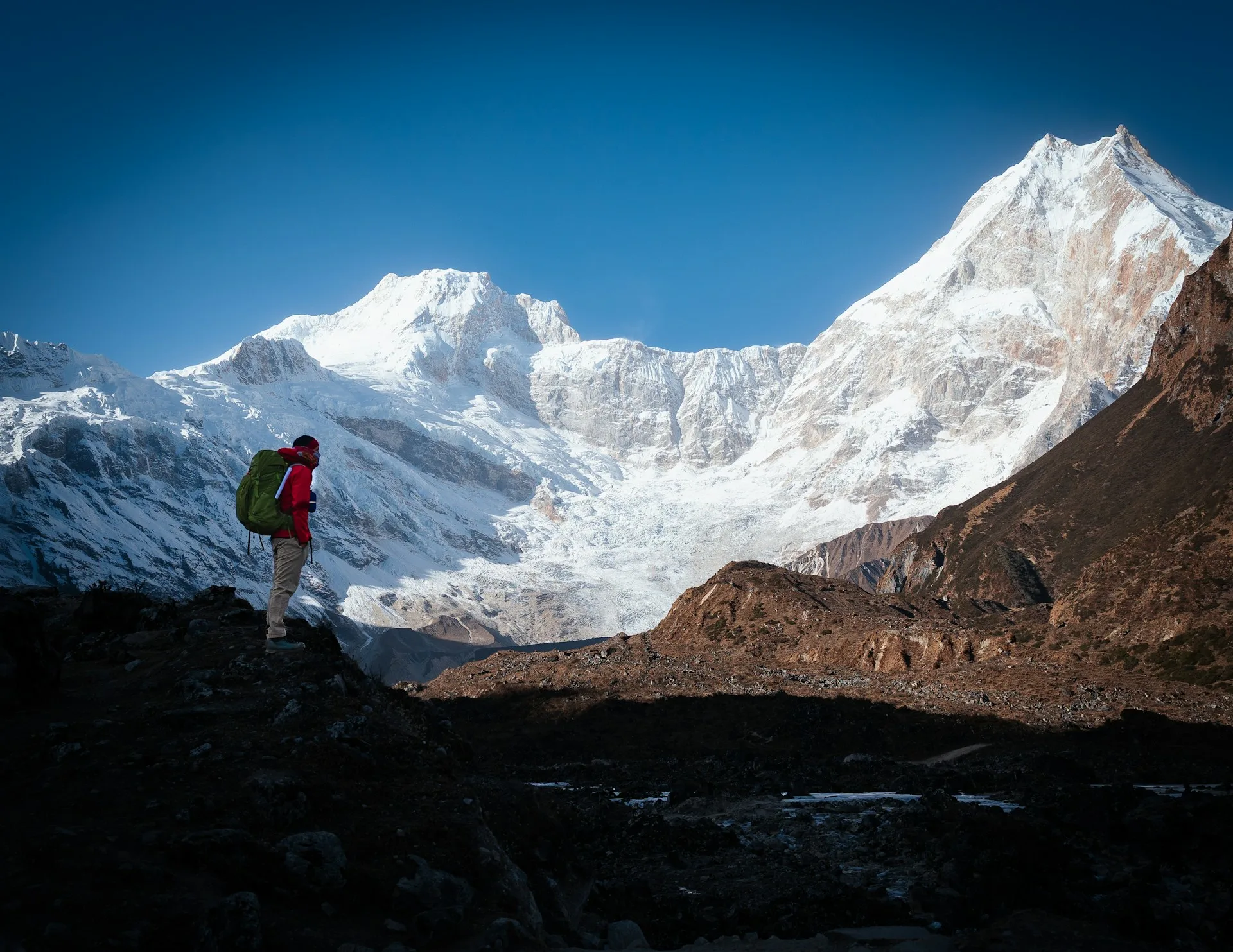
On clear days, views from the pass can include Manaslu, Manaslu North, and peaks such as Cheo Himal, Larke Peak, and Himlung, but weather at this altitude changes quickly and visibility is never guaranteed. Groups typically start together for this day given the terrain, weather sensitivity, and safety considerations involved.
Manaslu Restricted Area & Permit Requirements
The Manaslu region is a government-designated restricted trekking area, distinct from ordinary conservation-area trekking. This means:
- A Manaslu Restricted Area Permit (RAP) is mandatory, issued only through a registered trekking agency — this cannot be obtained independently. As of 2026, permit rules and group-size requirements for this specific region have been subject to change; some current sources indicate a minimum group size requirement still applies for the Manaslu RAP even after solo-trekking reforms in other restricted regions. Confirm the current rule with Trek Trove Nepal, since regulations here can differ from other restricted areas like Upper Mustang.
- A Manaslu Conservation Area Permit (MCAP) is required for the conservation area the route passes through.
- An Annapurna Conservation Area Permit (ACAP) is required for the final section past Larkya La, since the trail joins Annapurna Conservation Area territory around Dharapani.
- A licensed guide accompanying the group throughout is a legal requirement, checked at multiple posts along the route (Jagat, Philim, Namrung, Samagaon).
Permit fees for this region are set by the Nepali government and vary by season (typically higher in September–November) and by duration.
Manaslu Conservation Area
The Manaslu Conservation Area was established to protect the region’s high-Himalayan ecosystems and biodiversity, alongside the cultural heritage of the Nubri and Tsum communities who live along this route. Permit fees contribute directly to conservation projects and community infrastructure in the region.
Trail Conditions
The lower half of the trek follows the Budhi Gandaki River valley, with numerous suspension bridge crossings, stone stairways, and forested sections. As the route climbs past Namrung, the landscape shifts to more open, Tibetan-influenced terrain, with Samagaon and Samdo sitting in a drier, higher-altitude environment.
The final approach to Larkya La and the pass itself frequently holds snow and ice, particularly outside the core spring and autumn seasons — trekking poles and, in some conditions, microspikes or crampons are worth having for this section.
Difficulty and Fitness Requirements
This trek is rated challenging, driven by a combination of sustained daily walking (5 to 9 hours), significant cumulative altitude gain, and the Larkya La crossing itself, which is both the highest and longest single day of the trek. Good cardiovascular fitness and, ideally, some prior high-altitude trekking experience are recommended — this is a step up in demand from treks like Annapurna Base Camp.
Being able to walk 6 to 8 hours on uneven, sometimes icy terrain across multiple consecutive days, including one very long day, is the realistic baseline for completing this trek comfortably.
Altitude & Acclimatization
This itinerary builds in a dedicated acclimatization day at Samagaon (Day 7) and a deliberately short walking day to Samdo (Day 8), both aimed at reducing altitude risk before the push to Dharamsala and over Larkya La. Even with this pacing, altitude symptoms — headache, fatigue, nausea, disturbed sleep — are common above 3,500 m and cannot be ruled out by fitness level alone.
Staying well hydrated, avoiding alcohol at altitude, sleeping at the lowest reasonable elevation each night, and reporting any symptoms to your guide immediately are standard precautions.
Your guide monitors the group throughout, particularly in the days leading up to the pass, and the appropriate response to worsening symptoms is to stop ascending and, if necessary, descend — this is a decision your guide is trained to make.
Travel insurance covering high-altitude trekking and emergency evacuation is strongly recommended given the remoteness and elevation involved.
Accommodation
| Night | Location | Accommodation Type |
|---|---|---|
| Nights 1–6 | Soti Khola through Samagaon | Tea house, twin-share |
| Night 7 | Samagaon (acclimatization) | Tea house, twin-share |
| Night 8 | Samdo | Tea house, twin-share |
| Night 9 | Dharamsala | Basic tea house, twin-share |
| Night 10 | Bimthang | Tea house, twin-share |
| Night 11 | Dharapani | Tea house, twin-share |
| Nights 12–13 | En route / Kathmandu | Hotel, depending on travel timing |
Meals & Drinking Water
Breakfast, lunch, and dinner are included during the trekking days, ordered individually at each tea house — group joining doesn’t mean fixed group meals. Menus include Nepali dal bhat, noodle and rice dishes, and simpler options at higher elevations, particularly at Dharamsala.
Bottled water becomes notably more expensive with altitude given transport costs; a reusable bottle with a filter or purification tablets is a practical, lower-cost option over 14 days.
Wi-Fi, Electricity and Connectivity
Wi-Fi and charging are available at most tea houses through Namrung and Samagaon, usually for a fee, but become unreliable or unavailable at Samdo, Dharamsala, and Bimthang given the remoteness of this section.
A power bank is worth carrying, since charging options thin out precisely in the days around the pass crossing.
Local Culture and Villages
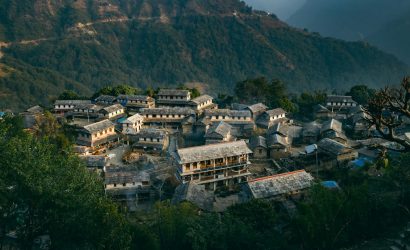
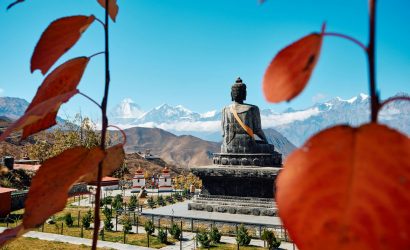
The upper Manaslu region, from Namrung through Samagaon and Samdo, has a strongly Tibetan-influenced culture, reflecting the area’s historical and geographic proximity to Tibet. Mani walls, chortens, and prayer flags line sections of the trail, and monasteries including Pungyen Gompa reflect the region’s Tibetan Buddhist heritage.
Lower down, Gurung communities are present in villages along the Budhi Gandaki valley. As with any active religious site, walk mani walls and chortens keeping them on your left, and ask before photographing inside monasteries or during ceremonies.
Best Time to Trek
Season Comparison
| Season | Months | Conditions |
|---|---|---|
| Spring | March – May | Generally good weather, rhododendron blooming at mid-elevation, manageable pass conditions |
| Summer/Monsoon | June – August | Frequent rain, leeches on lower forested sections, higher risk of trail damage/landslides in the valley |
| Autumn | September – November | Most reliable season — stable weather, best conditions for the Larkya La crossing |
| Winter | December – February | Cold, with a real chance of heavy snow closing or complicating the Larkya La crossing; some tea houses may close |
Weather Overview
Autumn offers the most dependable conditions for this trek, particularly for the pass crossing, where snow and wind are the main weather risks. Spring is also generally good. Winter carries genuine risk of the pass becoming difficult or temporarily impassable after heavy snowfall — this is worth discussing directly with Trek Trove Nepal if considering a winter departure. Monsoon season brings consistent rain to the lower valley sections and reduces visibility throughout.
Transportation
The trek begins and ends with road transport between Kathmandu and the trailhead (Soti Khola) and endpoint (Dharapani/Besisahar), each roughly 7 to 8 hours depending on road conditions, which vary seasonally on these mountain roads. This is included as part of the package.
Packing Checklist
| Category | Items |
|---|---|
| Clothing | Base layers, warm insulated jacket (down or synthetic), waterproof/windproof shell, trekking trousers, warm hat, gloves (including a warmer pair for the pass) |
| Footwear | Broken-in, well-supporting hiking boots, warm socks, gaiters, microspikes if trekking outside peak season |
| Gear | Daypack, trekking poles (strongly recommended, especially for Larkya La), headlamp with spare batteries, reusable water bottle |
| Health | Personal first aid kit, sunscreen, sunglasses (essential at altitude, particularly with snow glare near the pass), any personal medication |
| Documents | Passport, passport photos (for permit processing), travel insurance details covering high-altitude trekking and evacuation |
| Extras | Power bank, cash in Nepali rupees (no ATMs past Machha Khola), basic toiletries |
Cost Breakdown
The US$750 per-person price covers a 14-day group join itinerary with guide, transport, accommodation, and meals during the trek.
| Cost Component | Covered |
|---|---|
| Guide (English-speaking, licensed for restricted area) | Yes |
| Ground transport Kathmandu–Soti Khola / Dharapani–Kathmandu | Yes |
| Accommodation (tea houses + hotel nights as per itinerary) | Yes |
| Meals during trek (B, L, D) | Yes |
| RAP, MCAP, ACAP permit fees | Confirm at booking — a significant, regulated cost for this restricted region |
| Porter | Available on request, additional cost |
Group Joining Logistics
Group join departures are scheduled around demand for specific dates, primarily in the peak spring and autumn seasons. You’ll typically meet your guide and fellow trekkers in Kathmandu shortly before departure.
If you’re traveling solo and specifically want to confirm current group composition, minimum numbers, or whether a private trek would suit you better, raise this directly with Trek Trove Nepal — exact current group sizes aren’t fixed for every departure and should be confirmed before booking.
Optional Services / Customization
- Porter service for luggage
- Extra acclimatization days if you want additional buffer before the pass
- Extension into Tsum Valley, a separate permit-required side route, for a longer combined itinerary
- Private trek arrangement instead of group join, if preferred
Responsible Trekking
The Manaslu region’s restricted-area status and permit system exist partly to manage tourism’s impact on a fragile high-altitude environment and to support the Nubri and Tsum communities who live along the route.
Trek Trove Nepal asks trekkers to stay on marked trails, carry out waste where bins aren’t available (particularly above Samagaon, where waste management infrastructure is limited), and behave respectfully around monasteries and local religious practice.
Practical Travel Tips
- Take the acclimatization days seriously — skipping or rushing them meaningfully increases risk on the Larkya La day.
- Pack for genuinely cold, windy conditions on the pass regardless of season — this is not a day to underdress for.
- Carry sufficient cash before Machha Khola; there are no reliable ATMs past this point.
- Confirm your departure date and current group details with Trek Trove Nepal well in advance, since group join departures are tied to scheduled dates.
- Build in flexibility around your return to Kathmandu — the buffer day exists because weather can delay the pass crossing or the road transfer out.
Book the Manaslu Circuit Group Join Trek
If you want to cross Larkya La Pass and trek one of Nepal’s most significant restricted-area routes without covering the full cost of a private trek alone, this group join departure gives you the permits, guide, and shared logistics you need.
Contact Trek Trove Nepal to check current group departure dates, confirm permit costs, and ask any questions about how group joining works for your travel dates.
Manaslu Circuit Group Join Trek Highlights
- Crossing Larkya La at 5,106 m — the trek's defining moment: an early, pre-dawn start, 8–9 hours of walking, and a genuine high-altitude pass crossing rather than a lower viewpoint dressed up as one.
- A restricted-area route with real permit checkpoints. Jagat, Philim, Namrung, and Samagaon each verify your Restricted Area Permit — this is a tangible sign of how differently Manaslu is regulated compared to open trekking regions like Annapurna or Everest.
- Samagaon's proximity to Manaslu Base Camp and Birendra Lake. The Day 7 acclimatization day includes an optional side hike toward these, turning a rest day into an active option rather than a wasted one.
- A visible cultural shift partway through the trek. Lower villages along the Budhi Gandaki carry Gurung influence; from Namrung onward, architecture and daily life become noticeably more Tibetan-influenced — a change you can actually see, not just read about.
- Two dedicated acclimatization stops, not just one. The Samagaon rest day and the deliberately short walking day to Samdo both exist specifically to prepare the body for Dharamsala and the pass — a concrete example of how this itinerary manages altitude risk.
- Pungyen Gompa and trail-side Buddhist heritage — mani walls, chortens, and monasteries reflecting the Nubri and Tsum communities' Tibetan Buddhist practice, encountered as part of the walk rather than a separate side trip.
- Bimthang's different vantage on Manaslu. Descending the far side of the pass gives you a view of the mountain from an angle most trekkers on the approach side never see.