
Introduction to Kathmandu Temple Guide
Kathmandu Valley holds one of the densest concentrations of living religious architecture anywhere on Earth — not museum pieces, but temples where rituals performed centuries ago are still performed today, often multiple times a day. That density is also what makes “Kathmandu Temple” such a confusing search: are you asking about Pashupatinath specifically, the whole UNESCO World Heritage designation, or the dozens of smaller shrines tucked into every courtyard in the old city?
This guide covers the answer properly — every major temple and sacred site worth knowing about in the Kathmandu Valley, with accurate current entry fees, opening hours, the actual history behind each site, and the etiquette details that matter (particularly around non-Hindu access restrictions, which trip up more visitors than any other single issue). We’ve built this from years of guiding travelers through these sites with Trek Trove Nepal.
Quick Answer: Kathmandu’s Major Temples at a Glance
| Site | Type | Foreigner Entry Fee | Hours | Significance |
|---|---|---|---|---|
| Pashupatinath Temple | Hindu, dedicated to Shiva | NPR 1,000 (~US$8) | 4:00 AM–9:00 PM | One of the most sacred Shiva temples in South Asia; UNESCO site |
| Swayambhunath (Monkey Temple) | Buddhist/Hindu stupa complex | NPR 200 (~US$1.5) | Open 24 hours; best at sunrise or sunset | One of the oldest religious sites in the Kathmandu Valley; UNESCO site |
| Boudhanath Stupa | Buddhist stupa | NPR 400 (~US$3.5) | Open 24 hours; best 5:30 AM–8:00 PM | One of the largest stupas in the world; center of Tibetan Buddhism in Nepal; UNESCO site |
| Kathmandu Durbar Square | Hindu temple complex within a former royal palace square | NPR 1,000 (~US$8) | ~9:00 AM–5:00 PM (temple checks); square generally accessible | Includes Kumari Ghar, Taleju Temple, Kasthamandap; UNESCO site |
| Patan Durbar Square | Hindu/Buddhist temple complex | NPR 1,000 (~US$8) | Daylight hours | Includes Krishna Mandir; UNESCO site |
| Bhaktapur Durbar Square | Hindu temple complex | NPR 1,500–1,800 (~US$12–15) | Daylight hours | Includes Nyatapola Temple, the tallest pagoda in Nepal; UNESCO site |
| Changu Narayan | Hindu, dedicated to Vishnu | NPR 300 (~US$2.5) | Early morning–evening | The oldest Hindu temple in the Kathmandu Valley still in active use; UNESCO site |
| Budhanilkantha | Hindu, dedicated to Vishnu | Free | Daylight hours | Famous reclining Vishnu statue in a water pond |
| Dakshinkali | Hindu, dedicated to Kali | Free (small camera fee sometimes applies) | Daylight hours | Known for ritual animal sacrifice, especially on Tuesdays and Saturdays |
The Kathmandu Valley UNESCO World Heritage Site
Before covering each site individually, it’s worth understanding the umbrella designation that ties most of them together. Kathmandu Valley was inscribed as a UNESCO World Heritage Site in 1979, but not as a single site — it’s a collection of seven separate monument zones scattered across the valley, each individually significant.
| No | Monument Zone | Type |
|---|---|---|
| 1 | Kathmandu Durbar Square | Former royal palace complex and temples |
| 2 | Patan Durbar Square | Former royal palace complex and temples |
| 3 | Bhaktapur Durbar Square | Former royal palace complex and temples |
| 4 | Pashupatinath Temple | Hindu temple complex |
| 5 | Swayambhunath | Buddhist/Hindu stupa complex |
| 6 | Boudhanath | Buddhist stupa complex |
| 7 | Changu Narayan | Hindu temple |
Understanding this structure clears up a common point of confusion: when people say they’re doing a “UNESCO tour” of Kathmandu, they typically mean visiting some combination of these seven zones in a single day or over a couple of days, not one consolidated site. Most one-day UNESCO tour packages cover four to five of the seven zones, since fitting all seven — particularly with Bhaktapur and Changu Narayan sitting further from central Kathmandu — comfortably into a single day is a genuinely tight schedule.
Pashupatinath Temple: The Most Sacred Shiva Temple in Nepal
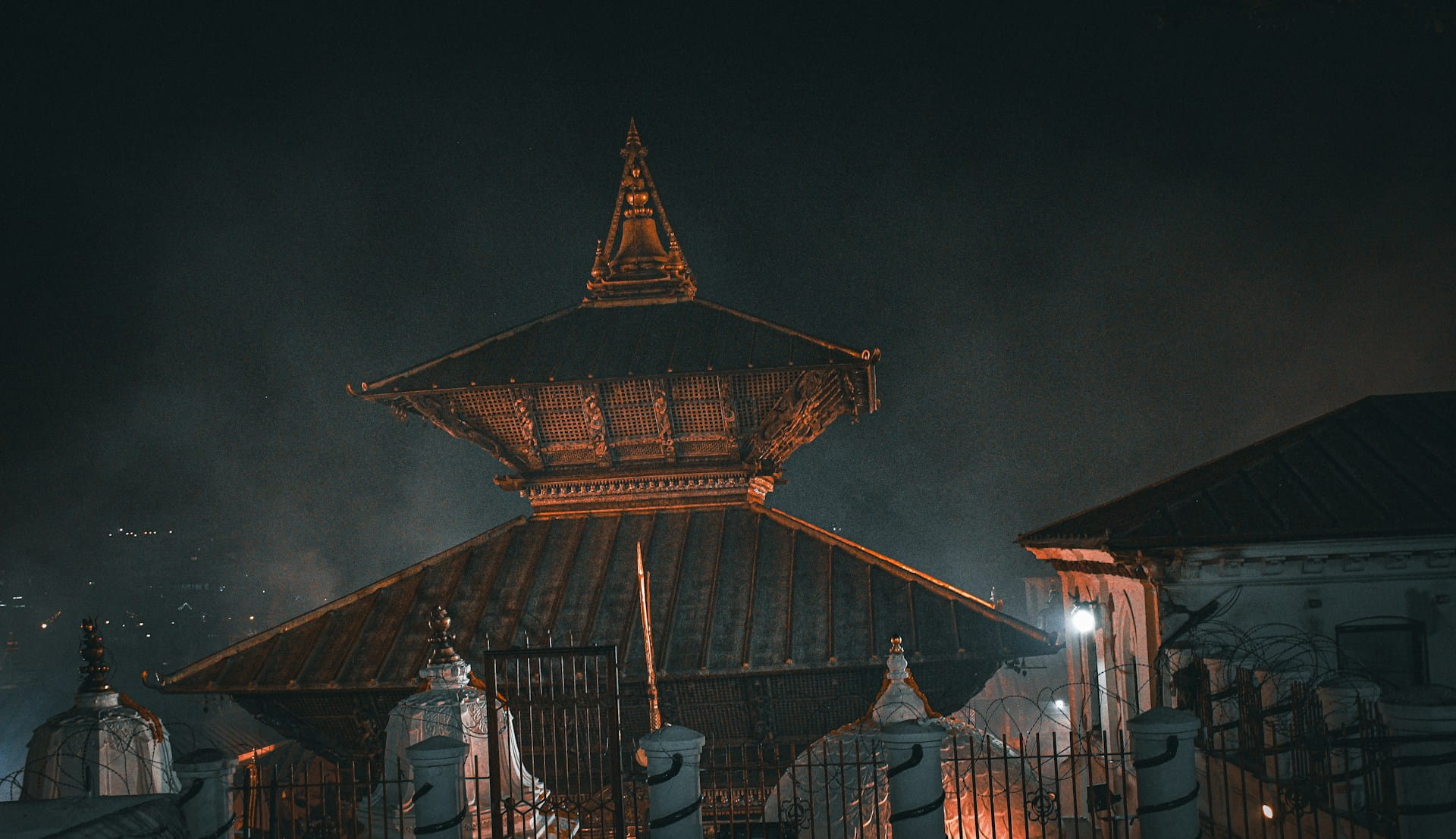
Pashupatinath is, by most measures, the single most important Hindu temple in Nepal and one of the most significant Shiva temples anywhere in South Asia. It sits on the banks of the Bagmati River in eastern Kathmandu, and its temple complex extends well beyond the main pagoda itself, encompassing cremation ghats, smaller shrines, ashrams, and a wooded hillside dotted with additional temples and meditation caves.
History and architecture: the current main temple structure is a two-tiered pagoda with a gilded roof, generally dated to the late 17th century, though the site’s religious significance and earlier structures on the same ground stretch back many centuries further — Pashupatinath has been a site of Shiva worship for well over a thousand years, with the temple rebuilt and renovated multiple times through its history.
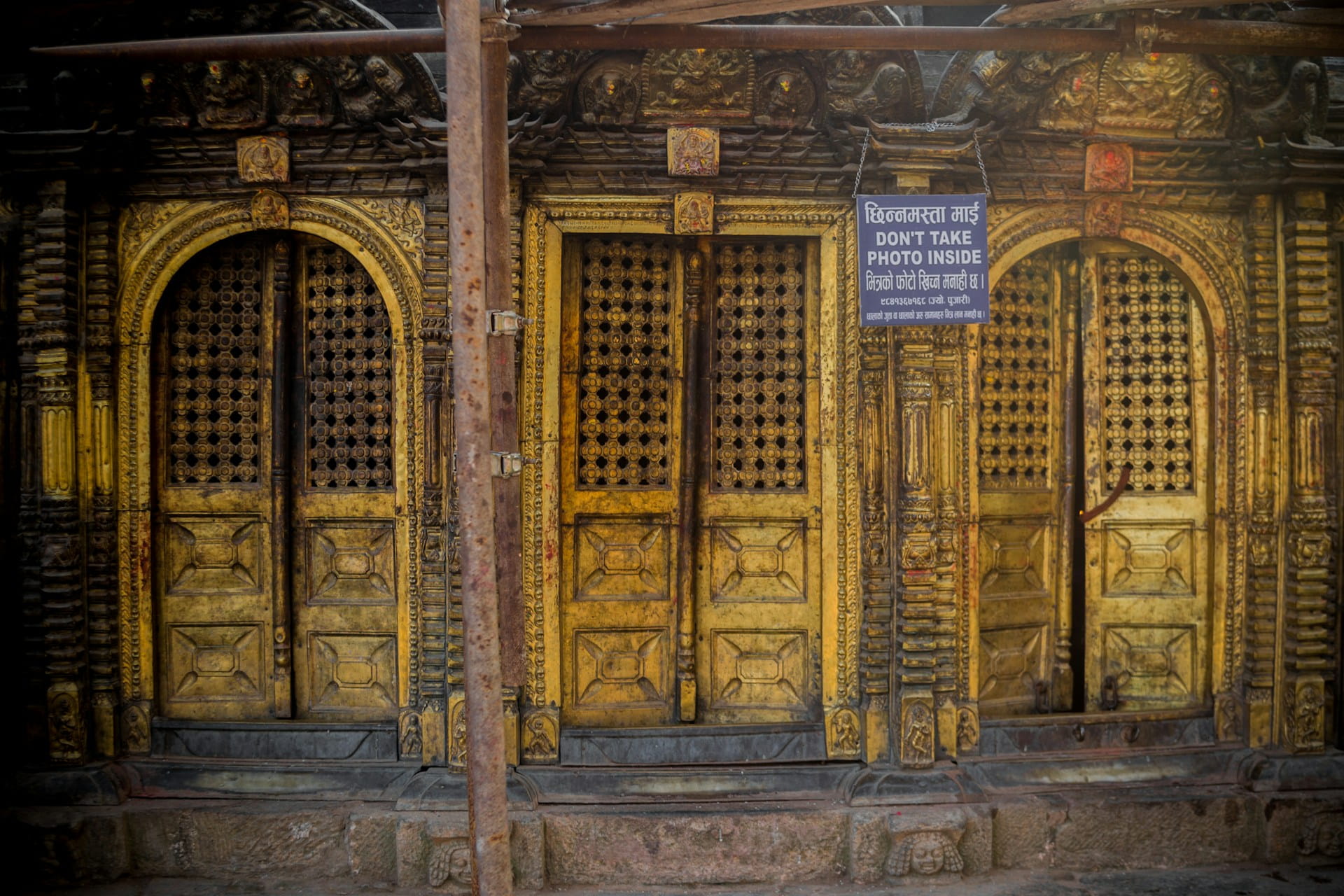
The non-Hindu access rule — the single most important thing to know before visiting: non-Hindus are not permitted to enter the main temple building itself. This isn’t a minor technicality; it surprises a meaningful share of first-time visitors who arrive expecting full temple access. What your entry ticket does grant is access to the wider complex — the cremation ghats along the Bagmati River, smaller shrines, courtyards, and viewing areas across the river where you can observe the main temple’s exterior and the cremation rituals from an appropriate distance. Most visitors, once there, find this wider complex experience more than fills the visit regardless of the main sanctum restriction.
Cremation ghats: Pashupatinath’s riverside cremation ghats are one of the most significant open-air Hindu cremation sites outside Varanasi, India, and observing (respectfully, at a distance, without photographing grieving families) is a genuinely significant part of what draws visitors here, alongside the religious architecture itself.
Evening aarti (ritual ceremony): an evening ritual ceremony, typically around 6:00 PM, held along the riverbank, is widely considered one of the most atmospheric moments to experience at Pashupatinath, combining chanting, fire rituals, and drumming in a setting that feels distinct from a purely daytime sightseeing visit.
| Detail | Information |
|---|---|
| Entry fee (foreigners) | NPR 1,000 (~US$8) |
| Entry fee (Nepali citizens) | Free |
| Hours | 4:00 AM–9:00 PM |
| Non-Hindu access | Wider complex only; main temple sanctum restricted to Hindus |
| Best time to visit | Early morning for a quieter atmosphere, or around 6:00 PM for the evening aarti |
| Major festival | Maha Shivaratri, when the temple draws enormous crowds of pilgrims from across Nepal and India |
Swayambhunath (The Monkey Temple)
Perched on a hilltop in the western part of Kathmandu, Swayambhunath is one of the oldest and most instantly recognizable religious sites in the valley — its whitewashed stupa dome, topped with a gold spire painted with the watchful “Buddha eyes” facing in all four directions, is one of Nepal’s most photographed religious images.
Why it’s called the Monkey Temple: a resident population of rhesus macaque monkeys lives around the site, considered holy in local tradition and connected to Buddhist legend, giving the complex its popular English nickname.
Religious character: Swayambhunath is significant to both Buddhists and Hindus, reflecting Nepal’s long history of religious syncretism — the site includes Buddhist shrines, prayer wheels, and monastery buildings alongside Hindu temples and deities, making it one of the clearest physical examples of this shared religious landscape anywhere in the valley.
The climb: the main approach is a steep stairway of 365 stone steps from the eastern base, though a vehicle-accessible route exists on the southwestern side for visitors who prefer not to make the climb. The reward at the top, beyond the stupa itself, is a genuinely sweeping view across the Kathmandu Valley.
| Detail | Information |
|---|---|
| Entry fee (foreigners) | NPR 200 (~US$1.5) |
| Entry fee (SAARC nationals) | NPR 50 |
| Entry fee (Nepali citizens) | Free |
| Hours | Open 24 hours; best visited at sunrise or sunset |
| Best time to visit | Early morning, both for light and to avoid the busiest midday crowds |
Boudhanath Stupa: The Heart of Tibetan Buddhism in Nepal
Boudhanath is one of the largest stupas in the world and the spiritual center of Nepal’s substantial Tibetan Buddhist community, many of whom settled in the surrounding neighborhood following Chinese annexation of Tibet in the mid-20th century. The stupa’s massive white dome and gilded spire dominate a large open plaza, ringed by monasteries, shops, and cafés with rooftop views over the site.
Ritual life: unlike some heritage sites that feel primarily historical, Boudhanath remains a genuinely active devotional space — pilgrims and local Buddhists circumambulate the stupa clockwise, spinning prayer wheels as they walk, an activity visitors are welcome to join respectfully. Butter lamp offerings and chanting are common sights, especially around dawn and dusk.
Surrounding monasteries: the neighborhood around Boudhanath hosts numerous Tibetan Buddhist monasteries, some open to respectful visitors, offering a deeper look into the practices connected to the stupa itself beyond the central plaza.
| Detail | Information |
|---|---|
| Entry fee (foreigners) | NPR 400 (~US$3.5) |
| Entry fee (SAARC nationals) | NPR 100 |
| Entry fee (Nepali citizens) | Free |
| Hours | Open 24 hours; best visited between roughly 5:30 AM and 8:00 PM |
| Best time to visit | Early morning or evening, when the circumambulation ritual and butter lamp offerings are most active |
Kathmandu Durbar Square: Temples Inside a Former Royal Palace
Kathmandu Durbar Square is the historic seat of Nepal’s former Malla and Shah dynasty royalty, and remains dense with temples, courtyards, and monuments packed into a relatively compact area in the heart of the old city.
Kumari Ghar — home of the Living Goddess: perhaps the most unusual site within the square, Kumari Ghar is the residence of the Kumari, a young girl worshipped as a living manifestation of the goddess Taleju in a tradition unique to the Kathmandu Valley. Visitors can enter the courtyard, and the Kumari occasionally appears at a window overlooking it, though photography of her is strictly prohibited out of respect for tradition.
Taleju Temple: a large temple dedicated to Taleju Bhawani, historically the tutelary deity of the Malla kings, though it remains closed to the general public for most of the year, opening briefly during the Dashain festival for specific rituals.
Kasthamandap: historically one of the oldest and most significant structures in the square, a large pavilion said to give Kathmandu its very name (a folk etymology deriving “Kathmandu” from “Kastha Mandap,” meaning “wooden pavilion”). Kasthamandap collapsed during the devastating April 2015 earthquake that struck Nepal; reconstruction efforts have followed in the years since, as part of the broader, multi-year restoration effort across the square following the quake’s significant damage to several structures here.
Hanuman Dhoka Palace: the former royal palace complex itself, included within the same entry ticket, offering museum displays covering Nepal’s royal history.
| Detail | Information |
|---|---|
| Entry fee (foreigners) | NPR 1,000 (~US$8) |
| Entry fee (SAARC nationals) | Lower tiered rate, commonly cited around NPR 150 |
| Hours | Square generally accessible during daylight; specific temple/museum ticket checks typically 9:00 AM–5:00 PM |
| Key sites within | Kumari Ghar, Taleju Temple (exterior/limited access), Kasthamandap, Hanuman Dhoka Palace Museum |
Patan Durbar Square: The Krishna Mandir and Newar Temple Architecture
Patan (also known as Lalitpur), just across the Bagmati River from central Kathmandu, holds its own former royal palace square, widely regarded by many visitors and architecture enthusiasts as the most visually cohesive and best-preserved of the valley’s three Durbar Squares.
Krishna Mandir: the standout structure within the square, built in the early-to-mid 17th century under the Malla king Siddhinarasimha Malla, in a stone shikhara style distinct from the wooden pagoda architecture dominating most other temples in the valley. Its tiered stone structure and detailed carvings depicting scenes from the Mahabharata and Ramayana make it one of the most architecturally significant single temples in the Kathmandu Valley.
Newar craftsmanship: Patan has long been considered the center of traditional Newar (the indigenous ethnic community of the Kathmandu Valley) metalworking and woodcarving craftsmanship, and the square’s temples showcase some of the finest surviving examples of this artistry, alongside a still-active community of artisans in the surrounding streets.
| Detail | Information |
|---|---|
| Entry fee (foreigners) | NPR 1,000 (~US$8) |
| Hours | Daylight hours |
| Key sites within | Krishna Mandir, Patan Museum, numerous additional pagoda-style temples |
Bhaktapur Durbar Square: Home of the Tallest Pagoda in Nepal
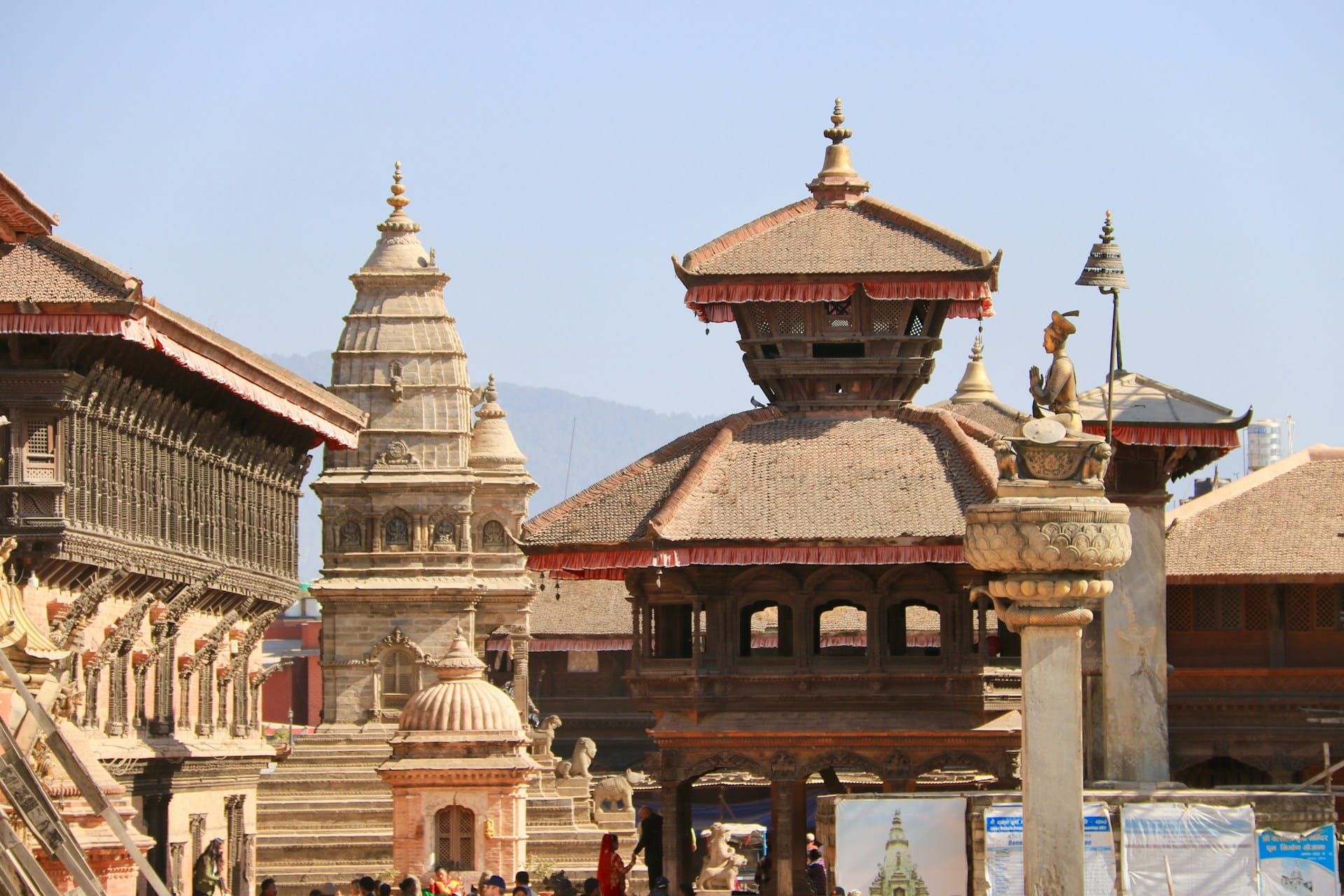
Bhaktapur, the furthest of the three Durbar Squares from central Kathmandu, is widely considered the best-preserved of the three in terms of surrounding medieval urban fabric — much of the old city around the square retains its traditional brick-and-timber architecture, giving it a notably different, more immersive atmosphere than Kathmandu’s more commercially developed Durbar Square.
Nyatapola Temple: the standout structure here, a five-story pagoda built in 1702 under King Bhupatindra Malla, and, at roughly 30 meters, the tallest pagoda-style temple in Nepal. It’s dedicated to Siddhi Lakshmi, a tantric goddess, and its main sanctum is closed to the public, though the temple’s exterior — with its distinctive stone guardian figures flanking the staircase, said to each be ten times stronger than the figure below — remains one of the most photographed structures in the entire Kathmandu Valley.
Vatsala Devi Temple: a stone shikhara-style temple within the square, another notable architectural departure from the wooden pagoda style dominant elsewhere.
Higher entry fee: Bhaktapur charges noticeably more than the other two Durbar Squares — a reflection, tourism authorities have generally explained, of the funds directed toward preserving the surrounding old city’s traditional architecture, not just the square’s temples themselves.
| Detail | Information |
|---|---|
| Entry fee (foreigners) | NPR 1,500–1,800 (~US$12–15) |
| Hours | Daylight hours |
| Key sites within | Nyatapola Temple, Vatsala Devi Temple, 55-Window Palace, Bhaktapur Pottery Square |
Changu Narayan: The Oldest Hindu Temple in the Kathmandu Valley
Sitting on a ridge near Bhaktapur, Changu Narayan is widely regarded as the oldest Hindu temple in the Kathmandu Valley still in continuous active use, with its origins dating back to the Licchavi period, generally placed around the 4th to 5th century CE, though the current structure reflects centuries of subsequent rebuilding following fires and other damage over its long history.
Dedicated to Vishnu: the temple is dedicated to Narayan, a form of Vishnu, and its compound includes an exceptional collection of stone and metal sculptures and inscriptions, some among the oldest surviving examples of Nepali stone carving and inscriptional history, making it as significant a site for art historians as for religious pilgrims.
A quieter alternative: because it sits somewhat apart from the more heavily touristed central Kathmandu sites, Changu Narayan offers a noticeably quieter, less commercialized visiting experience than Pashupatinath or the central Durbar Squares, appealing particularly to visitors interested in history and architecture over crowds.
| Detail | Information |
|---|---|
| Entry fee (foreigners) | NPR 300 (~US$2.5) |
| Entry fee (SAARC nationals) | NPR 100 |
| Hours | Early morning to evening |
| Significance | Oldest Hindu temple still in active use in the Kathmandu Valley; UNESCO site |
Budhanilkantha: The Sleeping Vishnu
On the northern edge of the Kathmandu Valley, at the base of Shivapuri Hill, Budhanilkantha houses one of Nepal’s most striking religious sculptures — a large stone statue of Vishnu reclining on the coils of a cosmic serpent (Ananta), lying in a rectangular water pool. Generally dated to somewhere between the 5th and 7th century CE, this is widely considered one of the most significant Vishnu sculptures in South Asia.
A curious historical taboo: according to local tradition, Nepal’s former kings — themselves considered incarnations of Vishnu — were traditionally forbidden from visiting Budhanilkantha, based on a belief that seeing another image of the deity they were said to embody would bring misfortune. This is one of the more distinctive pieces of royal folklore connected to any temple in the valley.
There is no formal entry fee at Budhanilkantha, though donations are welcomed, and the site remains an active place of worship rather than a purely tourist attraction, meaning visitors should expect and respect ongoing rituals during a visit.
Dakshinkali: The Temple of Ritual Sacrifice
Roughly 22 kilometers south of central Kathmandu, in a wooded gorge, Dakshinkali is dedicated to the goddess Kali in her fierce, protective aspect, and is one of the most significant Kali temples in the Kathmandu Valley. It’s most notable — and, for some visitors, most confronting — for its practice of ritual animal sacrifice, particularly concentrated on Tuesdays and Saturdays, when devotees bring goats, chickens, and other animals as offerings.
This is genuinely not a site for every traveler, and it’s worth going in with accurate expectations rather than discovering the nature of the rituals on arrival unprepared. For visitors interested in a deeper, unfiltered look at living Hindu tantric practice in Nepal, it’s a significant and historically important site; for others, particularly those uncomfortable with animal sacrifice, it’s reasonable to choose a different destination for the day.
Architecture Styles Explained: What You’re Actually Looking At
Understanding the three dominant architectural traditions on display across these sites makes visiting them considerably more rewarding.
| Style | Characteristics | Examples |
|---|---|---|
| Pagoda (multi-tiered) | Layered, sloping roofs (typically 2–5 tiers), traditionally built in wood and brick with elaborately carved struts | Pashupatinath, Nyatapola Temple, most temples across all three Durbar Squares |
| Stupa | Dome-shaped structure with a central spire, no interior worship space in the conventional sense — devotion happens by circumambulating around it | Boudhanath, Swayambhunath |
| Shikhara (stone spire) | Tall, tapering stone towers, generally of North Indian architectural influence, distinct from the native Newar pagoda tradition | Krishna Mandir (Patan), Vatsala Devi Temple (Bhaktapur) |
The pagoda style is considered the indigenous architectural tradition of the Newar people of the Kathmandu Valley, and it’s this style — not the stupa or shikhara forms, both originally imported influences — that most people picture when they think of a “Nepali temple.” Notably, the multi-tiered pagoda roof design that spread across much of East Asia is believed by many architectural historians to have originated in the Kathmandu Valley, later carried to China and beyond through cultural and trade connections.
Temple Etiquette: What You Need to Know Before Visiting
Getting this right matters — these are active places of worship, not museum exhibits, and Nepali communities are generally welcoming to respectful visitors but understandably sensitive to disrespectful behavior at sacred sites.
- Dress modestly. Cover shoulders and knees at minimum; this applies at every site in this guide, not just the more conservative Hindu temples.
- Remove shoes before entering interior spaces where required — this is standard practice at most temple interiors across the valley, though outdoor courtyards and stupa plazas generally don’t require it.
- Walk clockwise around stupas and religious monuments (Boudhanath, Swayambhunath, and mani walls/prayer wheels generally) — this reflects Buddhist devotional practice and is expected of visitors as well as worshippers.
- Never touch or attempt to photograph the Kumari at Kumari Ghar; photography of the Living Goddess is strictly prohibited.
- Respect the non-Hindu restriction at Pashupatinath’s main temple without attempting to argue or negotiate entry — this is a firmly and consistently enforced rule, not a suggestion.
- Photograph cremation rituals at Pashupatinath with real discretion, if at all — grieving families deserve privacy, and photographing the process up close is widely considered deeply inappropriate.
- Ask before photographing individual worshippers or monks anywhere, as a general courtesy.
- Keep voices low and phones on silent within active worship spaces, particularly Boudhanath’s inner plaza and Pashupatinath’s temple grounds.
- Avoid public displays of affection at religious sites, which runs counter to local norms regardless of your own cultural background.
Best Time to Visit and Major Festival Calendar
Kathmandu’s temples are worth visiting year-round, but timing your trip around — or, if you prefer smaller crowds, deliberately away from — the valley’s major religious festivals significantly shapes the experience.
| Festival | Approximate Timing | Where It’s Most Significant |
|---|---|---|
| Maha Shivaratri | February/March (varies by lunar calendar) | Pashupatinath — the single largest annual gathering at the temple, drawing pilgrims from across Nepal and India |
| Buddha Jayanti (Buddha’s Birthday) | April/May (varies by lunar calendar) | Boudhanath and Swayambhunath — both become major centers of Buddhist celebration |
| Indra Jatra | September (varies by lunar calendar) | Kathmandu Durbar Square — features the Kumari’s public chariot procession, one of the valley’s most significant living-goddess public appearances |
| Dashain | September/October (varies by lunar calendar) | Nepal’s largest festival overall; Taleju Temple in Kathmandu Durbar Square opens briefly for specific rituals during this period |
| Bisket Jatra | April (Nepali New Year period) | Bhaktapur — a major chariot festival centered on the old city |
Visiting during a major festival offers a genuinely different, more vivid experience of these sites as living religious spaces rather than heritage attractions, but comes with substantially larger crowds and, at sites like Pashupatinath during Maha Shivaratri, significant congestion. If a quieter, more contemplative visit is your priority, planning around these dates rather than during them is the better choice.
A Sample One-Day Kathmandu Temple Itinerary
For travelers with a single day to see the highlights, here’s a realistic sequence that respects both geography and typical opening patterns.
| Time | Site | Notes |
|---|---|---|
| 6:00–7:30 AM | Swayambhunath | Early morning light, fewer crowds, cooler temperatures for the stair climb |
| 8:00–9:30 AM | Kathmandu Durbar Square | Quieter before the busiest midday tourist flow |
| 10:00–11:30 AM | Boudhanath Stupa | Mid-morning still active with pilgrim circumambulation |
| 12:00–1:00 PM | Lunch near Boudhanath | The area has numerous rooftop cafés overlooking the stupa |
| 1:30–3:00 PM | Pashupatinath Temple | Afternoon light along the Bagmati River ghats |
| 6:00 PM | Return to Pashupatinath (optional) | For the evening aarti ceremony, if not already covered earlier |
Patan and Bhaktapur Durbar Squares, along with Changu Narayan, sit further from this central cluster and are generally better treated as a separate half-day or full-day excursion rather than crammed into the same day as the sites above.
How Trek Trove Nepal Approaches Kathmandu Temple Tours
Given how much of the value at these sites comes from context — knowing which festival is happening, which structure survived the 2015 earthquake intact and which was rebuilt, why the non-Hindu restriction exists at Pashupatinath, or what the Kumari tradition actually involves — we generally recommend a knowledgeable local guide for at least the first visit to the major sites, particularly Pashupatinath and the Durbar Squares, where the layered history is easy to miss without someone to explain it.
At Trek Trove Nepal, our Kathmandu temple tours are built around exactly this: enough time at each site to actually absorb what you’re looking at, rather than a rushed checklist of photo stops.

Frequently Asked Questions about Kathmandu Temples
1. Can non-Hindus enter Pashupatinath Temple?
Non-Hindus cannot enter the main temple building itself, but the wider complex — including the cremation ghats, smaller shrines, and river viewing areas — remains open to all visitors with a paid entry ticket.
2. What is the most important temple in Kathmandu?
Pashupatinath is generally considered the most important single Hindu temple in Nepal, given its status as one of the most significant Shiva temples in South Asia and its central role in Nepali religious life.
3. How many UNESCO World Heritage Sites are there in Kathmandu Valley?
Seven monument zones make up the Kathmandu Valley UNESCO World Heritage Site: the three Durbar Squares (Kathmandu, Patan, Bhaktapur), Pashupatinath, Swayambhunath, Boudhanath, and Changu Narayan.
4. Is Boudhanath a temple or a stupa?
It’s a stupa, a distinct architectural and devotional form from a conventional temple — a dome-shaped monument that worshippers circumambulate rather than enter, associated with Buddhist rather than Hindu tradition specifically, though it draws visitors of multiple faiths.
5. What should I wear when visiting Kathmandu’s temples?
Modest clothing covering shoulders and knees is expected at every major site covered in this guide, regardless of the specific religious tradition involved.
6. Which is the oldest temple in Kathmandu?
Changu Narayan is widely regarded as the oldest Hindu temple in the Kathmandu Valley still in continuous active use, with origins dating back to the Licchavi period, roughly the 4th to 5th century CE.
7. What is Kumari Ghar and can I visit it?
Kumari Ghar, within Kathmandu Durbar Square, is the residence of the Kumari, a young girl worshipped as a living goddess. Visitors can enter the courtyard and may occasionally see the Kumari appear at a window, though photographing her is strictly prohibited.
8. How much does it cost to visit Kathmandu’s main temples?
Fees vary by site: Swayambhunath is the least expensive at NPR 200 for foreigners, followed by Boudhanath (NPR 400) and Changu Narayan (NPR 300), while Pashupatinath and the three Durbar Squares charge NPR 1,000 to NPR 1,800 for foreign visitors.
9. Which Durbar Square is most worth visiting if I only have time for one?
This depends on priorities — Kathmandu Durbar Square is the most central and includes Kumari Ghar; Patan Durbar Square is often considered the most architecturally cohesive, centered on the Krishna Mandir; Bhaktapur Durbar Square offers the most immersive old-city atmosphere and the tallest pagoda in Nepal, Nyatapola Temple.
10. Is animal sacrifice still practiced at any Kathmandu-area temples?
Yes, most notably at Dakshinkali, particularly on Tuesdays and Saturdays. This is worth knowing about in advance if it’s not an experience you’re comfortable witnessing.
11. Were Kathmandu’s temples damaged in the 2015 earthquake?
Yes, significantly — the April 2015 earthquake caused major damage across several sites, including the collapse of Kasthamandap in Kathmandu Durbar Square. Extensive, multi-year restoration efforts have followed across the affected sites in the years since.
12. What is the best time of day to visit Boudhanath and Swayambhunath?
Early morning (roughly sunrise to mid-morning) or evening offer the most atmospheric experience at both sites, when pilgrim activity — circumambulation, prayer wheel spinning, butter lamp offerings — is most active.
13. Do I need a guide to visit Kathmandu’s temples?
Not strictly, but a knowledgeable local guide adds considerable context that’s easy to miss independently — particularly the layered history at Pashupatinath and the Durbar Squares, and the reasoning behind access restrictions and rituals you’ll encounter.
14. Can I combine several temples in a single day?
Yes — Swayambhunath, Kathmandu Durbar Square, Boudhanath, and Pashupatinath are all located within central Kathmandu and can realistically be combined into a single well-planned day. Patan, Bhaktapur, and Changu Narayan sit further out and are generally better treated as a separate excursion.
Final Word on Kathmandu Temple Guide
Kathmandu’s temples reward slowing down far more than most quick-checklist itineraries allow for — the difference between rushing through Pashupatinath in twenty minutes and spending an unhurried hour along the ghats, or between glancing at Boudhanath’s dome from outside and actually joining a clockwise circuit among pilgrims at dawn, is the difference between seeing a monument and briefly participating in something still genuinely alive.
Whichever combination of sites fits your schedule, the details in this guide — accurate fees, honest access restrictions, and real etiquette — should be enough to make that visit both smooth and appropriately respectful of what these places actually are.