
Introduction to Places to Go in Nepal Kathmandu
If you type “places to go in Kathmandu” into Google, you’ll get the same seven names in a different order, entrance fees that were accurate two years ago, and almost no honest guidance on which sites are worth a rushed hour versus a full unhurried morning. We run tours and treks in and out of this valley year-round at Trek Trove Nepal, so we’ve watched thousands of travelers walk through these same gates — some leave Kathmandu Durbar Square in twenty minutes feeling like they “did” it, others spend two hours and leave changed. The difference is almost never the site. It’s knowing what you’re actually looking at.
This guide covers Kathmandu’s ten essential places — the seven UNESCO World Heritage monument zones that make the valley one of the densest concentrations of living heritage on earth, plus three more that consistently outperform visitor expectations but rarely get equal billing. Every entrance fee below has been checked against multiple current sources; where prices vary between sources (which happens often here, since municipal offices revise pricing without much notice), we’ve flagged the range so you’re not caught off guard at the ticket counter.
Why the Kathmandu Valley Is Different From Almost Anywhere Else
Before the list, it’s worth understanding why this specific valley — roughly 15 kilometers across — earned a single UNESCO World Heritage inscription covering seven separate sites in 1979, rather than being recognized site by site.
The Kathmandu Valley was historically home to three independent royal city-states — Kathmandu, Patan, and Bhaktapur — each ruled by its own Malla king, each competing to build the most magnificent Durbar Square (literally “palace square”) as a display of wealth and devotion. That rivalry, which played out for centuries until the Gorkha unification of Nepal in 1768, is why the valley has three separate historic city centers within a 20-minute drive of each other rather than one.
Layered on top of the three royal cities are the valley’s great religious sites — the Buddhist stupas of Swayambhunath and Boudhanath, and the Hindu temple complexes of Pashupatinath and Changu Narayan — which predate the Malla palaces by centuries and represent the valley’s deeper role as one of the oldest continuously inhabited centers of Hindu-Buddhist civilization in the world.
What makes all of this genuinely rare, not just old: these are living heritage sites. Nobody roped off Kathmandu Durbar Square as a museum piece. People still live in the houses ringing it, priests still perform daily rituals inside the temples, and the Kumari — Nepal’s living child goddess — still resides in her palace on the square itself, appearing at her window for visitors below. Pashupatinath still cremates the dead on its ghats every single day, exactly as it has for over a thousand years. You are not visiting ruins. You are visiting neighborhoods.
Quick Reference: Kathmandu’s 10 Top Places at a Glance
| # | Site | Type | Foreign Entry Fee* | Typical Time Needed |
|---|---|---|---|---|
| 1 | Kathmandu Durbar Square | UNESCO — Royal Square | NPR 1,000 | 1.5–2.5 hrs |
| 2 | Swayambhunath (Monkey Temple) | UNESCO — Buddhist Stupa | NPR 200 | 1–1.5 hrs |
| 3 | Boudhanath Stupa | UNESCO — Buddhist Stupa | NPR 400 | 1.5–2 hrs |
| 4 | Pashupatinath Temple | UNESCO — Hindu Temple Complex | NPR 1,000 | 1.5–2 hrs |
| 5 | Patan Durbar Square | UNESCO — Royal Square | NPR 1,000 | 2–3 hrs |
| 6 | Bhaktapur Durbar Square | UNESCO — Royal Square | NPR 1,800 | 3–4 hrs |
| 7 | Changu Narayan Temple | UNESCO — Hindu Temple | NPR 300–400 | 1–1.5 hrs |
| 8 | Thamel & Garden of Dreams | Neighborhood + Garden | ~NPR 400 (garden only) | 2–3 hrs |
| 9 | Nagarkot | Hill station / viewpoint | Free (accommodation extra) | Half-day to overnight |
| 10 | Chandragiri Hills (Cable Car) | Hilltop temple + viewpoint | ~NPR 1,000–2,200 round trip | 3–4 hrs |
*Fees are for non-SAARC foreign nationals as of 2026 and are collected in Nepali Rupees at site ticket counters; card payment is inconsistent, so carry cash. SAARC nationals (Indian, Bangladeshi, Bhutanese, Maldivian, Pakistani, Sri Lankan citizens) pay a reduced rate at every site, typically 20–50% of the foreign fee, and Nepali citizens enter free everywhere on this list. Prices are revised periodically by local municipal offices, so treat these as accurate-but-verify at the gate.
1. Kathmandu Durbar Square (Hanuman Dhoka)
Where: Basantapur, Kathmandu’s old city center
Entry fee: NPR 1,000 for foreign nationals; NPR 150–200 for SAARC nationals; free for Nepali citizens. The ticket is valid for one day only, but a long-stay pass covering your entire visa duration is available for free or minimal cost at the tourism office beside the Kumari’s residence — bring your passport and a passport photo.
Hours: Effectively open daily; museums within the complex generally operate roughly 10 am–5 pm, closed on public holidays.
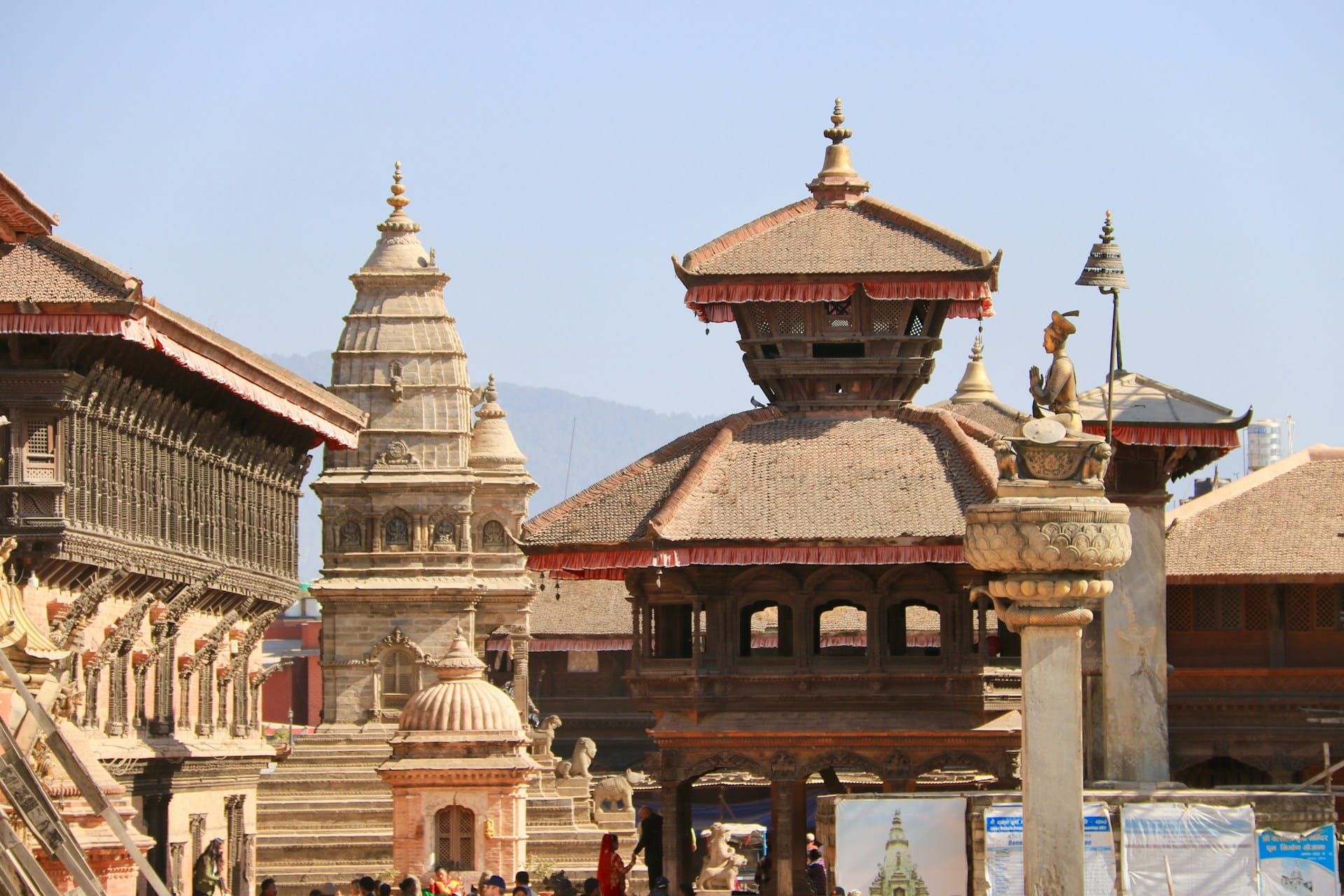
This is Kathmandu’s founding square, the seat of the Malla and later Shah kings, and — practically speaking — the most efficient single stop for understanding Newar architecture, Hindu mythology, and Nepal’s royal history in one place. The complex includes the sprawling Hanuman Dhoka Palace (named for the stone statue of the monkey god Hanuman guarding its entrance), the nine-story Basantapur Tower, the fearsome black stone relief of Kal Bhairav (a wrathful manifestation of Shiva that was historically used as a truth-detecting device — locals believed lying in front of it brought instant misfortune), and Kasthamandap, the enormous wooden pavilion said to have given Kathmandu its name, painstakingly reconstructed after Nepal’s devastating 2015 earthquake collapsed it entirely.
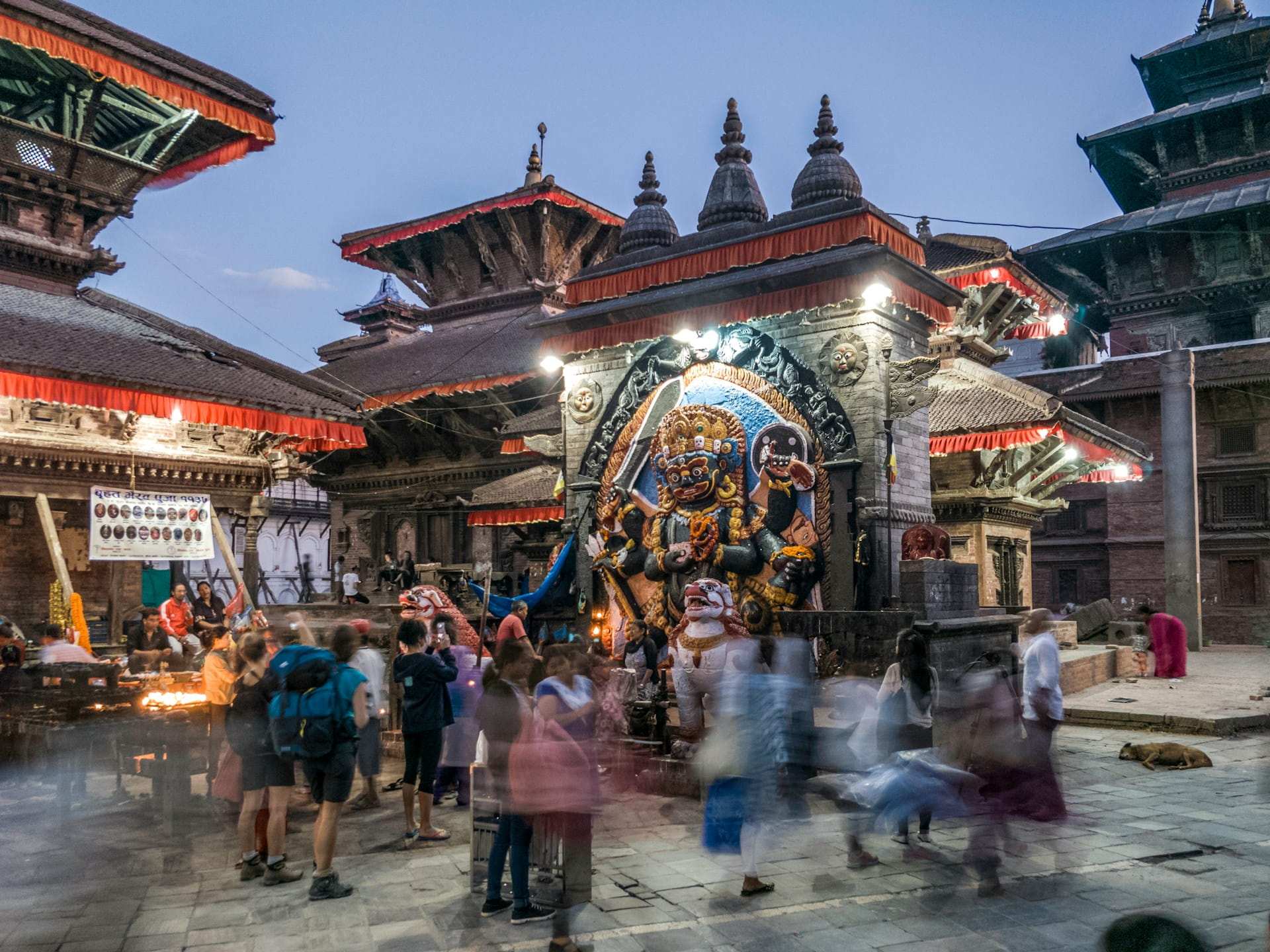
The single most memorable stop on the square is the Kumari Ghar, home to Nepal’s Living Goddess — a young girl selected through an elaborate traditional process and worshipped as the living incarnation of the goddess Taleju until she reaches puberty, at which point a new Kumari is chosen. Visitors gather in the courtyard hoping for a glimpse of her appearing briefly at the carved wooden window above; photography of her face is strictly forbidden, and this is worth respecting without exception — it’s one of the few genuine cultural boundaries in a square that is otherwise remarkably open to visitors.
What most guides don’t tell you: a significant number of temples here still show visible 2015 earthquake damage and reconstruction scaffolding. This isn’t a flaw in your visit — it’s arguably the most honest window into how living heritage actually survives, with traditional Newar carpenters using centuries-old joinery techniques to rebuild rather than replace. Ask any guide on-site about the earthquake and you’ll get a far richer story than any plaque provides.
2. Swayambhunath Stupa (The Monkey Temple)
Where: A hilltop roughly 3 km west of central Kathmandu
Entry fee: NPR 200 for foreign nationals; NPR 50 for SAARC nationals; free for Nepali citizens.
Hours: Effectively open 24 hours, though the ticket booth operates during daylight hours; sunrise and sunset are the two best visiting windows.
Swayambhunath is one of the oldest religious sites in the Kathmandu Valley, with some structures on the site dating back over 1,500 years, and it’s arguably the most photographed single monument in Nepal — the great white stupa dome topped with a gilded spire, painted with the enormous, watchful eyes of the Buddha gazing in the four cardinal directions, said to represent wisdom and compassion observing all directions simultaneously. The nose-like symbol beneath the eyes is actually the Nepali numeral “1,” symbolizing the unity of all paths to enlightenment.
Reaching the top requires climbing roughly 365 stone steps (there’s also a longer, gentler road route with parking, if stairs aren’t for you), and the reward at the summit is twofold: the stupa itself, ringed with prayer wheels that pilgrims spin clockwise while murmuring mantras, and one of the best panoramic views of the entire Kathmandu Valley on a clear day. The nickname “Monkey Temple” comes from the large resident population of macaques that treat the hillside as home — entertaining to watch from a distance, but keep food and dangling jewelry out of easy reach, since they’re confident and occasionally opportunistic.
What makes Swayambhunath genuinely different from Kathmandu’s other major stupa (Boudhanath, below) is its religious layering: Hindu shrines sit directly alongside Buddhist chaityas and monastery buildings on the same hilltop, an architectural expression of the centuries-long religious syncretism that defines Newar culture in this valley more than almost anywhere else in the Himalayan region.
3. Boudhanath Stupa
Where: Eastern Kathmandu, roughly 6 km from Thamel
Entry fee: NPR 400 for foreign nationals; NPR 100 for SAARC nationals; free for Nepali citizens.
Hours: Open 24 hours; the surrounding shops and cafés typically operate from early morning to evening.
If Swayambhunath is Kathmandu’s most photographed stupa, Boudhanath is its largest and, for many visitors, its most emotionally resonant. This is among the biggest spherical stupas in the world, and it functions as the spiritual center of Tibetan Buddhism in Nepal — the surrounding neighborhood filled with Tibetan refugee families, monasteries, butter-lamp shops, and thangka painting studios since the wave of migration that followed the 1959 Tibetan uprising.
The best way to experience Boudhanath is exactly the way locals do: join the slow clockwise circumambulation (called a kora) around the base of the stupa, ideally in the late afternoon or early evening when maroon-robed monks, elderly pilgrims spinning prayer wheels, and visitors all move together in the same unhurried loop. Several rooftop cafés ringing the plaza offer an elevated view over the stupa itself — worth the extra cost of a coffee for the photograph alone, particularly around sunset when the dome catches the light and the evening lighting of butter lamps begins around its base.
Boudhanath sits close enough to Kathmandu’s airport that it’s often the first meaningful cultural site visitors see after landing, and for good reason — it’s an easy, walkable, low-pressure introduction to the valley’s Buddhist heritage before diving into the denser, more layered Durbar Squares.
4. Pashupatinath Temple
Where: Eastern Kathmandu, on the banks of the sacred Bagmati River
Entry fee: NPR 1,000 for foreign nationals and other non-Indian SAARC nationals; free for Indian and Nepali nationals.
Hours: The wider complex is open roughly 4 am–9 pm daily; the inner temple gates typically close around 2 pm and reopen for the evening aarti (fire ceremony) at 6 pm in winter or 7 pm in other seasons.
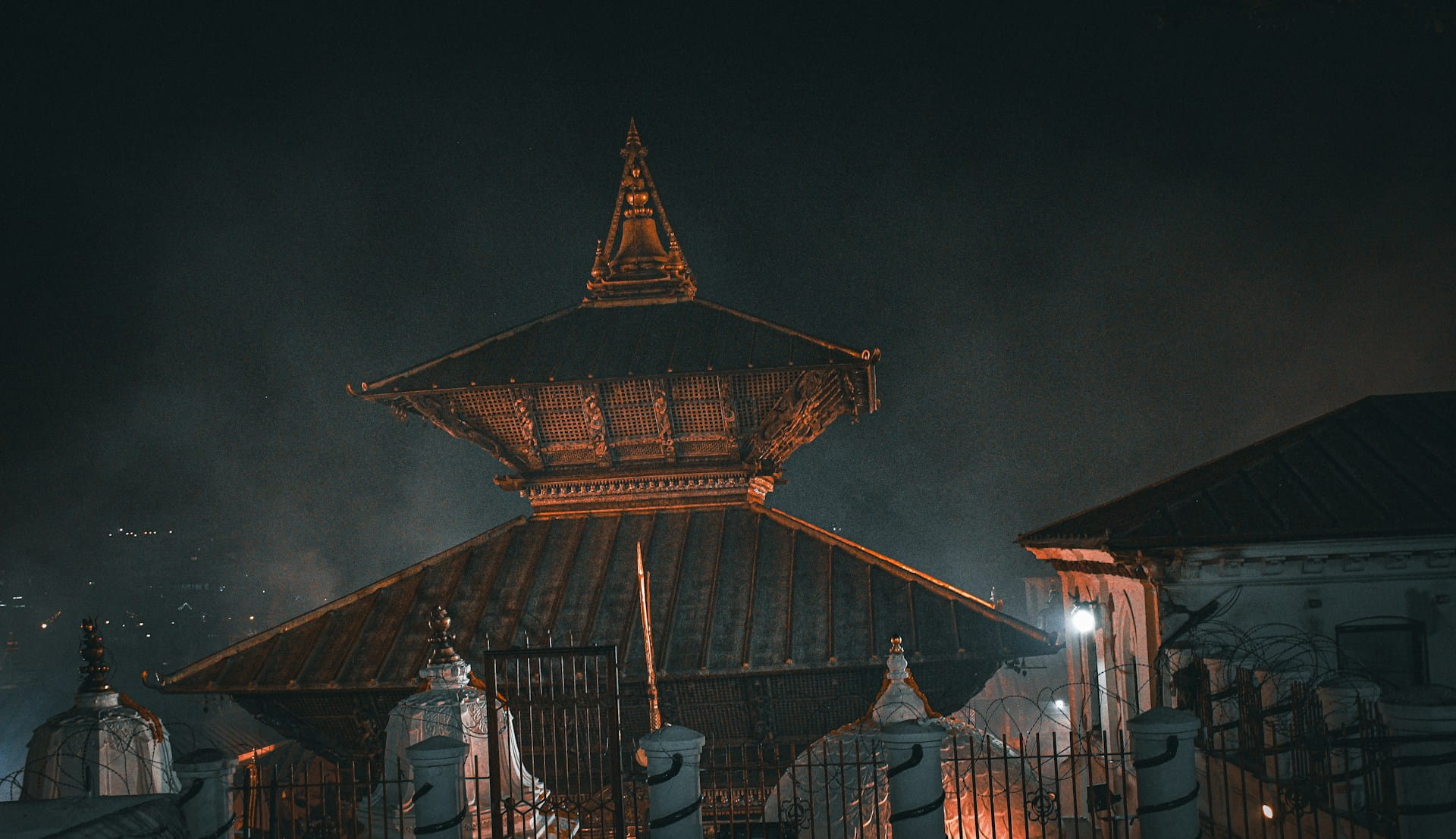
Pashupatinath is one of the most sacred Shiva temples on the Indian subcontinent and Nepal’s most important Hindu pilgrimage site — and it’s important to set the right expectation before you go. The main inner sanctum is restricted to Hindus only, a policy PADT (the Pashupatinath Area Development Trust, which manages the site) enforces without a formalized identity test, meaning visitors uncertain about their eligibility should simply ask temple staff rather than assume. This surprises some first-time visitors who expect their entrance ticket to grant full access — it doesn’t, and it’s worth knowing before you arrive rather than after paying.
What the ticket does grant, and what’s genuinely worth the visit regardless: access to the wider temple complex along both banks of the Bagmati River, including the cremation ghats where Hindu funeral rites are performed in open view, exactly as they have been for over a thousand years. This can be one of the more emotionally intense experiences available to travelers anywhere in Asia — witnessing the full cycle of a Hindu cremation from a respectful distance across the river is not staged for tourists; it is a real, ongoing part of daily life and death here. Photography of cremation ceremonies is a serious cultural sensitivity — keep cameras down unless you’re certain it’s appropriate, and follow your guide’s lead.
Beyond the ghats, the complex includes ashrams housing sadhus (Hindu holy men, some genuinely ascetic, some posing for tips — use judgment), forest paths along Kailash Hill dotted with smaller shrines, and, in the evening, one of Kathmandu’s most beautiful rituals: the nightly aarti ceremony, when priests perform a synchronized fire offering to the river as bells ring and crowds gather on both banks. Non-Hindu visitors are explicitly welcome to watch this from the eastern bank.
5. Patan Durbar Square (Lalitpur)
Where: Patan (Lalitpur), just south of Kathmandu across the Bagmati River
Entry fee: NPR 1,000 for foreign nationals (includes the excellent on-site Patan Museum); NPR 250 for SAARC nationals; free for Nepali citizens. A free multi-day extension is available at the ticket office with your passport.
Hours: The square itself is open at all times as a public space; the Patan Museum typically operates roughly 10:30 am–4:30 pm.
If Kathmandu Durbar Square feels like a history lesson, Patan Durbar Square feels like walking into an art gallery that happens to be an entire neighborhood. Patan — historically an independent kingdom called Lalitpur, “City of Beauty,” and known as Yela in the local Newari language — is widely considered to have the finest concentration of stone and wood carving craftsmanship in the entire valley, and locals will tell you this without a hint of hesitation.
The square is dense with temples in a relatively compact space: the ornate Krishna Mandir, built entirely from carved stone in a striking departure from the valley’s typical brick-and-wood pagoda style; the gleaming Hiranya Varna Mahavihar (the Golden Temple), a working Buddhist monastery a short walk from the main square, its courtyard covered in intricately worked gold repoussé panels; and the Patan Museum itself, widely regarded as one of the best-curated museums in South Asia, housed inside a former royal palace wing and covering the valley’s religious art and metalwork traditions in genuine depth — worth the extra hour most visitors skip.
Patan also remains a living center of traditional metal craft: wander the surrounding lanes and you’ll pass open workshops still hand-casting bronze and copper statues using the lost-wax technique passed down through Newar artisan families for generations — a living industry, not a museum display.
6. Bhaktapur Durbar Square
Where: Bhaktapur, roughly 15 km east of central Kathmandu
Entry fee: NPR 1,800 for foreign nationals; NPR 500 for SAARC nationals; free for Nepali citizens. The ticket covers the entire old city, including Pottery Square, Taumadhi Square, and Dattatreya Square, with a free one-week extension available with your passport.
Hours: Open daily; the old city’s vehicle-free zone operates on its own rhythm from early morning market activity through evening.
Bhaktapur is the most expensive of the three Durbar Square tickets, and it’s also the one we’d defend most strongly if you can only pick one. Bhaktapur — meaning “City of Devotees” — is Nepal’s third-largest city, but its historic core is entirely closed to vehicle traffic, which means it has preserved its medieval character more completely than either Kathmandu or Patan, both of which have modern city life pressing in against their old squares. Walking through Bhaktapur genuinely feels like stepping into the 15th century: narrow brick lanes, women drying grain and red chilies on rooftops, potters shaping clay on manual wheels in open courtyards exactly as their families have for generations.
The square’s centerpiece is the five-tiered Nyatapola Temple in Taumadhi Square — at roughly 30 meters, the tallest pagoda-style temple in Nepal, dedicated to the tantric goddess Siddhi Lakshmi and guarded by a stairway lined with pairs of stone figures, each pair said to be ten times stronger than the one below it. Bhaktapur is also the best place in the valley to try the local specialty juju dhau (“king of yogurt”), a rich, caramelized clay-pot yogurt sold from stalls throughout the old city — genuinely one of the better food experiences available anywhere in Kathmandu Valley.
Because it’s the farthest of the three Durbar Squares from central Kathmandu, Bhaktapur gets meaningfully fewer rushed day-trippers than Kathmandu Durbar Square, and it rewards a slower pace — this is the one square on this list where we’d actively encourage giving up half a day rather than an hour or two.
7. Changu Narayan Temple
Where: A hilltop above Bhaktapur, roughly 22 km from central Kathmandu
Entry fee: approximately NPR 300–400 for foreign nationals; NPR 100–350 for SAARC nationals (figures vary somewhat by source, so confirm at the gate); free for Nepali citizens.
Hours: Generally open daylight hours, roughly 7 am–6 pm.
Changu Narayan is the valley’s quietest UNESCO site by visitor numbers and, for many travelers, its most rewarding discovery precisely because of that. Dedicated to Vishnu, it’s widely regarded as the oldest Hindu temple still in active use in the Kathmandu Valley, with an inscription on-site dated to 464 CE during the reign of the Licchavi king Manadeva — making it one of the oldest dated inscriptions found anywhere in Nepal. The temple has survived fire in 1702 and the 2015 earthquake, and each restoration has preserved rather than replaced its extraordinary collection of stone and metal sculpture, considered by art historians among the finest examples of Licchavi-era craftsmanship anywhere in South Asia.
Because it sits away from the main tourist circuit and requires a deliberate trip (most visitors combine it with Bhaktapur, roughly 20–30 minutes away by road), Changu Narayan offers something genuinely rare in the valley’s heritage circuit: the chance to sit in an ancient, actively worshipped temple courtyard without competing for space with tour groups. If you only have time for six of the seven UNESCO sites, this is the one people skip — and, honestly, the one we’d tell a second-time visitor to prioritize.
8. Thamel & The Garden of Dreams
Where: Central Kathmandu, adjacent to the old city
Entry fee: Thamel itself is free to explore; the Garden of Dreams charges roughly NPR 200–400 for foreign visitors, with Nepali citizens paying significantly less.
Hours: Thamel operates late into the evening; the Garden of Dreams typically closes around 8–9 pm.
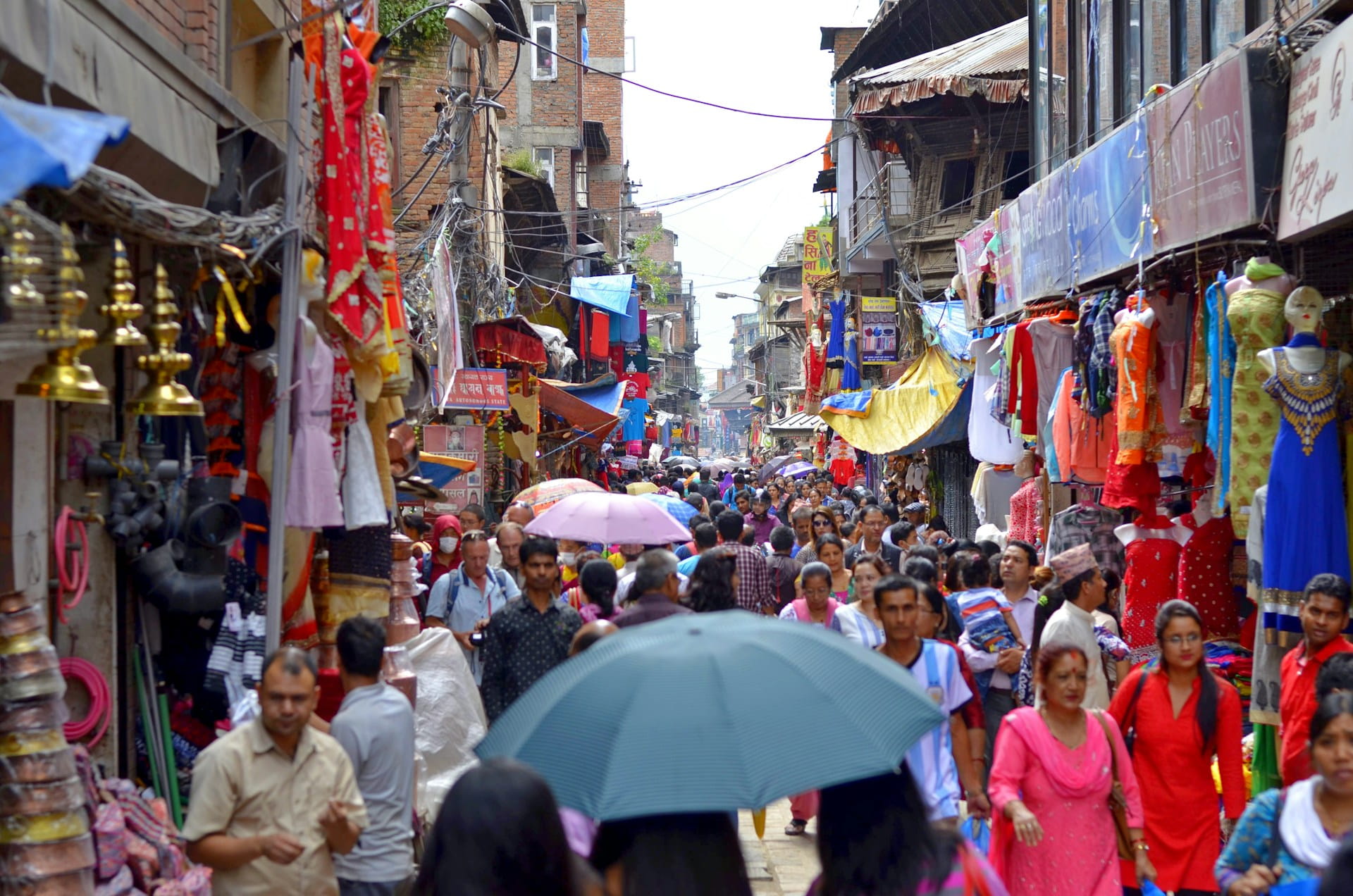
Thamel is Kathmandu’s tourist and trekking hub — a dense tangle of narrow lanes packed with trekking gear shops, budget guesthouses, rooftop restaurants, bars, bookshops, and pashmina stalls, all wedged into a neighborhood that predates the tourism industry by centuries. It’s not a heritage site in the UNESCO sense, but it earns its place on this list because it’s genuinely where most travelers spend their unstructured time in Kathmandu — sorting gear before a trek, unwinding after one, or simply absorbing the particular energy of a city where backpackers, monks, porters, and street vendors share the same 400-meter stretch of road.
Tucked just off Thamel’s northern edge is the Garden of Dreams, a beautifully restored neoclassical garden built in the 1920s by a former Nepali field marshal, inspired by Edwardian European garden design — a genuinely unexpected oasis of manicured lawns, pavilions, and a quiet fountain courtyard a two-minute walk from Thamel’s chaos. It’s a legitimately good spot to decompress with a coffee at the on-site Kaiser Café, particularly useful on your first or last day in Kathmandu when you want green space and relative quiet without leaving the city center.
9. Nagarkot
Where: A hill station roughly 32 km east of Kathmandu, about 1.5–2 hours by road
Entry fee: Free to visit; costs are limited to transport and accommodation if staying overnight.
Best time: Overnight, to catch both sunset and sunrise; October–November and March–April offer the clearest Himalayan views.
Nagarkot sits at roughly 2,100 meters on the eastern rim of the Kathmandu Valley, and on a clear day it delivers one of the most accessible wide-angle Himalayan panoramas available without trekking — a horizon that, under ideal autumn or spring conditions, stretches from Dhaulagiri in the west to Everest itself in the east. It’s a genuinely different kind of “place to go” than anything else on this list: not a heritage monument but a landscape, and the reason most travelers add it to a Kathmandu itinerary is the sunrise.
Staying overnight at one of Nagarkot’s hillside guesthouses or resorts, most positioned specifically to catch first light on the mountains, is worth the modest extra planning over attempting a same-day dawn drive from Kathmandu. Beyond the viewpoint itself, the area offers genuinely good short hiking trails through pine forest and terraced farmland connecting Nagarkot to nearby villages like Changu Narayan (making a combined half-day hike a smart way to link two entries on this list), and the air here — well above the valley floor’s seasonal haze layer — is consistently better than what you’ll be breathing in central Kathmandu, particularly during the winter months when the valley itself is under a smog layer that Nagarkot sits comfortably above.
10. Chandragiri Hills
Where: Southwest of Kathmandu, roughly 30–40 minutes by road to the cable car base station
Entry fee: Cable car round-trip pricing runs roughly NPR 1,000–2,200 for foreign visitors depending on the season and ticket tier, with lower rates for SAARC nationals and Nepali citizens; confirm current pricing at the base station, as it’s revised periodically.
Hours: The cable car typically operates from around 9 am to 5–6 pm daily.
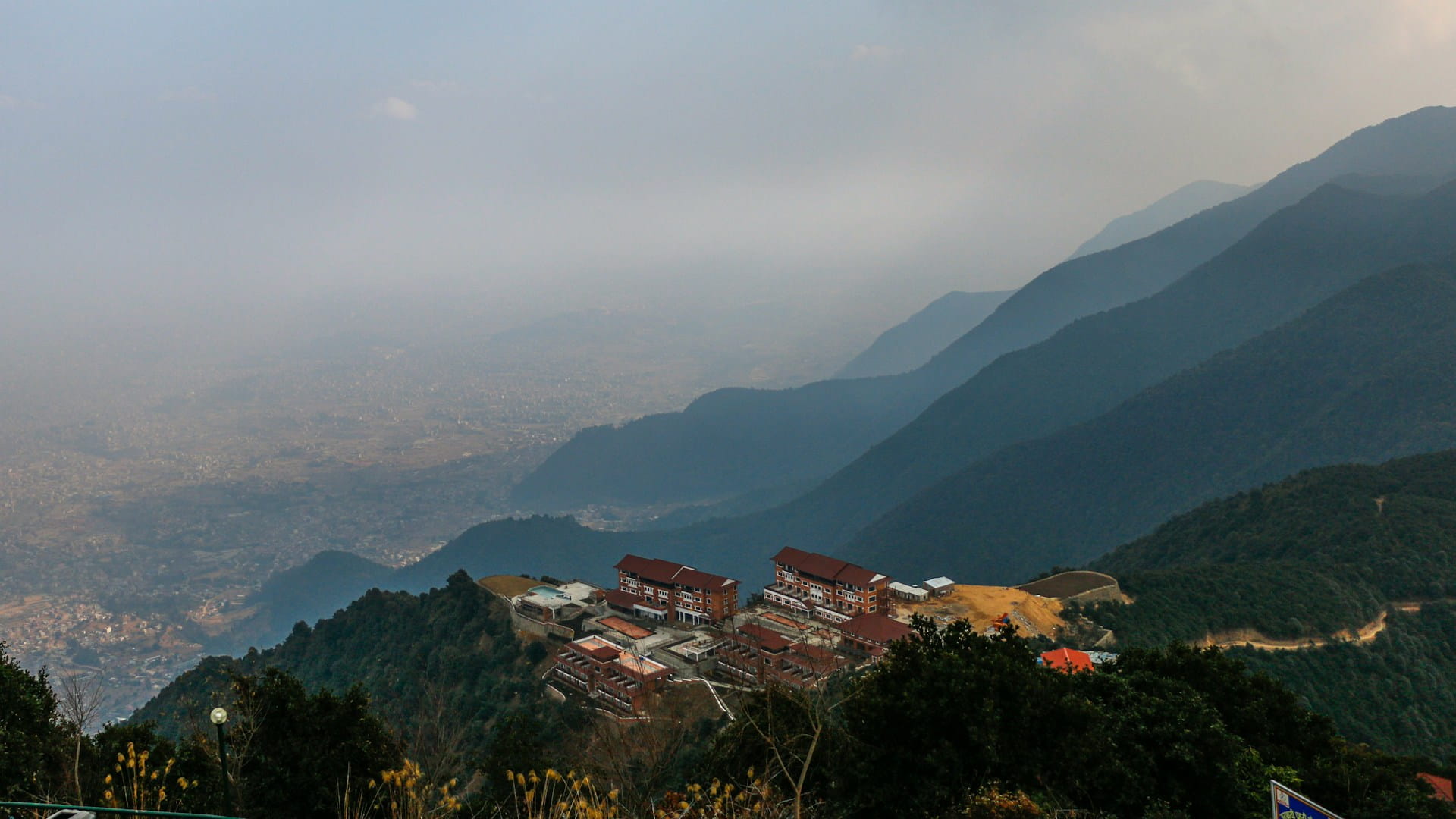
Chandragiri offers a different kind of valley-rim experience from Nagarkot: instead of an overnight hill-station stay, it’s a compact half-day trip built around a roughly 2.5-kilometer cable car ride climbing to the Bhaleshwor Mahadev Temple at the summit, at an elevation of around 2,550 meters. On a clear day, the top delivers sweeping views back down over the entire Kathmandu Valley on one side and, on the clearest days, a genuine Himalayan range view on the other — including, on exceptional days, Everest in the distance.
Because it’s a cable car rather than a hike, Chandragiri is the most accessible high-viewpoint option on this list for travelers with mobility limitations, tight schedules, or simply no interest in a multi-hour trek — you can realistically fit a Chandragiri visit into a half-day slot between other Kathmandu activities. The summit area also has a small network of short walking trails, a handful of restaurants, and, for the more adventurous, a zip-line — worth knowing about if you’re traveling with teenagers looking for something more active than another temple courtyard.
Planning Your Kathmandu Sightseeing: Practical Logistics
How many days do you actually need? For a meaningful (not rushed) first visit covering all seven UNESCO sites plus Thamel and one hill viewpoint, budget 4 full days minimum, ideally 5. Trying to compress this into 2 days is common but genuinely regrettable — you’ll end up “collecting” temples rather than experiencing them, and the Kathmandu Valley rewards unhurried mornings more than almost anywhere else in Nepal.
A realistic day-by-day structure:
| Day | Focus | Sites Covered |
|---|---|---|
| Day 1 | Kathmandu’s old city | Kathmandu Durbar Square, Thamel, Garden of Dreams |
| Day 2 | Buddhist Kathmandu | Swayambhunath (morning), Boudhanath (afternoon/evening) |
| Day 3 | Hindu heritage | Pashupatinath (morning), free afternoon or Chandragiri Hills |
| Day 4 | Patan | Patan Durbar Square, Patan Museum, Golden Temple, local lanes |
| Day 5 | Bhaktapur & Changu Narayan | Bhaktapur Durbar Square (half-day), Changu Narayan (afternoon), optionally continuing to Nagarkot for sunset/overnight |
Getting between sites. Taxis are the most flexible option for a multi-site day, generally negotiated up front rather than metered — expect to agree a price before getting in. Ride-hailing apps popular in Nepal offer more price transparency if data access is available. For a genuinely efficient valley tour, particularly one combining multiple UNESCO sites in a single day, a private guide and vehicle removes most of the friction around ticket queues, negotiating fares, and knowing which entrance gate to use at each site — a detail that trips up more independent travelers than you’d expect, since several of these sites have multiple gates with inconsistent ticket-checking.
Dress and behavior at religious sites. Nepal is genuinely relaxed compared to some neighboring countries, but a few points matter: cover shoulders and knees at temple complexes, particularly Pashupatinath; remove shoes before entering interior temple spaces where indicated; avoid touching statues, offerings, or ritual items; and always ask before photographing individuals, particularly sadhus and anyone engaged in an active ritual. At cremation ghats specifically, keep a respectful distance and lower voices — this is someone’s genuine grief, not a photo opportunity.
Budgeting for entrance fees. If you plan to visit all seven UNESCO sites plus the Garden of Dreams, budget roughly NPR 6,000–7,000 (approximately $45–55 USD) per person in entrance fees alone, before transport, guides, or the Chandragiri or Nagarkot side trips. It’s a meaningful amount relative to daily costs elsewhere in Nepal, but the fees directly fund ongoing conservation and post-earthquake reconstruction work — money well spent for sites this significant.
Beyond the Top 10: Honorable Mentions
If you have extra days, several additional Kathmandu Valley spots consistently reward the effort, even though they didn’t make the primary ten:
- Kopan Monastery, a working Tibetan Buddhist monastery on a hillside above Boudhanath, open to visitors and offering short meditation courses for those interested in a deeper engagement than a typical stupa visit.
- Kirtipur, a hilltop Newar town southwest of central Kathmandu with its own smaller-scale Durbar Square-style heritage core, notably free of the entrance fees and crowds of the three main squares.
- Freak Street (Jhochhen), just south of Kathmandu Durbar Square, the original 1960s–70s hippie-trail hub before Thamel existed — now a quieter, more local alternative with a handful of legacy cafés still trading on the era’s history.
- Shivapuri Nagarjun National Park, on the valley’s northern rim, offering genuine day-hiking trails through protected forest with occasional wildlife sightings, a useful nature counterweight to a heritage-heavy itinerary.
- The National Museum of Nepal, in Chhauni, useful as a single-stop primer on Nepali history and art before diving into the individual heritage sites, though its presentation is noticeably less polished than the Patan Museum.
Frequently Asked Questions about Places to Go in Nepal Kathmandu
- What are the 7 UNESCO World Heritage Sites in Kathmandu Valley?
Kathmandu Durbar Square (Hanuman Dhoka), Patan Durbar Square, Bhaktapur Durbar Square, Swayambhunath Stupa, Boudhanath Stupa, Pashupatinath Temple, and Changu Narayan Temple — collectively inscribed as a single World Heritage property in 1979. - Can I visit all seven UNESCO sites in one day?
Physically, yes, with a private vehicle and an early start, but it’s not recommended — you’ll spend more time in transit than actually engaging with the sites, and several (particularly Bhaktapur and Pashupatinath) genuinely reward two-plus hours each. Four to five days is a far better pace for a first visit. - Do I need a guide to visit Kathmandu’s heritage sites?
No, all seven sites are independently accessible, but a knowledgeable guide adds real value at sites like Kathmandu Durbar Square and Pashupatinath, where the layered mythology and history aren’t well explained by on-site signage. - Is Kathmandu Durbar Square free for tourists?
No — foreign nationals pay NPR 1,000 for a one-day ticket, though a free multi-day extension is available at the tourism office beside the Kumari’s residence with a passport and photo. - Can non-Hindus enter Pashupatinath Temple?
Non-Hindu visitors cannot enter the main inner sanctum, but the entrance ticket grants access to the wider temple complex, including the cremation ghats, gardens, and surrounding shrines, where most visitor activity actually takes place. All visitors, regardless of religion, may watch the evening aarti ceremony from the eastern riverbank. - What’s the difference between Swayambhunath and Boudhanath?
Swayambhunath is older, sits on a hilltop with sweeping valley views, and shares its site with Hindu shrines alongside Buddhist structures. Boudhanath is larger, sits at street level in a dedicated Tibetan Buddhist neighborhood, and functions as the center of Tibetan Buddhist life in Kathmandu, particularly since the Tibetan diaspora settled around it from 1959 onward. - Which Durbar Square is the best — Kathmandu, Patan, or Bhaktapur?
They’re genuinely different experiences rather than better-or-worse: Kathmandu Durbar Square is the most historically layered and central; Patan has the finest craftsmanship and the best museum; Bhaktapur is the most atmospheric and best-preserved as a living medieval town, and arguably the single best choice if you can only pick one. - How much does it cost to visit Kathmandu’s main attractions?
Budget roughly NPR 6,000–7,000 (about $45–55 USD) per person for entrance fees to all seven UNESCO sites plus the Garden of Dreams, not including transport, food, or guides. - Is Thamel worth visiting if I’m not trekking?
Yes — Thamel is Kathmandu’s most concentrated hub for restaurants, nightlife, shopping, and general city energy, and it’s centrally located enough to be a practical base even for travelers with no trekking plans at all. - What’s the best viewpoint near Kathmandu for Himalayan views?
Nagarkot offers the widest and most reliable panoramic range, especially for an overnight sunrise visit, while Chandragiri Hills offers a faster half-day cable-car alternative with views over both the valley and, on clear days, the distant Himalaya. - Are Kathmandu’s heritage sites still recovering from the 2015 earthquake?
Largely restored, but visible reconstruction continues at several sites, particularly parts of Kathmandu Durbar Square and Bhaktapur. Rather than detracting from a visit, most travelers find the ongoing traditional restoration work — using historic carpentry and masonry techniques — adds a genuine layer of understanding about how these living heritage sites survive. - Is it safe to walk between Kathmandu’s heritage sites on foot?
Within old-city cores like Bhaktapur and Patan, yes — both are largely pedestrianized. Central Kathmandu’s old city around Durbar Square is walkable but has more mixed vehicle traffic; use marked crossings and stay alert, as Kathmandu’s traffic patterns take some adjustment for first-time visitors. - What should I wear to visit temples in Kathmandu?
Cover shoulders and knees, wear shoes that are easy to remove for interior temple spaces, and bring a light scarf or shawl as a flexible cover-up option for sites with stricter dress expectations, particularly Pashupatinath. - Can I combine Kathmandu’s UNESCO sites with a trek?
Absolutely — most trekking itineraries in the Everest, Annapurna, or Langtang regions naturally bookend with a few extra days in Kathmandu before or after, and it’s one of the most efficient ways to pair cultural depth with mountain adventure in a single trip.
Conclusion on Places to Go in Nepal Kathmandu

Ten places, seven of them among the densest concentrations of living heritage anywhere on earth, all within a valley you can comfortably cross in under an hour. The sites aren’t going anywhere — but the version of them you experience depends entirely on how much time you give each one, and which gate you happen to walk through first.
If you’re building a Kathmandu itinerary around a trek, a festival, or simply want someone who knows which entrance to use at Bhaktapur before 8 am, Trek Trove Nepal plans exactly this kind of trip, every week, year-round.