
Introduction to Muktinath Cable Car
Important upfront: if you’re reading this because you’re planning an actual trip to Muktinath and hoping to skip the flight, jeep, or trek by riding a cable car — it does not exist yet. As of the most recent confirmed development, the Investment Board Nepal approved the project’s investment structure at its 64th meeting in early September 2026, and a committee was formed to negotiate the terms of the project development agreement with the developer. That’s a genuine milestone, but it is not construction, and no groundbreaking date has been confirmed. If you’re booking travel now, you still need one of the existing methods — flight, jeep, helicopter, or trekking — covered in our other Muktinath guides.
This guide exists because “Muktinath Cable Car” is a real, extensively reported infrastructure project that will matter enormously to how pilgrims and trekkers reach this sacred site if it’s ever completed — and because the numbers reported about it have shifted considerably over more than two decades of planning. Here’s the most accurate, dated, and honestly caveated picture we could put together, verified as of September 2026.
Quick Answer: Current Status at a Glance
| Question | Answer (as of September 2026) |
|---|---|
| Does it exist yet? | No — still in the investment approval and pre-construction phase |
| Latest confirmed milestone | Investment Board Nepal approved the project’s investment structure at its 64th meeting, chaired by Prime Minister KP Sharma Oli, in early September 2026 |
| Proposed length | 81.041 km (most recent detailed Environmental Impact Assessment figure) |
| Proposed route | Seraphant/Sherafant (near Nayapul/Birethanti, Parbat district) to near Muktinath Temple (Mustang district) |
| Proposed cost | Approximately Rs 57.6 billion (about US$416–430 million, depending on exchange rate used) |
| Proposed journey time | 3 hours 36 minutes, non-stop |
| Developer | Muktinath Darshan Pvt. Ltd., through the Investment Board Nepal |
| Would it be the world’s longest cable car? | Yes, by a very wide margin over any existing cable car system, if built as currently planned |
What Is the Muktinath Cable Car, Actually?
The Muktinath Cable Car is a proposed aerial ropeway intended to connect the lower hills near Pokhara (specifically, an area near Nayapul/Birethanti in Parbat district) directly to Muktinath Temple in Mustang, cutting a journey that currently takes anywhere from 8 hours by jeep to several days on foot down to a stated non-stop travel time of roughly 3 hours and 36 minutes.
The core motivation, as described consistently across years of reporting on the project, is accessibility: hundreds of thousands of Hindu and Buddhist pilgrims visit Muktinath annually, many of them elderly, and the current journey — whether by rough jeep road or multi-day trek — is genuinely difficult for a meaningful share of that pilgrim population. A cable car, in theory, would let visitors reach the temple in comfort without the physical demands or altitude-related risks of the existing overland or trekking routes.
It is also, if completed as designed, intended to become the longest cable car system in the world — a claim worth putting in honest perspective, which we do later in this guide.
The Real Timeline: How This Project Has Evolved
This is the single most important section for understanding why you’ll find such wildly different numbers about this project across different websites — the plan has genuinely changed multiple times over more than two decades of development, and each stage produced different, dated, publicly reported figures.
| Date/Period | Milestone | Key Reported Figures |
|---|---|---|
| ~20–25 years before 2026 (per developer statements) | Project first envisioned | No detailed technical specifications reported at this stage |
| Included in an earlier national budget | Nepal’s government formally proposed the concept | General plan announced, no finalized route or cost |
| MoU signing (Investment Board Nepal & Muktinath Darshan Pvt. Ltd.) | Memorandum of Understanding signed to prepare a Detailed Project Report (DPR) | Route described as 83.65–84 km, Birethanti to Muktinath, six stations (Birethanti, Ghorepani, Tatopani, Lete/Marpha, Jomsom, Kagbeni, Muktinath), estimated cost around Rs 35 billion |
| October 2023 | Financing agreement signed with Hyderabad-based Indian company KE&R Engineering Limited | Route described as ~80 km, cost estimated at Rs 55 billion, KE&R to invest 80% (Rs 44 billion) under an EPC/EPCF model, DPR reportedly completed, EIA nearing completion, ~90% of required land reportedly acquired, 19 stations mentioned |
| January 10, 2024 | Detailed Project Report (DPR) and Environmental Impact Assessment (EIA) submitted to the Nepal Investment Board | Budget revised upward to approximately Rs 57.64 billion; route described in some reports as 80.15 km with 17 sections and 19 stations |
| February 16, 2026 | Formal EIA report submitted to Nepal’s Ministry of Forests and Environment, made public for comment | Length specified as 81.041 km, 20 stations, 871 gondolas, 442 towers, starting altitude 1,009 m (Sheraphant/Sherafant, Parbat) to 3,653 m (Chengresi, near Muktinath), gondola capacity 10 passengers, spacing ~234 m, speed 7 m/s, up to 13 MW power requirement |
| Mid-2026 | EIA report publication reported as “moving the construction process forward” | Cost reaffirmed around Rs 55 billion, 20 stations, 3 hr 36 min journey time reconfirmed |
| Early September 2026 (most recent) | Investment Board Nepal’s 64th meeting, chaired by PM KP Sharma Oli, approved the project’s investment | Length reconfirmed at 81.041 km, cost approved at Rs 57.6437 billion, described under a build-own-operate-transfer (BOOT) model, “seven different locations” described as stations, a committee formed to negotiate the project development agreement with the developer |
What this timeline tells you: the project has moved through at least five distinct planning stages over more than two decades, with the route length growing from an initial ~80 km estimate to a more precisely surveyed 81.041 km, the station count reported anywhere from 6 to 20 depending on whether a report is describing major stations or all technical stops, and the cost climbing from an early Rs 35 billion estimate to a currently approved Rs 57.6 billion.
Treat any Muktinath Cable Car figure you encounter as tied to a specific date and report — this is an actively evolving project, not a fixed, finished plan.
Route and Stations
Based on the most detailed and recent Environmental Impact Assessment (submitted February 2026), the proposed route runs as follows:
| Segment | Approximate Location |
|---|---|
| Starting point | Sheraphant/Seraphant, Modi Rural Municipality, Parbat district (near Nayapul/Birethanti) |
| Passes through | Bhukbesi, Ulleri, Ghorepani, Sikha, Ghar, Narchyang, Kabre, Pahirothaplo, Ghasa, Lete, Kobang, Tukuche, Chokhopani, Marpha, Thini/Jomsom, Eklebhatti, Kagbeni, Khinga |
| Ending point | Chengresi/Chengrisi, near Muktinath Temple, Mustang district |
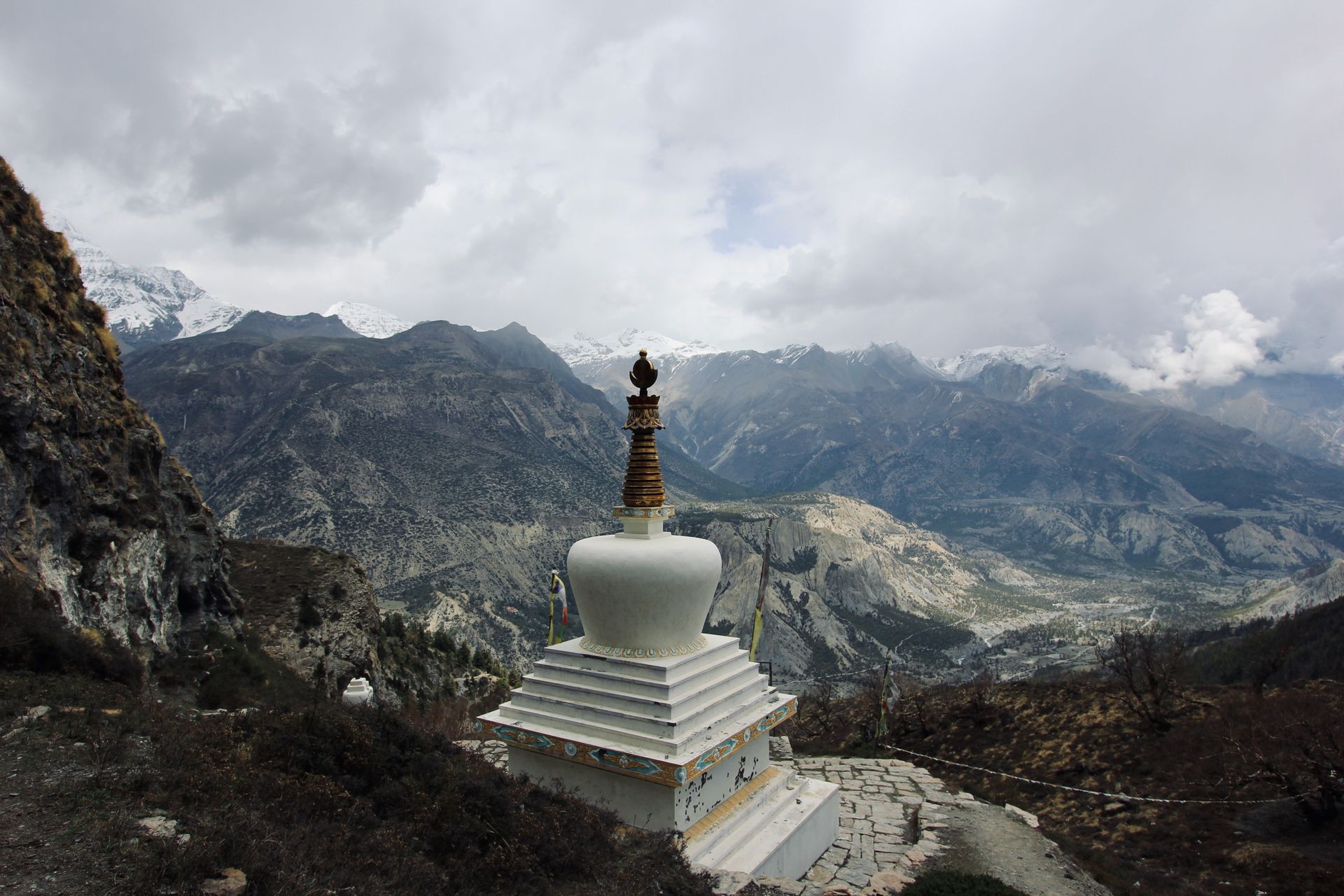
The route crosses four districts of Gandaki Province — Parbat, Kaski, Myagdi, and Mustang — and follows the watersheds of the Kali Gandaki and Modi rivers. Notably, this alignment tracks closely alongside sections of the classic Jomsom Muktinath Trek and the Ghorepani–Poon Hill section of the Annapurna Circuit, meaning the cable car would run, at least partially, above or near some of Nepal’s most popular existing trekking routes.
Station counts have been reported differently across different documents:
- Earlier MoU stage: 6 stations (Birethanti, Ghorepani, Tatopani, Lete/Marpha transit, Jomsom, Kagbeni, Muktinath — technically listed as 6 sub-stations plus the endpoints)
- 2023–early 2024 reports: 17 sections and 19 stations
- February 2026 EIA: 20 stations
- September 2026 IBN approval statement: “seven different locations”
These aren’t necessarily contradictory — they likely reflect different levels of detail (major passenger-boarding stations versus all technical support stations along the line), but the discrepancy has never been clearly reconciled in public reporting, so we’re presenting it honestly rather than picking one number and treating it as settled.
Technical Specifications (Per the February 2026 EIA)
The most detailed and recent technical figures come from the formally submitted Environmental Impact Assessment:
| Specification | Figure |
|---|---|
| Total length | 81.041 km |
| Starting altitude | 1,009 m (Sheraphant, Parbat) |
| Ending altitude | 3,653 m (Chengresi, near Muktinath) |
| Total elevation gain | ~2,644 m |
| Number of stations | 20 |
| Number of towers | 442 |
| Number of gondolas | 871 |
| Passenger capacity per gondola | 10 |
| Gondola spacing | Approximately 234 meters apart |
| Operating speed | 7 meters per second |
| Non-stop journey time | 3 hours 36 minutes |
| Estimated power requirement | Up to 13 megawatts |
Worth noting: the EIA’s stated ending altitude of 3,653 meters is somewhat lower than Muktinath Temple’s own commonly cited altitude of roughly 3,710–3,800 meters, since the terminal station (Chengresi) appears to sit slightly below and near the temple complex rather than at the shrine itself — meaning a short additional walk from the cable car’s final station to the temple would likely still be required, similar to the walk currently required from Ranipauwa.
Cost and Financing
| Detail | Figure |
|---|---|
| Current approved investment (September 2026) | Rs 57.6437 billion (roughly US$416–430 million, depending on the exchange rate used) |
| Earlier reported estimates | Rs 35 billion (initial MoU-stage estimate) → Rs 55 billion (2023–24 estimates) → Rs 57.64 billion (final approved figure) |
| Development model | Described as an EPC/EPCF (Engineering, Procurement, Construction/Financing) arrangement in 2023–24 reports; described as a BOOT (build-own-operate-transfer) model in the most recent 2025–26 reporting |
| Primary developer | Muktinath Darshan Pvt. Ltd. |
| Regulatory body | Investment Board Nepal (IBN), chaired by the Prime Minister of Nepal |
| Major financing partner (2023–24 reports) | KE&R Engineering Limited, a Hyderabad, India-based firm, reportedly committing 80% of the financing (roughly Rs 44 billion) |
| Ownership distribution (as reported in 2023) | 2% to locals affected by construction, 7% to the general public, 11% to founders |
The shift in described financing model — from EPC/EPCF in earlier reporting to BOOT in the most recent governmental framing — likely reflects the project’s evolution as it moved from an early construction-financing arrangement toward a formal, long-term public-private infrastructure agreement, but this hasn’t been explicitly clarified in public statements, so we’re flagging it rather than asserting a definitive resolution.
Would It Really Be the World’s Longest Cable Car?
This is the most consistently repeated claim about the project across every stage of its development, and it’s worth checking against what actually exists today.
| System | Location | Length | Type |
|---|---|---|---|
| Cablebús Line 2 | Mexico City, Mexico | 10.55 km | Longest single urban cable car line (Guinness World Record holder) |
| Hon Thom Cable Car | Phú Quốc, Vietnam | 7.9 km | World’s longest 3S (tricable) cable car, opened 2018 |
| Mi Teleférico | La Paz/El Alto, Bolivia | Multiple lines totaling roughly 30+ km across the network | World’s largest urban cable car network by combined line length |
| Muktinath Cable Car (proposed) | Nepal | 81.041 km | Would be a single continuous system |
Even compared to Bolivia’s entire multi-line urban cable car network — widely regarded as the largest cable car transit system in the world by total combined length — the proposed Muktinath system, at over 81 km as a single continuous line, would be roughly two to three times longer. Compared to the single longest existing individual cable car line (Mexico City’s Cablebús Line 2, at 10.55 km), it would be nearly eight times as long. If completed as currently planned, the “world’s longest cable car” claim is very likely to hold up — the honest caveat is simply that “if completed” is doing a lot of work in that sentence, given the project’s 20-plus-year planning history.
Environmental and Legal Context
This is a section worth reading carefully if you’re relying on this article for accurate, complete information, because the project’s future isn’t purely a matter of engineering and financing — it also sits within a broader, genuinely contested legal and environmental landscape in Nepal.
The route passes through the Annapurna Conservation Area, one of Nepal’s most significant protected areas both ecologically and culturally, sacred to both Hindu and Buddhist communities along its length. Large infrastructure projects proposed within Nepal’s protected conservation areas have faced significant legal challenges in recent years, and it’s important to understand this pattern to accurately assess the Muktinath project’s context.
On January 16, 2024, Nepal’s Supreme Court Constitutional Bench annulled an amendment to the National Parks and Wildlife Conservation Act that had previously allowed infrastructure projects designated as “national priority” to be built inside legally protected areas. This ruling has been widely reported as removing the legal basis for constructing infrastructure — including cable car projects — inside Nepal’s protected conservation zones, though a full written verdict has reportedly remained pending well after the summary ruling.
Separately, in January 2023, Nepal’s Supreme Court issued an interim order halting construction of a different, smaller cable car project — the 6.416 km Sikles Annapurna Cable Car in Kaski district — following a writ petition challenging its Environmental Impact Assessment. This is a distinct project from the Muktinath Cable Car, but it demonstrates that cable car proposals within the Annapurna Conservation Area specifically have already faced successful legal challenges on environmental grounds.
More broadly, Nepal has seen a documented pattern of controversy over cable car projects sited in ecologically and culturally sensitive areas in recent years — most prominently the Pathibhara (Mukkumlung) Cable Car dispute in Taplejung, eastern Nepal, an entirely separate project in a different region that has involved Supreme Court interim orders, protester confrontations, tree-felling controversies, and even a World Bank Group ombudsman review of an international finance institution’s advisory role. We mention this not because it’s the same project as Muktinath’s, but because it illustrates the kind of scrutiny and opposition large cable car developments in Nepal’s protected and sacred landscapes have faced in the current period, and it’s a reasonable signal that the Muktinath project could face comparable challenges given its similar profile — a large infrastructure development inside a nationally significant conservation area.
One specific report (via ICT, a global indigenous rights news outlet, dated mid-2025) described the Muktinath Cable Car project as having drawn opposition tied to concerns over its impact on forests and pilgrimage routes within the Annapurna Conservation Area, and noted that Nepal’s National Planning Commission had granted the broader category of such projects “national priority” status despite pending legal challenges elsewhere in the system — a decision legal experts quoted in that reporting characterized as potentially conflicting with the Supreme Court’s January 2024 ruling.
The honest summary: the Muktinath Cable Car has continued to move forward through Nepal’s investment-approval bureaucracy as of September 2026, but it does so against a backdrop of genuine, ongoing legal and environmental contestation over infrastructure development inside Nepal’s protected conservation areas more broadly. Whether this specific project faces a direct legal challenge of its own, in the way the smaller Sikles project or the unrelated Pathibhara project have, isn’t something we can confirm definitively from current reporting — but it’s a live enough issue in Nepal’s infrastructure-and-conservation landscape that it deserves mention rather than omission.
Potential Impact on Existing Trekking Routes and Local Communities
Because the proposed route runs directly alongside — and in places likely above — sections of the classic Jomsom Muktinath Trek and the Ghorepani–Poon Hill loop, it’s worth thinking through what a completed cable car could mean for the villages and trekking economy along that corridor, independent of the legal questions above.
- Teahouses and local lodges along the current trekking route (Ghorepani, Tatopani, Ghasa, Marpha, Kagbeni, and others) depend substantially on trekker traffic. A cable car that lets pilgrims and casual visitors bypass these villages entirely could meaningfully reduce foot traffic and associated income for communities currently built around hosting trekkers.
- Poon Hill’s famous sunrise viewpoint and the broader trekking experience through this region has, for decades, been one of Nepal’s most popular short treks in its own right, independent of Muktinath. How a cable car alignment running near or through this area affects the visual and experiential character of that trek is a genuine open question that hasn’t been fully addressed in public reporting we’ve reviewed.
- Construction impact — tree clearance, tower construction, and station building across 81 km of hill and mountain terrain — represents a substantial physical footprint, which is part of what has drawn environmental scrutiny to comparable projects elsewhere in Nepal’s conservation areas.
None of this is a reason to assume the project won’t ultimately proceed, or that it would necessarily be a net negative — proponents argue it would dramatically improve accessibility for elderly and physically limited pilgrims who currently cannot make the journey at all, and could bring new tourism revenue to the region. It’s simply the honest, other side of the accessibility argument that gets less coverage in promotional material about the project.
What This Means for Travelers Planning a Trip Today
Given everything above, here’s the practical bottom line if you’re actually planning a Muktinath visit rather than just following the project’s news coverage:
- The cable car does not exist and cannot be booked, ridden, or relied upon for any trip planned in the near-to-medium term. As of September 2026, the project is at the investment-approval and pre-construction-agreement stage, with a negotiating committee freshly formed and no confirmed construction start date.
- Even under an optimistic scenario where construction begins soon, cable car projects of this scale typically take several years to complete — earlier project statements referenced construction timelines of roughly 4 to 4.5 years once actual building begins, though these figures were stated years ago and haven’t been reconfirmed against the current, later-stage approval.
- Given the project’s 20-plus-year planning history and the unresolved legal/environmental context, it would be reasonable to expect further delays, rather than assume the currently approved timeline will hold without adjustment — this is a pattern worth being realistic about rather than optimistic about.
- The existing ways to reach Muktinath — flight and jeep from Pokhara, overland driving, helicopter, or trekking — remain the only real options for anyone planning a visit now, and will likely remain so for years to come.
Should You Wait for the Cable Car Before Visiting?
Based on everything documented above, our honest answer at Trek Trove Nepal is no — not because the project won’t eventually happen, but because its history gives no reliable basis for predicting when. A project first envisioned roughly two decades ago, which has moved through an MoU, a financing agreement, a DPR submission, an EIA submission, and multiple rounds of investment approval — with cost estimates rising at nearly every stage — is not a project on the verge of imminent completion. It’s a project that has consistently taken longer, and cost more, than each preceding stage projected.
If reaching Muktinath comfortably and with minimal physical exertion is your priority, the existing flight-and-jeep or helicopter options already achieve that goal today, without waiting on a project whose completion timeline remains genuinely uncertain.
How We’re Tracking This at Trek Trove Nepal
Given how directly this project could affect the trekking routes we run — the Jomsom Muktinath Trek and the broader Ghorepani–Poon Hill corridor both sit close to the proposed alignment — we follow its regulatory and legal developments closely, and we’ll continue updating our guidance as genuine construction milestones (not just further approval-stage announcements) are confirmed.
For now, our advice to every traveler asking about it is the same: plan your trip around the routes that exist today, and treat the cable car as a genuinely fascinating but unresolved piece of Nepal’s infrastructure future, not a travel option.
Frequently Asked Questions about Muktinath Cable Car
1. Is the Muktinath Cable Car open or operating?
No. As of September 2026, it remains in the investment-approval and pre-construction-agreement stage. No section of it has been built, and no opening date has been set.
2. How long will the Muktinath Cable Car be?
The most recent and detailed figure, from the February 2026 Environmental Impact Assessment, is 81.041 km. Earlier reports across 2021–2024 cited figures ranging from roughly 80 km to 84 km, reflecting the project’s evolving planning stages.
3. Will it really be the world’s longest cable car?
If completed as currently planned, very likely yes — at over 81 km, it would be roughly eight times longer than the current record-holding single urban cable car line (Mexico City’s 10.55 km Cablebús Line 2) and two to three times longer than Bolivia’s entire multi-line Mi Teleférico network, widely considered the world’s largest cable car transit system by total combined length.
4. How much will it cost?
The most recently approved figure, from the Investment Board Nepal’s September 2026 meeting, is approximately Rs 57.64 billion (roughly US$416–430 million). This figure has risen from an initial estimate of around Rs 35 billion at the earlier MoU stage.
5. Where will it start and end?
It’s proposed to run from Sheraphant/Seraphant, near Nayapul/Birethanti in Parbat district, to Chengresi, near Muktinath Temple in Mustang district, at an ending altitude of approximately 3,653 meters.
6. How long will the ride take?
The consistently reported figure across multiple years of planning documents is 3 hours and 36 minutes for a non-stop journey, at an operating speed of approximately 7 meters per second.
7. Who is building it?
Muktinath Darshan Pvt. Ltd. is the primary developer, operating through the Investment Board Nepal. A Hyderabad, India-based firm, KE&R Engineering Limited, was reported in 2023–24 as committing roughly 80% of the project’s financing.
8. Is the project facing legal challenges?
Cable car projects within Nepal’s protected conservation areas more broadly have faced significant legal challenges, including a Supreme Court ruling in January 2024 that annulled a legal amendment permitting infrastructure inside protected areas, and a separate 2023 court order halting a different, smaller cable car project (Sikles Annapurna Cable Car) within the same conservation area. Whether the Muktinath project itself faces a direct, active court challenge specifically hasn’t been definitively confirmed in the reporting we reviewed, though at least one report has described organized opposition to the project on environmental and cultural grounds.
9. Will the cable car pass near existing trekking routes?
Yes — the proposed alignment runs close to, and in sections likely alongside, the classic Jomsom Muktinath Trek route and the Ghorepani–Poon Hill section of the Annapurna Circuit.
10. How many stations will it have?
This is one of the least consistently reported figures — ranging from 6 stations at the earlier MoU stage to 20 stations in the most detailed 2026 Environmental Impact Assessment, with the most recent September 2026 approval statement describing “seven different locations.” The discrepancy likely reflects different levels of technical detail across reports rather than a single settled figure.
11. When will construction begin?
No confirmed construction start date has been publicly announced as of September 2026. The most recent milestone is the formation of a committee to negotiate the project development agreement, which is a pre-construction regulatory step, not the start of building.
12. How long will construction take once it begins?
Earlier project statements (2023–24) referenced a construction period of roughly 4 to 4.5 years, though this figure hasn’t been reconfirmed against the project’s current, later-stage approval, and given the project’s history of delays, it should be treated as an estimate rather than a firm commitment.
13. Should I delay my Muktinath trip to wait for the cable car?
No — given the project’s more than two-decade planning history and its still-unconfirmed construction start date, waiting isn’t a practical strategy for anyone planning a trip in the foreseeable future. Existing flight, jeep, helicopter, and trekking options remain the only real ways to reach Muktinath today.
14. Where can I get reliable updates on the project’s progress?
Nepali news outlets covering infrastructure and investment policy (reporting on Investment Board Nepal meetings specifically) tend to carry the most current, dated milestones. Because figures have shifted at nearly every reporting stage, treat any single source’s numbers as tied to its publication date rather than as a final, settled specification.
Final Word on Muktinath Cable Car
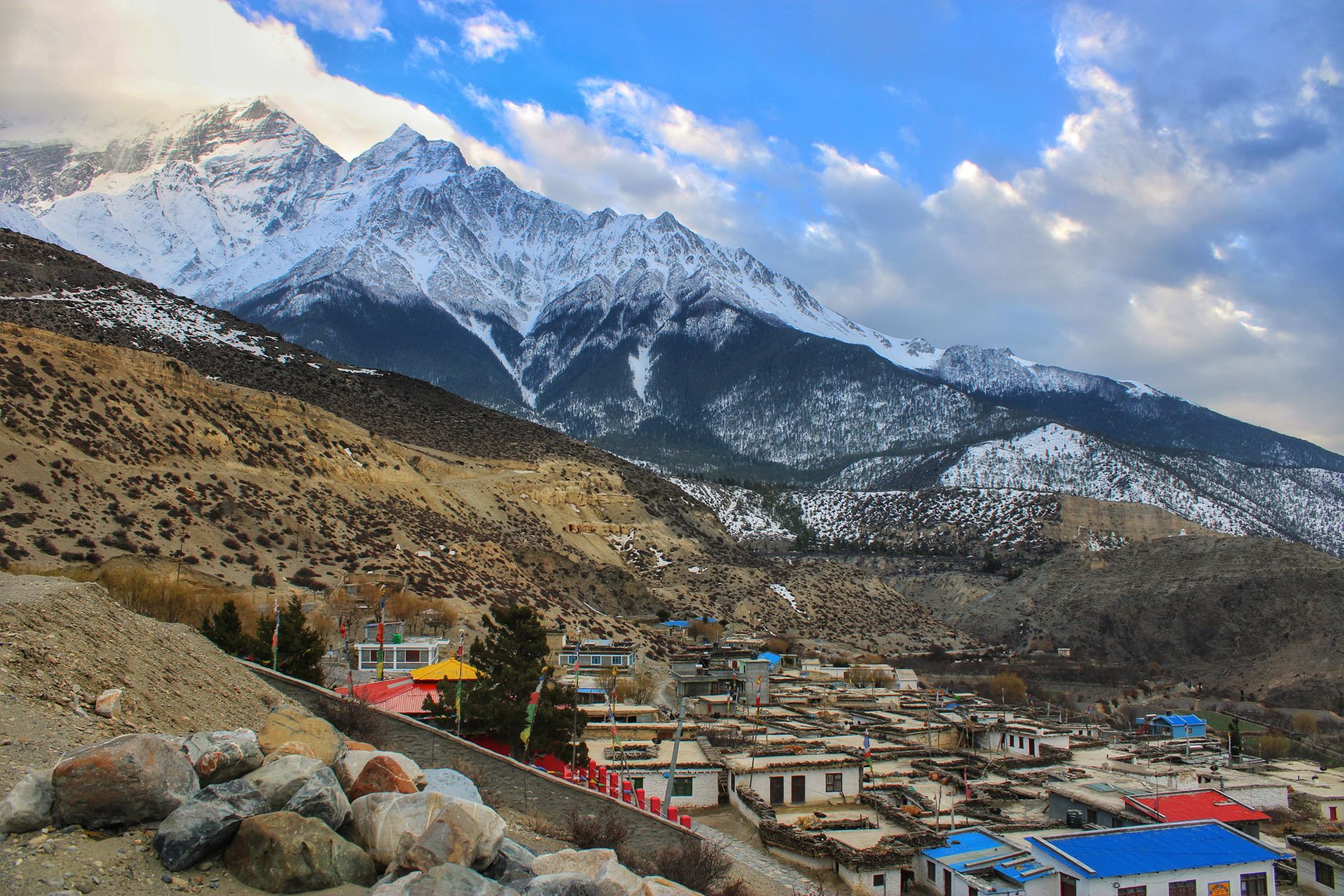
The Muktinath Cable Car is a genuinely remarkable proposed piece of infrastructure — at over 81 km, it would dwarf every existing cable car system on Earth, and it could meaningfully improve access to one of the Himalayas’ most significant pilgrimage sites for travelers who currently can’t manage the physical demands of the existing routes. But “proposed” is the operative word, and has been for more than two decades of planning, financing agreements, and regulatory approvals that have consistently taken longer and cost more than each preceding stage projected.
If you’re planning a visit to Muktinath, plan around the routes that exist today — and treat any confident claim that the cable car is “coming soon” with the same healthy skepticism this project’s own two-decade history warrants.
