
Introduction to Muktinath Itinerary
Search “Muktinath itinerary” and you’ll find dozens of near-identical day-by-day plans, most copied from one another, few explaining why you’d pick an 11-day trek over a 3-day jeep tour, or what you actually give up by choosing the fast option. The honest answer is that there isn’t one correct itinerary — there’s a right itinerary for your fitness level, time budget, and whether you’re visiting Muktinath as a pilgrimage or as one stop on a longer Himalayan trek.
This guide lays out six realistic itinerary structures — from a 3-day express pilgrimage to a full 11-day Jomsom Muktinath trek via Ghorepani and Poon Hill — with real day-by-day breakdowns, altitude figures, permit requirements, and costs, plus a short note on what changes if you extend into the full Annapurna Circuit. We’ve built and run versions of every one of these itineraries at Trek Trove Nepal, so the trade-offs here come from what actually happens on the ground, not just what looks good on paper.
Quick Answer: Which Itinerary Fits You?
| Itinerary | Duration | Style | Best For |
|---|---|---|---|
| Express Pilgrimage | 3 days | Flight + jeep | Time-limited pilgrims, older travelers, tight schedules |
| Extended Pilgrimage | 4 days | Flight + jeep + Pokhara buffer | Same as above, with a weather safety margin |
| Overland Jeep Tour | 5–6 days | Jeep both ways via Beni/Tatopani | Groups, families, those who want scenery without walking |
| Short Jomsom Muktinath Trek | 7–8 days | Fly in, trek out (or reverse) | First-time trekkers, moderate fitness, limited days off |
| Classic Jomsom Muktinath Trek | 9–11 days | Full walk-in via Ghorepani & Poon Hill | Trekkers wanting the complete lower Mustang experience |
| Full Annapurna Circuit | 12–18 days | Multi-day trek crossing Thorong La (5,416m) | Serious trekkers wanting the complete circuit, not just Muktinath |
What Actually Determines Which Itinerary You Should Choose
Before the day-by-day breakdowns, it’s worth being honest about the handful of factors that should drive this decision, because they matter more than which blog post you happened to read first.
- Total days available. This is usually the real constraint. A 3-day itinerary and an 11-day itinerary both end at the same temple — the difference is everything you see, and how gradually your body adjusts, along the way.
- Physical fitness and trekking experience. Jeep-based itineraries require essentially no trekking fitness. The multi-day trekking options require the ability to walk 5–7 hours a day on uneven terrain, sometimes for a week or more consecutively.
- Altitude sensitivity and age. Trekking itineraries build in far more gradual altitude gain than flight-based options, which matters for older travelers, anyone with a history of altitude sickness, or those simply wanting the safest possible ascent profile.
- Whether Muktinath is the destination or a waypoint. If you’re doing the full Annapurna Circuit, Muktinath is one stop among many, and your itinerary planning should center on Thorong La, not on Muktinath alone.
- Budget. Flights, jeep hire, and porter/guide costs scale very differently across these options, covered in the cost comparison table later in this guide.
- Season. Every itinerary here works best in spring (March–May) and autumn (September–November); several remain viable, with caveats, in winter and monsoon, discussed under each option.
Permits You’ll Need, Regardless of Itinerary
This surprises a lot of first-time visitors: even jeep-based, non-trekking pilgrimage tours to Muktinath require permits, because the route passes through the Annapurna Conservation Area. Independent travelers can’t simply drive up without documentation.
| Permit | Cost (2026, foreign nationals) | Required For |
|---|---|---|
| Annapurna Conservation Area Permit (ACAP) | NPR 3,000 (≈ US$23), one-time | All itineraries — jeep, flight, or trekking |
| TIMS Card (Trekkers’ Information Management System) | NPR 2,000 (≈ US$15) individual; less for group/SAARC travelers | Trekking itineraries; commonly required for jeep tours too |
| Upper Mustang Restricted Area Permit | US$50 per person, per day inside the restricted zone (replaced the old flat US$500/10-day fee in late 2025) | Only if extending beyond Kagbeni into Upper Mustang |
For a standard Muktinath visit that doesn’t push north into Upper Mustang, budget roughly US$38 per person in permit costs (ACAP + TIMS combined) — genuinely inexpensive compared to many other Nepal trekking regions. If you’re tempted to add an Upper Mustang extension (covered later in this guide), understand that the restricted-area permit alone adds a meaningful cost per additional day, and as of March 2026 it’s charged per day rather than as a flat fee, so trip length now matters more to the total cost than it used to.
A licensed guide and, for Upper Mustang specifically, a registered agency are compulsory requirements — this isn’t a route where independent permit applications are an option.
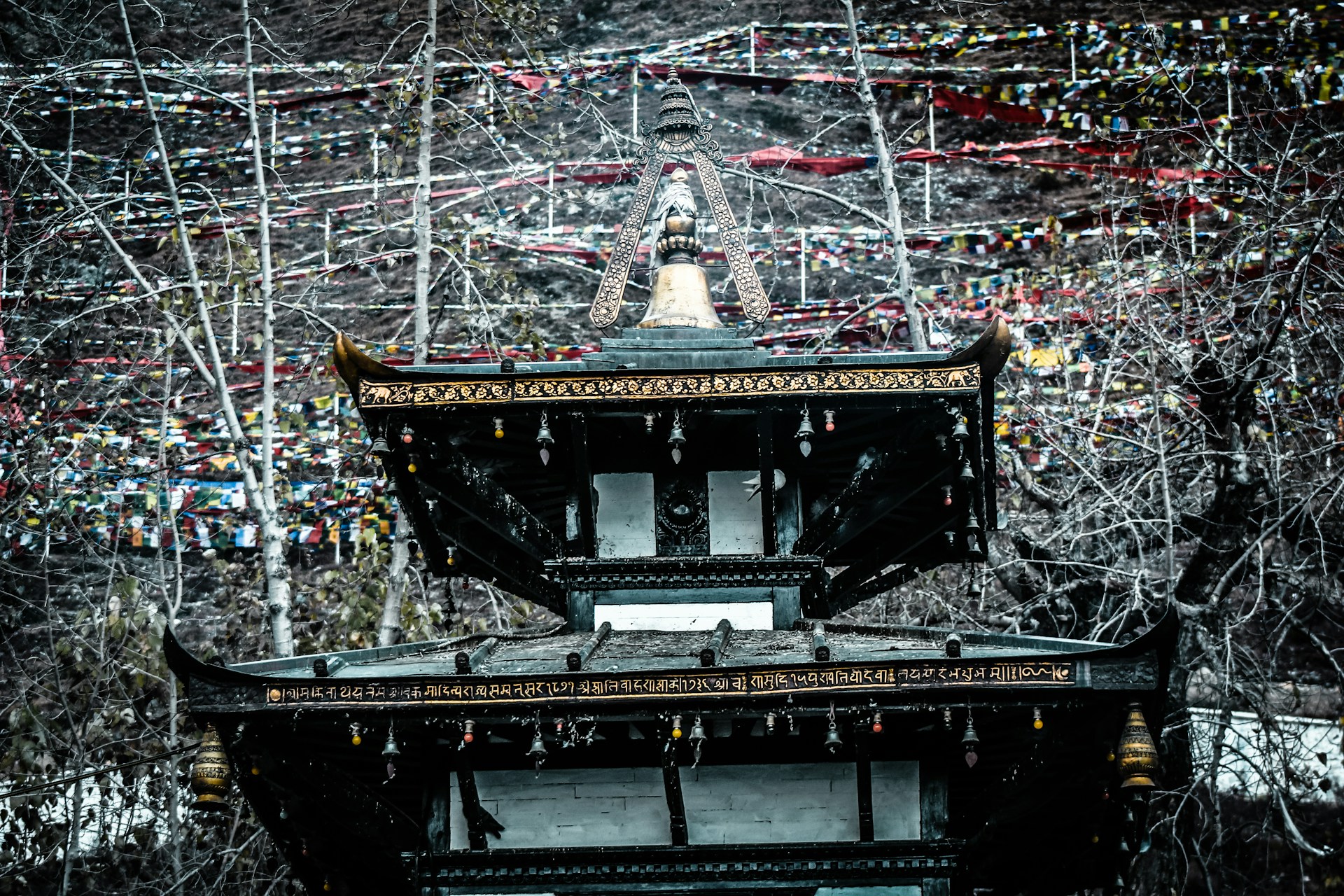
Option 1: The 3-Day Express Pilgrimage Itinerary
This is the fastest realistic way to visit Muktinath and return, built entirely around flights and jeep transfers. It’s the itinerary of choice for pilgrims on a tight schedule, business travelers adding a side trip, or anyone who wants the temple experience without a multi-day commitment.
| Day | Route | Altitude | Transport | Time |
|---|---|---|---|---|
| 1 | Kathmandu → Pokhara | 1,400m → 820m | Flight (25 min) or drive (6–7 hrs) | Half to full day |
| 2 | Pokhara → Jomsom → Muktinath | 820m → 2,720m → 3,710–3,800m | Flight (20–25 min) + jeep (~1 hr) | Half day |
| 3 | Muktinath → Jomsom → Pokhara → Kathmandu | 3,800m → 2,720m → 820m → 1,400m | Jeep + flight/drive | Full day |
What this itinerary actually involves: an early-morning flight from Pokhara to Jomsom (these flights only operate in the early morning before Mustang’s strong afternoon winds set in), a jeep transfer up to Ranipauwa, time at the temple, and a same-day or next-morning return. It’s efficient, but it’s also the itinerary with the fastest altitude gain of any option here — from roughly 820 meters to nearly 3,800 meters in a matter of hours — which means it carries the highest relative risk of mild altitude discomfort of anything in this guide.
Best for: pilgrims with rigid schedules, travelers who’ve been to altitude before without issue, and anyone prioritizing speed over acclimatization margin.
Honest downside: zero buffer for flight delays. If your Jomsom flight is cancelled or delayed due to weather — a real possibility, especially outside peak season — this itinerary has no slack to absorb it.
Option 2: The 4-Day Extended Pilgrimage Itinerary
The same structure as the 3-day version, with one addition that solves its single biggest weakness: a buffer day.
| Day | Route | Altitude | Notes |
|---|---|---|---|
| 1 | Kathmandu → Pokhara | 1,400m → 820m | Arrival, rest, sightseeing at Phewa Lake |
| 2 | Pokhara → Jomsom → Muktinath | 820m → 3,710–3,800m | Early flight + jeep; overnight at Ranipauwa |
| 3 | Muktinath temple visit → Jomsom | 3,800m → 2,720m | Full morning at the temple, descend to Jomsom, explore the town and its apple orchards |
| 4 | Jomsom → Pokhara → Kathmandu | 2,720m → 820m → 1,400m | Return flight/drive |
The key difference is spending the night in Jomsom rather than treating the whole trip as a same-day round trip. This gives you a genuine buffer against flight delays in either direction and a slightly more gradual altitude profile, since you’re not attempting the full ascent-and-descent in a single day. It’s a small change in duration with a real improvement in comfort and reliability.
Best for: the same traveler profile as the 3-day option, but for anyone slightly more risk-averse about altitude or flight reliability — which, honestly, should be most people taking this route.
Option 3: The 5–6 Day Overland Jeep Tour
This route swaps flights for a scenic overland drive, following the Kathmandu–Pokhara–Beni–Jomsom–Muktinath road. It’s popular with groups, families, and travelers who want the scenery and gradual altitude exposure of a road trip without any walking.
| Day | Route | Altitude | Drive Time |
|---|---|---|---|
| 1 | Kathmandu → Pokhara | 1,400m → 820m | 6–7 hrs |
| 2 | Pokhara → Jomsom (via Beni, Tatopani, Marpha) | 820m → 2,720m | 7–9 hrs |
| 3 | Jomsom → Muktinath, temple visit, return to Jomsom or Kagbeni | 2,720m → 3,800m → 2,720–2,804m | 2–3 hrs total |
| 4 | Jomsom → Pokhara (return via same route, or fly) | 2,720m → 820m | 7–9 hrs drive, or 20–25 min flight |
| 5 | Pokhara → Kathmandu | 820m → 1,400m | 6–7 hrs drive or 25 min flight |
| 6 | Buffer/departure day | — | — |
A 6-day version simply adds an overnight stop or a rest day somewhere along this route — commonly in Tatopani, known for its natural hot springs, or in Marpha, known for its apple orchards and Thakali culture — rather than pushing Pokhara to Jomsom in one long day.
What makes this option genuinely underrated: the overland route passes through intermediate altitudes — Tatopani around 1,190–1,290 meters, Ghasa and Marpha in the low-to-mid 2,000s — which gives your body a staged introduction to altitude that the flight-based options skip entirely. It takes longer and requires a full 4WD vehicle for the rougher unpaved stretches, but it’s a genuinely lower-risk ascent profile than flying straight to Jomsom.
Best for: families with children or older relatives, groups who want a shared scenic journey rather than a quick flight, and anyone who’d rather manage altitude gradually without the physical demands of trekking.
Option 4: The 7–8 Day Short Jomsom Muktinath Trek
This is the entry point into actual trekking itineraries — flying in to save time, then walking out (or occasionally the reverse), through some of the most scenic sections of the lower Mustang route.
| Day | Route | Altitude | Walking Time |
|---|---|---|---|
| 1 | Kathmandu → Pokhara | 1,400m → 820m | — (flight/drive) |
| 2 | Pokhara → Jomsom (flight) → Kagbeni | 820m → 2,720m → 2,804m | 3–4 hrs |
| 3 | Kagbeni → Muktinath | 2,804m → 3,710–3,800m | 4–6 hrs |
| 4 | Muktinath → Jomsom (via Jharkot) | 3,800m → 2,720m | 5 hrs |
| 5 | Jomsom → Marpha | 2,720m → 2,670–2,750m | 3–4 hrs |
| 6 | Marpha → Kalopani or Ghasa | 2,670m → 2,010–2,430m | 5–6 hrs |
| 7 | Ghasa → Tatopani | 2,010m → 1,190m | 4–6 hrs |
| 8 | Tatopani → drive to Pokhara (or continue trekking to Ghorepani, extending toward the 9–11 day version) | 1,190m → 820m | — (drive) or continue trek |
This version gives you the core highlights — Kagbeni’s medieval alleyways, Muktinath temple itself, Marpha’s apple brandy and whitewashed houses, and Tatopani’s hot springs — in a compact week, without the full Ghorepani–Poon Hill loop of the longer itinerary below. Walking days here run 3–6 hours, generally on established trails with teahouse accommodation the entire way, so it’s accessible to reasonably fit first-time trekkers, not just experienced mountaineers.
Best for: trekkers with a week rather than two, who want a genuine walking experience without a full multi-week commitment, and who don’t mind skipping the famous Poon Hill sunrise viewpoint to save a few days.
Option 5: The 9–11 Day Classic Jomsom Muktinath Trek
This is the itinerary most trekking operators mean when they say “the Jomsom Muktinath Trek” — a full walk-in from Nayapul near Pokhara, through Ghorepani and the Poon Hill viewpoint, down to Tatopani, and up through the Kali Gandaki valley to Muktinath, typically flying back out from Jomsom to save the return walk.
| Day | Route | Altitude | Walking Time |
|---|---|---|---|
| 1 | Kathmandu → Pokhara | 1,400m → 820m | — |
| 2 | Pokhara → Nayapul → Tikhedhunga | 820m → 1,480–1,570m | 3–4 hrs |
| 3 | Tikhedhunga → Ghorepani | 1,570m → 2,840–2,870m | 6–7 hrs |
| 4 | Ghorepani → Poon Hill sunrise hike → Tatopani | 2,840m → 3,210m → 1,190–1,200m | 2 hrs (Poon Hill) + 6–7 hrs (descent) |
| 5 | Tatopani → Ghasa | 1,190m → 2,010–2,110m | 5–6 hrs |
| 6 | Ghasa → Marpha | 2,010m → 2,670–2,750m | 5–6 hrs |
| 7 | Marpha → Kagbeni | 2,670m → 2,800–2,810m | 4–5 hrs |
| 8 | Kagbeni → Muktinath | 2,800m → 3,710–3,800m | 5–6 hrs |
| 9 | Muktinath → Jomsom | 3,800m → 2,720m | 5 hrs |
| 10 | Fly Jomsom → Pokhara | 2,720m → 820m | 20–25 min flight |
| 11 | Pokhara → Kathmandu / departure | 820m → 1,400m | — |
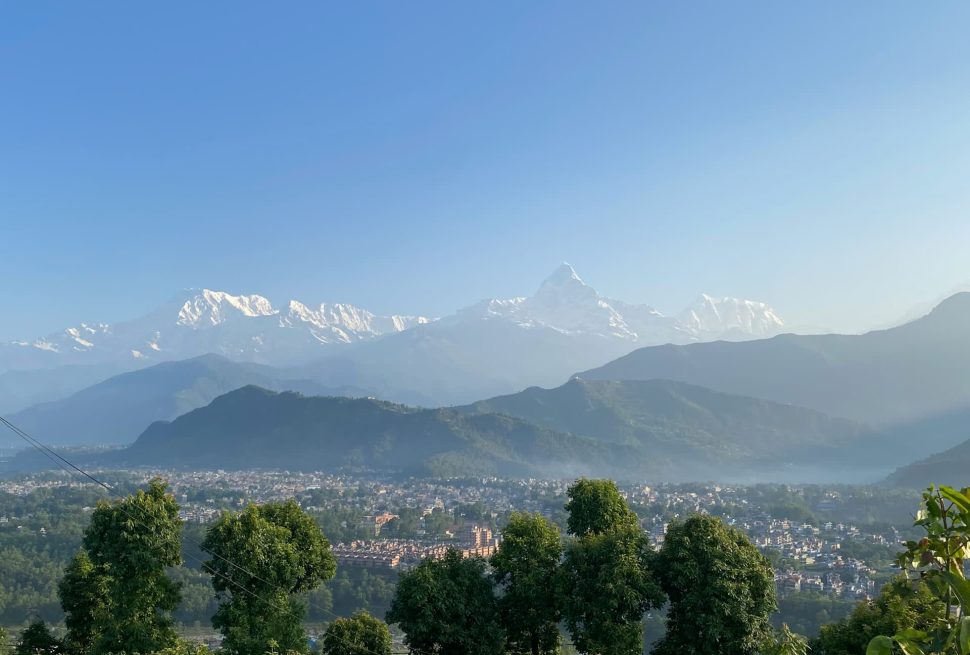
The sunrise from Poon Hill — a 360-degree panorama that typically includes Dhaulagiri, Annapurna South, Machhapuchhre, and on clear days a distant glimpse of the Annapurna massif — is the single most photographed moment of this itinerary, and it’s the main thing the shorter 7–8 day version sacrifices.
This is also, altitude-wise, the most gradually paced itinerary of anything short of the full circuit: you’re gaining elevation across nine walking days rather than compressing the climb into one or two flight-assisted days, which is a genuine safety advantage for anyone concerned about altitude sickness.
Best for: trekkers who want the complete, classic lower Mustang experience — Poon Hill included — with a genuinely low-risk altitude profile and two weeks or so of total travel time once flights and buffer days are factored in.
Beyond 11 Days: Extending to the Full Annapurna Circuit
If Muktinath is one stop on a longer journey rather than the destination itself, the itinerary structure changes substantially. The full Annapurna Circuit typically runs 12 to 18 days, starting from Besisahar or Chame on the Manang side, climbing gradually through Manang village for acclimatization, then crossing Thorong La Pass at 5,416 meters before descending into Muktinath from the opposite direction — the reverse approach from every itinerary described above.
This is a meaningfully more demanding undertaking than any of the Muktinath-focused itineraries in this guide: Thorong La sits roughly 1,600–1,700 meters higher than Muktinath itself, and crossing it requires a genuine high-altitude trekking day, proper acclimatization built in over the preceding week, and — in winter especially — real caution, since the pass is frequently closed or unsafe for unsupported crossing during the coldest months.
If a full circuit interests you, treat it as a separate, larger itinerary decision rather than an extension you tack onto a 9–11 day Muktinath trek — the acclimatization schedule, permits, and physical demands are shaped primarily by the pass, with Muktinath as the reward on the far side rather than the main event.
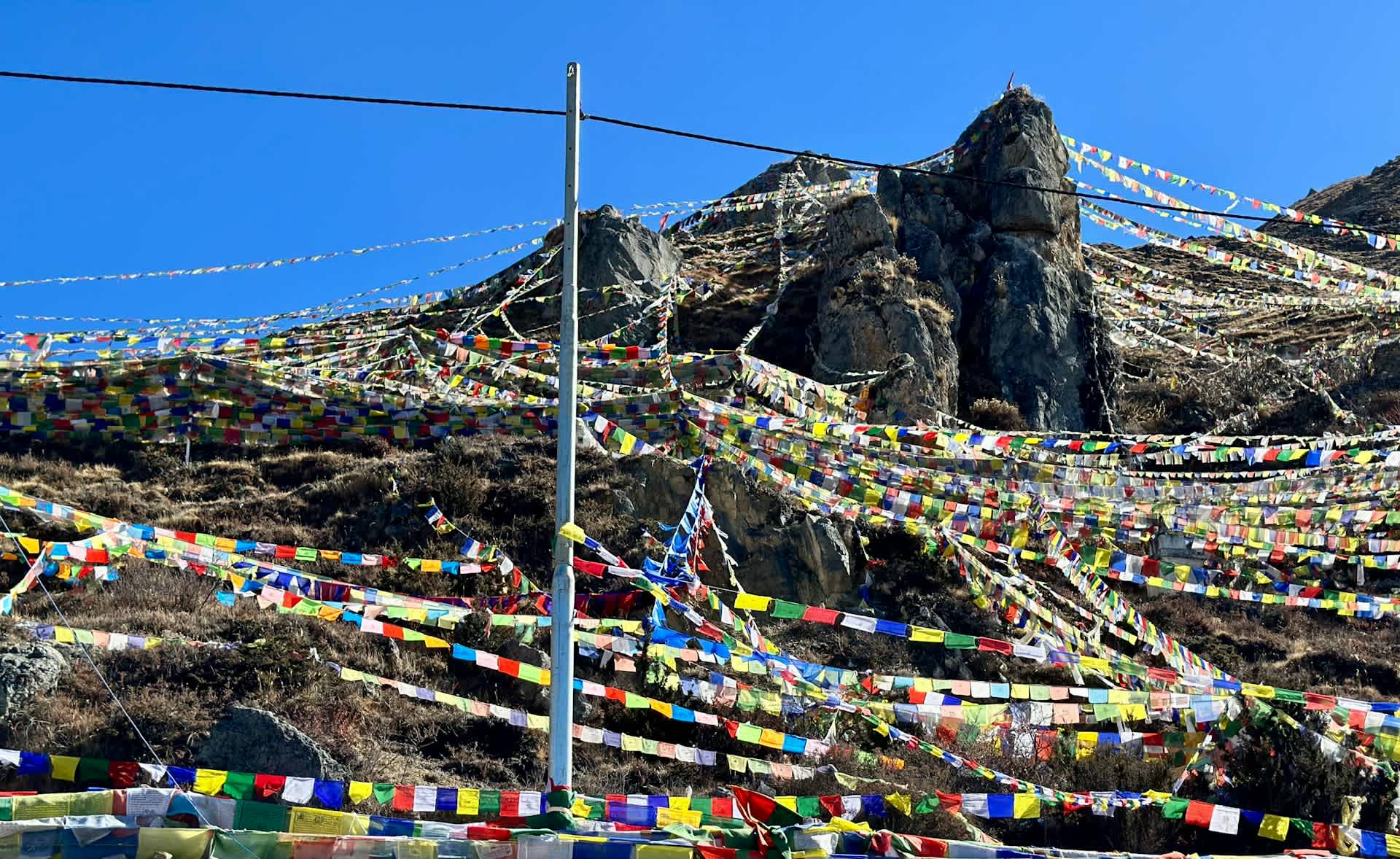
Optional Extension: Adding Upper Mustang
For trekkers with extra time and budget, an Upper Mustang extension — heading north from Kagbeni into the restricted region toward Lo Manthang, the walled former capital of the Kingdom of Mustang — adds roughly 4–7 additional days to any of the trekking itineraries above.
| Factor | Detail |
|---|---|
| Additional days | Typically 4–7 days round trip from Kagbeni |
| Additional permit cost | US$50 per person, per day inside the restricted zone |
| Requirements | Registered agency, licensed guide (independent travel is not permitted) |
| Terrain | High-altitude desert landscape, distinct from the greener lower Mustang trail |
This is a significant cost and time addition, and it’s worth deciding on deliberately rather than as an afterthought — the restricted-area permit alone can add several hundred dollars per person depending on how many days you spend north of Kagbeni.
Cost Comparison Across Itineraries
Costs vary considerably by group size, season, and operator, but the relative ordering below holds consistently.
| Itinerary | Relative Cost (excluding international flights) | Main Cost Drivers |
|---|---|---|
| 3-Day Express Pilgrimage | Low–moderate | Two domestic flights, jeep hire, one night’s accommodation |
| 4-Day Extended Pilgrimage | Moderate | Same as above plus one extra night |
| 5–6 Day Overland Jeep | Moderate | Vehicle hire for the full route, multiple nights’ accommodation |
| 7–8 Day Short Trek | Moderate–high | One flight, guide/porter fees, permits, multiple teahouse nights |
| 9–11 Day Classic Trek | Highest of the standalone Muktinath options | Extended guide/porter fees, permits, most nights on the trail |
| Full Annapurna Circuit (12–18 days) | Highest overall | Longest duration, most teahouse nights, highest guide/porter costs |
Domestic flights (Kathmandu–Pokhara, Pokhara–Jomsom) and permit fees are fairly fixed regardless of operator; the variable cost across operators is mostly in guide/porter arrangements, accommodation standard, and group size.
Difficulty and Fitness Requirements by Itinerary
| Itinerary | Physical Demand | Suitable For |
|---|---|---|
| 3–4 Day Pilgrimage | Very low — minimal walking beyond the temple approach | Nearly all fitness levels, including elderly travelers with doctor clearance |
| 5–6 Day Overland Jeep | Very low | Families, groups, those avoiding physical exertion |
| 7–8 Day Short Trek | Moderate — daily walks of 3–6 hours | Reasonably fit first-time trekkers |
| 9–11 Day Classic Trek | Moderate — daily walks of 4–7 hours over multiple consecutive days | Trekkers with some multi-day hiking experience |
| Full Annapurna Circuit | Moderate–challenging — sustained high-altitude trekking, including the Thorong La crossing day | Experienced trekkers comfortable with high-altitude conditions |
Choosing Between Flight, Jeep, and Trekking Approaches
Each of the three underlying transport methods carries a distinct trade-off, worth stating plainly rather than letting the day-by-day tables imply it.
- Flying (Pokhara–Jomsom) is fastest but produces the steepest single-day altitude gain of any method here, and is the most weather-dependent — flights operate only in a narrow early-morning window and are subject to seasonal cancellation risk, highest in monsoon and winter.
- Jeep/overland driving takes considerably longer but spreads altitude gain across intermediate stops, and remains viable (with more caution) through most seasons, though the lower sections of the road outside Mustang’s rain shadow can be affected by monsoon landslides.
- Trekking on foot takes the longest but produces, by a wide margin, the most gradual and lowest-risk altitude exposure of the three, since your body simply can’t outpace acclimatization at walking speed.
If altitude safety is your top priority and time allows, trekking beats jeep, which beats flying. If time is your binding constraint, that ordering reverses, with the trade-off understood rather than ignored.
Best Season for Each Itinerary
Every itinerary in this guide performs best in spring (March–May) and autumn (September–November), when weather is most stable and Jomsom flights are most reliable. Beyond that general rule, a few itinerary-specific notes:
- Flight-dependent itineraries (3–4 day, 7–8 day) are the most exposed to monsoon and winter flight disruption, since they typically depend on a single flight leg with limited buffer.
- Overland jeep itineraries remain workable in more seasons, though monsoon-season landslide risk on the lower route sections is worth checking with your operator before departure.
- Trekking itineraries are the most forgiving across seasons generally, since walking isn’t dependent on flight schedules — though winter cold at altitude and monsoon trail conditions still apply.
- Full Annapurna Circuit itineraries are the most season-restricted of all, because Thorong La’s safety depends heavily on snow conditions; winter crossings require specific, current local guidance.
What to Pack, Regardless of Itinerary
- Layered clothing: moisture-wicking base layer, insulating mid-layer (fleece or light down), windproof/water-resistant outer shell — temperatures swing sharply between day and night at these altitudes year-round
- Warm hat, gloves, and a buff or scarf for wind, especially relevant given Mustang’s strong afternoon winds
- Sunglasses with strong UV protection and high-SPF sunscreen — sun intensity increases with altitude regardless of season
- Comfortable, broken-in walking shoes or trekking boots, even for jeep-based itineraries, given the uphill walk from Ranipauwa to the temple itself
- A basic first-aid kit including any personally prescribed altitude medication, blister care, and standard painkillers
- A headlamp, useful for early starts and variable power reliability in teahouses
- Modest clothing for the temple visit — shoulders and knees covered, as expected at religious sites throughout Nepal
- Cash in Nepali rupees — card payment is unreliable to nonexistent in Mustang’s smaller villages and teahouses
What Each Itinerary Actually Feels Like
Numbers and tables only tell part of the story. Here’s the practical texture of each option, based on what travelers on our trips consistently report.
The express pilgrimage itineraries feel efficient and slightly rushed — you’re at the temple, engaged in prayer or reflection, and back on a flight within 48–72 hours. Travelers on this route often describe the trip as intense but complete: they got exactly what they came for, without the scenic buildup that longer itineraries provide.
The overland jeep route feels more like a road-trip adventure than a pilgrimage or trek — long, scenic driving days through the deepest gorge on Earth, with genuine cultural stops in Thakali and Gurung villages along the way. It’s the itinerary most families describe as comfortable rather than demanding.
The short and classic trekking itineraries feel like a genuine Himalayan trek, not a pilgrimage side-trip — daily walking, teahouse evenings, gradually thinning air, and a real sense of arrival by the time Muktinath’s temple courtyard comes into view after days of anticipation. Poon Hill’s sunrise, in the 9–11 day version, is consistently the moment travelers describe as the highlight of the entire trip, arguably rivaling the temple visit itself.
How Trek Trove Nepal Builds These Itineraries
None of the six structures above is a rigid template — in practice, most travelers end up with a hybrid: a jeep in one direction and a flight in the other, an extra rest day inserted where the original plan looked too tight, or a Poon Hill detour added onto what started as a short 7-day plan.
At Trek Trove Nepal, we build Muktinath itineraries around the same core principle running through this whole guide: match the pace of ascent to the traveler, not the other way around. That means asking about fitness level, altitude history, and how much schedule flexibility you actually have before defaulting to whichever itinerary happens to be the most commonly advertised, and building in the buffer days that the fastest options genuinely need.
Frequently Asked Questions about Muktinath Itinerary
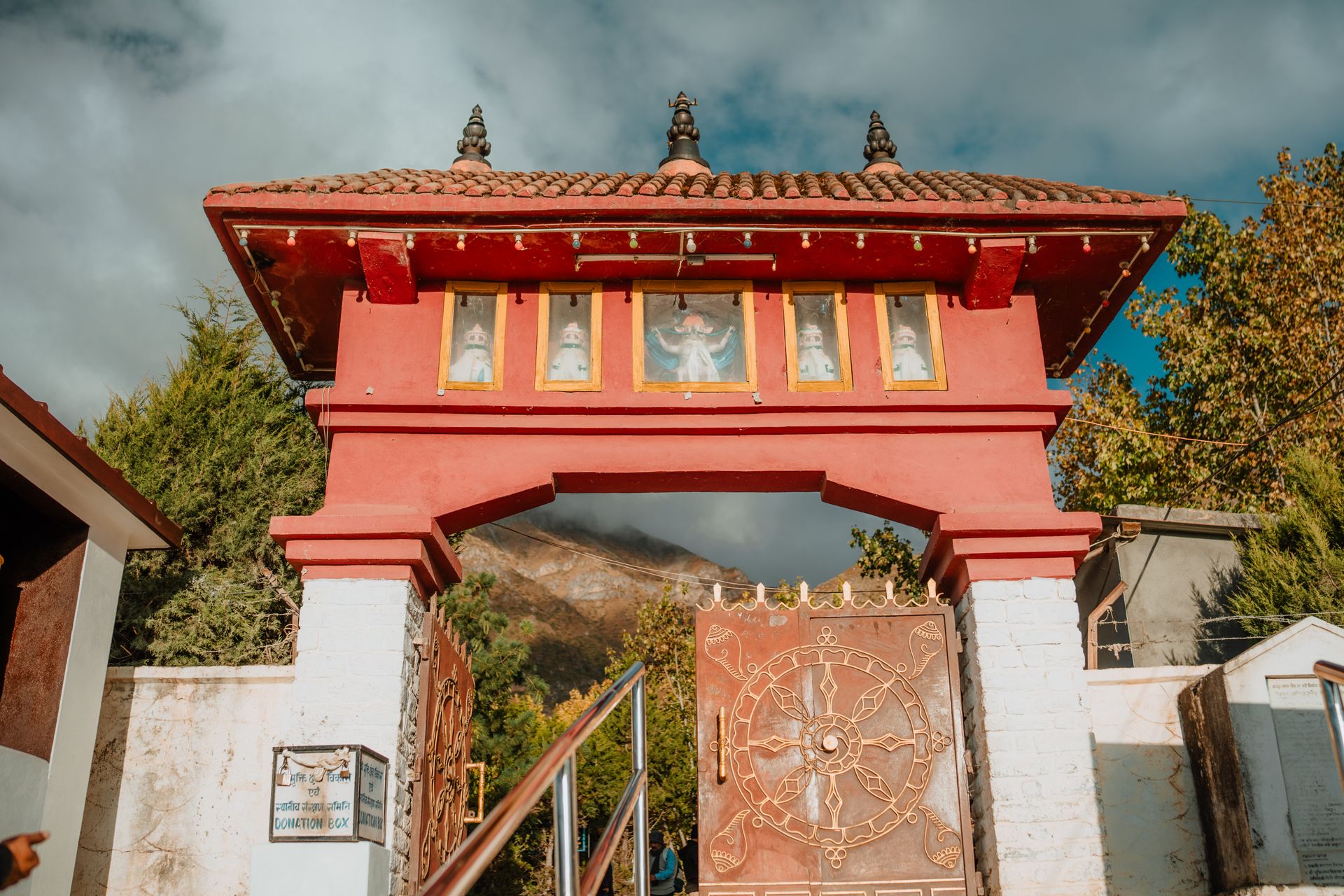
1. What is the shortest possible Muktinath itinerary?
A 3-day itinerary using flights both ways (Kathmandu–Pokhara–Jomsom, then jeep to Muktinath and back) is the fastest realistic option, though it leaves no buffer for flight delays.
2. How many days do I need for the classic Jomsom Muktinath Trek?
The classic version, including the Ghorepani Poon Hill loop, typically runs 9 to 11 days depending on rest days and return transport choices (trekking out versus flying out from Jomsom).
3. Do I need to trek at all to visit Muktinath?
No. Both flight-based pilgrimage itineraries and overland jeep tours reach Muktinath without any trekking required, making it accessible to travelers who don’t want or can’t manage multi-day walking.
4. What permits do I need for a Muktinath itinerary?
At minimum, the Annapurna Conservation Area Permit (ACAP, roughly US$23) and a TIMS card (roughly US$15), required for jeep tours as well as trekking itineraries. An Upper Mustang Restricted Area Permit (US$50/day) is only needed if you extend north of Kagbeni.
5. Can I combine Muktinath with the full Annapurna Circuit?
Yes — this is actually how many trekkers experience Muktinath, arriving via Thorong La Pass (5,416m) from the Manang side rather than approaching from Jomsom. This extends total trip length to 12–18 days and adds meaningful altitude and physical demands.
6. Is the 7–8 day short trek worth it compared to the full 9–11 day version?
It depends on priorities. The shorter version covers the core highlights — Kagbeni, Muktinath, Marpha, Tatopani — but skips the Poon Hill sunrise viewpoint and Ghorepani section that many trekkers consider a highlight of the longer itinerary.
7. Which itinerary is safest for altitude sickness?
The 9–11 day classic trekking itinerary offers the most gradual altitude gain of the standalone Muktinath options, since elevation is gained across many walking days rather than compressed into one or two flight-assisted days.
8. Can elderly travelers do any of these itineraries?
Yes — the 3–6 day flight and jeep-based itineraries are specifically suited to older travelers or anyone unable to trek, provided a buffer day is included and any relevant health conditions are discussed with a doctor beforehand.
9. How much walking is actually involved even in the “non-trekking” itineraries?
The walk from Ranipauwa up to the temple complex itself — roughly 10 to 20 minutes uphill — is unavoidable in every itinerary, jeep-based or not, since vehicles cannot reach the temple directly.
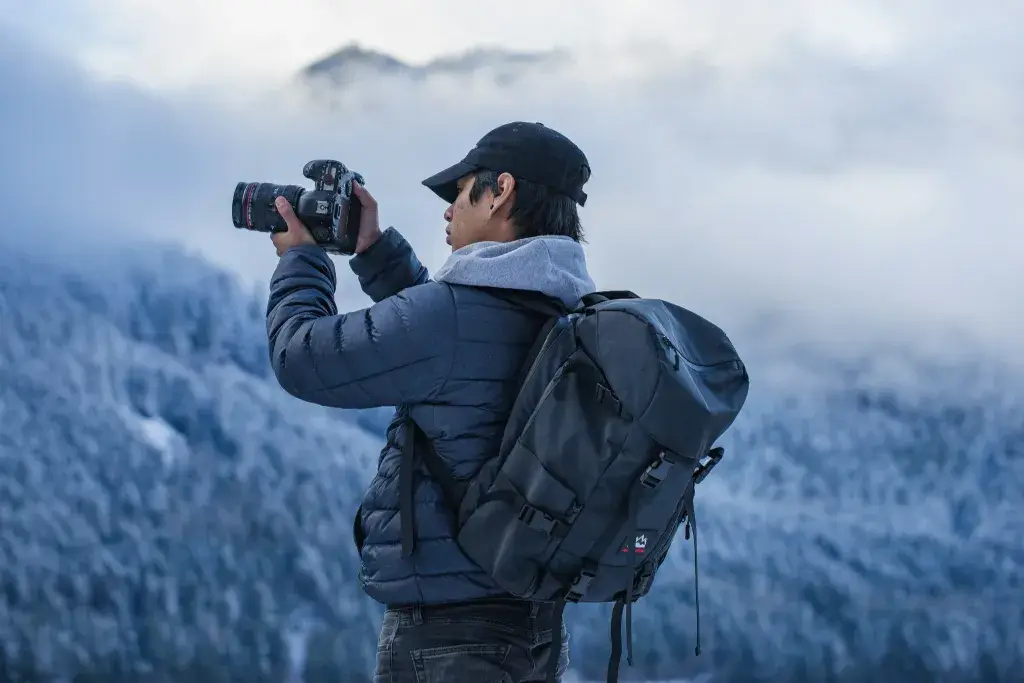
10. What’s the best itinerary for photography?
The 9–11 day classic trek, largely because of the Poon Hill sunrise viewpoint, which most photographers consider the single best mountain panorama on the entire route.
11. Do jeep-tour itineraries require a guide?
Yes, in practice — permits are typically processed through a licensed guide and registered agency, and the route includes genuine off-road sections better handled by an experienced local driver.
12. How far in advance should I book, especially in peak season?
For autumn (especially October) and April, book flights and accommodation several weeks ahead if possible — these are the busiest months on every itinerary structure in this guide.
13. What happens if my Jomsom flight is cancelled?
Overland jeep transfer via Beni becomes the backup option on most itineraries, adding a full day or more of driving; this is exactly why itineraries with an extra buffer day (the 4-day pilgrimage version, for instance) are more resilient than the tightest 3-day plan.
14. Which itinerary offers the best value for a first-time visitor with about a week available?
The 7–8 day short Jomsom Muktinath trek generally offers the best balance for a one-week trip — real trekking, the core cultural and religious highlights, and a manageable time and cost commitment without the full Poon Hill loop.
Final Word on Muktinath Itinerary
There’s no universally “best” Muktinath itinerary — there’s a best itinerary for how much time you have, how you want to travel, and how much risk margin you want built into your altitude gain. A 3-day flight-based trip and an 11-day classic trek both end at the same 108 sacred water spouts; the difference is everything in between, and how gently your body gets there.
Whichever structure fits your trip, the same underlying advice holds across every option in this guide: build in at least one buffer day wherever your schedule allows, and let that flexibility — not the fastest possible itinerary — be the thing that actually determines how smoothly the trip goes.