
Introduction to Best Time to Visit Muktinath
Most articles answer “best time to visit Muktinath” with one word — “autumn” — and stop there. That’s not wrong, but it’s incomplete enough to be unhelpful if you’re actually booking flights and blocking out dates. Autumn is the safest default, not the only good option, and it comes with its own trade-offs: higher prices, busier teahouses, and a narrower window before Thorong La closes for the season if you’re combining Muktinath with the Annapurna Circuit.
This guide breaks the year down month by month, explains what’s actually driving the weather at 3,700+ meters in a Himalayan rain-shadow desert (it behaves differently from the rest of Nepal), and matches seasons to different kinds of travelers — pilgrims on a tight schedule, photographers chasing clear peaks, trekkers doing the full circuit, and budget travelers who don’t mind a little cold for a lot fewer crowds. We’ve built this from years of running trips into Mustang with Trek Trove Nepal, watching which months actually deliver what they promise.
Quick Answer
- Best overall: October and early November — stable weather, clear mountain views, comfortable daytime temperatures, minimal rain
- Best second choice: March to early May — similar clarity, slightly warmer, better flower and landscape color in the lower valleys en route
- Avoid if possible: Late June through August (monsoon) unless you specifically want low crowds and don’t mind flight delays and overcast peaks
- Coldest but doable: December to February — genuinely cold, occasional snow, but Muktinath itself (unlike Thorong La) rarely becomes fully inaccessible
- For festivals: Time your visit around Janai Purnima (July/August) or Ram Navami (March/April) if a major pilgrimage gathering is part of what you want to experience
Why Muktinath’s Weather Behaves Differently From the Rest of Nepal
Before the month-by-month breakdown, it helps to understand one structural fact about this region: Muktinath and the wider Mustang district sit in the rain shadow of Annapurna and Dhaulagiri, two of the world’s fourteen 8,000-meter peaks. Monsoon clouds rolling up from the Bay of Bengal dump most of their moisture on the southern, lower-altitude slopes of these mountains before they ever reach Mustang. The result is that Muktinath receives dramatically less monsoon rainfall than Pokhara or the lower Annapurna trails, even though it’s technically “monsoon season” for the rest of the country.
This matters practically in two ways. First, it means Muktinath is a genuinely viable monsoon-season destination in a way that, say, the Annapurna Base Camp trek is not — you won’t be slogging through daily downpours on the ground. Second, and less well advertised, it means the more serious monsoon-season problem at Muktinath isn’t rain on the trail — it’s clouds and wind disrupting the short flight window into Jomsom, and landslides affecting the lower-altitude sections of the overland jeep route before you even reach the rain-shadow zone.
Altitude adds a second layer on top of this. At roughly 3,700–3,800 meters, temperatures swing hard between day and night year-round — a 15–20°C difference between a sunny midday and a clear, cold night is completely normal here, in any season. “Best time to visit” at this elevation is less about avoiding cold altogether and more about picking the window where the swing is most manageable and the skies are most reliably clear.
Month-by-Month Weather at Muktinath
The table below gives typical, representative ranges. Mountain weather at this altitude is genuinely variable year to year, and different weather stations and trekking operators report slightly different numbers — treat these as realistic planning ranges, not guarantees.
| Month | Typical Day Temp | Typical Night Temp | Precipitation | Crowd Level | Overall Rating |
|---|---|---|---|---|---|
| January | 3–8°C | -12 to -8°C | Low, occasional snow | Very low | Cold but clear |
| February | 5–10°C | -10 to -6°C | Low, occasional snow | Very low | Cold but clear |
| March | 10–16°C | -5 to 0°C | Low–moderate | Moderate | Very good |
| April | 14–20°C | 0–5°C | Low–moderate | High | Excellent |
| May | 17–22°C | 5–10°C | Moderate (pre-monsoon) | High | Very good |
| June | 17–22°C | 8–13°C | Rising (monsoon onset) | Moderate | Good, watch flights |
| July | 16–20°C | 10–14°C | Highest of the year | Low | Fair, flight risk |
| August | 16–20°C | 9–13°C | High | Low–moderate | Fair, flight risk |
| September | 14–19°C | 6–11°C | Tapering off | Moderate | Good |
| October | 12–17°C | 2–7°C | Low | Very high | Excellent |
| November | 8–14°C | -3 to 3°C | Low | High | Excellent |
| December | 4–9°C | -10 to -6°C | Low, occasional snow | Low | Cold but clear |
A few things stand out in that table that most quick-answer guides skip: October and November genuinely earn their reputation, but April sits right alongside them in overall quality and gets less credit simply because it’s warmer, not clearer. And December, often written off entirely, is actually a low-precipitation month — it’s cold, not wet, and the skies are frequently excellent.
Spring (March to May): The Underrated Rival to Autumn
Spring at Muktinath is often framed as the “second-best” season, mostly out of habit rather than evidence. In practice, March through May delivers weather that’s every bit as reliable as autumn, with two real advantages: warmer daytime and nighttime temperatures, and a longer stretch of good conditions before the pre-monsoon buildup begins in late May.
March starts the season with daytime temperatures typically in the 10–16°C range and nights still dropping below freezing. Skies are generally clear, though early March can carry over some of winter’s colder, drier air. This is also when Ram Navami pilgrimage traffic to Muktinath begins picking up, drawing large numbers of Hindu pilgrims, particularly from India.
April is arguably the single best all-around month if you’re weighing comfort against crowds. Daytime temperatures climb into a genuinely pleasant 14–20°C range, nights are no longer brutally cold, and the lower sections of the route — Tatopani, Ghasa, Marpha — are at their most scenic, with orchards blooming and terraced fields turning green. The trade-off is crowd volume: April is peak season on the wider Annapurna Circuit, so flights, jeeps, and teahouse rooms need to be booked further ahead than in the shoulder months.
May pushes temperatures higher still, sometimes into the low 20s during the day, but it’s also the month where pre-monsoon instability starts to creep in — expect a higher chance of afternoon cloud buildup and the occasional short, sharp shower, particularly toward the end of the month. Visibility can still be excellent, especially in the mornings, but it’s less consistently clear than March or April.
Why spring works particularly well for Muktinath specifically: because Mustang sits in the rain shadow, spring here doesn’t carry the same “pre-monsoon haze” reputation that plagues lower-altitude Nepal in April and May. Visitors regularly get crisp mountain views in Mustang during weeks when Pokhara and Kathmandu are already hazier.
Summer / Monsoon (June to August): The Season Nobody Talks About Correctly
Most generic Nepal travel content tells you to avoid June through August entirely. For most of the country, that’s sound advice. For Muktinath specifically, it’s an oversimplification that costs some travelers a genuinely good, much quieter trip.
Because of the rain-shadow effect described earlier, Muktinath and the upper Kali Gandaki valley receive a fraction of the rainfall that falls on Pokhara, Tatopani, or the lower Annapurna Circuit during monsoon. Ground conditions at Muktinath itself in July and August are often dry, dusty, and windy — closer to a desert summer than a monsoon soak.
The real monsoon-season problem isn’t rain on the ground at Muktinath — it’s getting there. Two specific issues show up every year:
- Jomsom flights become less reliable. Cloud cover building up over the lower valleys and around the flight corridor causes more frequent morning delays and cancellations during monsoon months, even though Jomsom and Muktinath themselves may be dry and clear. Flights out of Pokhara already only operate in a narrow early-morning window (typically before mid-morning, when winds start picking up); monsoon cloud adds another layer of unpredictability on top of that.
- The lower overland route is genuinely affected. If you’re driving or trekking in via Beni, Tatopani, and Ghasa, you’re passing through sections that sit outside the rain shadow and do get heavy monsoon rainfall, with real landslide and road-washout risk on the jeep road in the worst years.
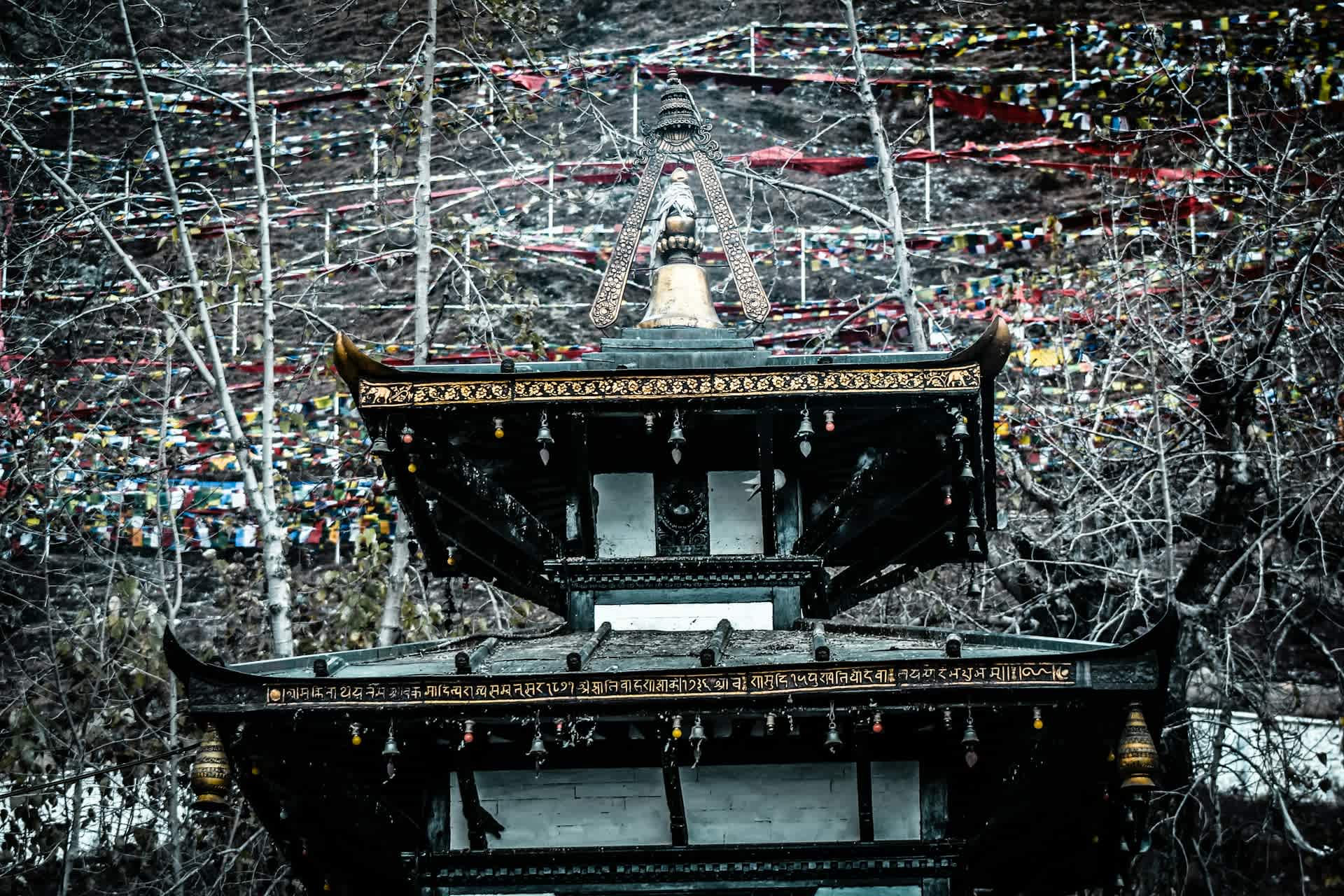
If you can build slack into your itinerary — an extra buffer day or two in Pokhara in case of flight delays, and a willingness to travel overland if flights are grounded — a summer visit to Muktinath rewards you with dramatically lower crowds, easier hotel bookings, and a starkly beautiful, near-empty temple courtyard that autumn and spring visitors never see. It’s not the season we’d recommend for a first-timer with a rigid two-day schedule, but for flexible travelers, it’s underrated.
August specifically is also when the Yartung Festival takes place in Muktinath and the wider Mustang region — a lively horse-racing and cultural festival tied to the end of the summer farming season, worth timing a visit around if festivals interest you more than guaranteed clear skies.
Autumn (September to November): The Reliable Favorite, and Why
Autumn’s reputation as the best time to visit Muktinath is well-earned, but it’s worth understanding why, because the reasoning also tells you when autumn’s advantages start to fade.
September is transitional — the monsoon is tapering off, but residual cloud and occasional rain can still affect the first half of the month, particularly on the lower approach routes. By the back half of September, conditions typically stabilize noticeably.
October is the standout month by nearly every measure: low precipitation, consistently clear skies, comfortable daytime temperatures without summer’s occasional instability, and mountain visibility that’s frequently described as the best of the year. This is also peak Dashain season, Nepal’s biggest festival — a wonderful time to experience local culture, but also a period when domestic transport and some services can be affected as Nepali staff travel home to celebrate with family.
November holds much of October’s clarity with a noticeable drop in temperature, especially at night, where readings below freezing become the norm rather than the exception. It remains an excellent month for views and stability, with the trade-off of needing warmer gear than October requires.
The reason autumn edges out spring in most rankings comes down to consistency, not superiority: post-monsoon air is unusually clean and dust-free, which tends to produce marginally sharper, more reliable mountain photography conditions than the pre-monsoon haze that can occasionally build in late spring. The difference is real but smaller than the marketing suggests — spring is not a consolation-prize season.
The cost of autumn’s popularity is straightforward: this is peak season for the entire Annapurna region, which means the highest flight and jeep prices of the year, teahouses and hotels booking out days or weeks in advance in the busiest stretches, and noticeably more foot and vehicle traffic on the route, particularly around Dashain.
Winter (December to February): Cold, Clear, and Genuinely Underrated
Winter gets dismissed too quickly in most guides, largely because it’s lumped together with high-altitude trekking routes like Thorong La, where winter conditions are a real and serious obstacle. Muktinath itself is a different case.
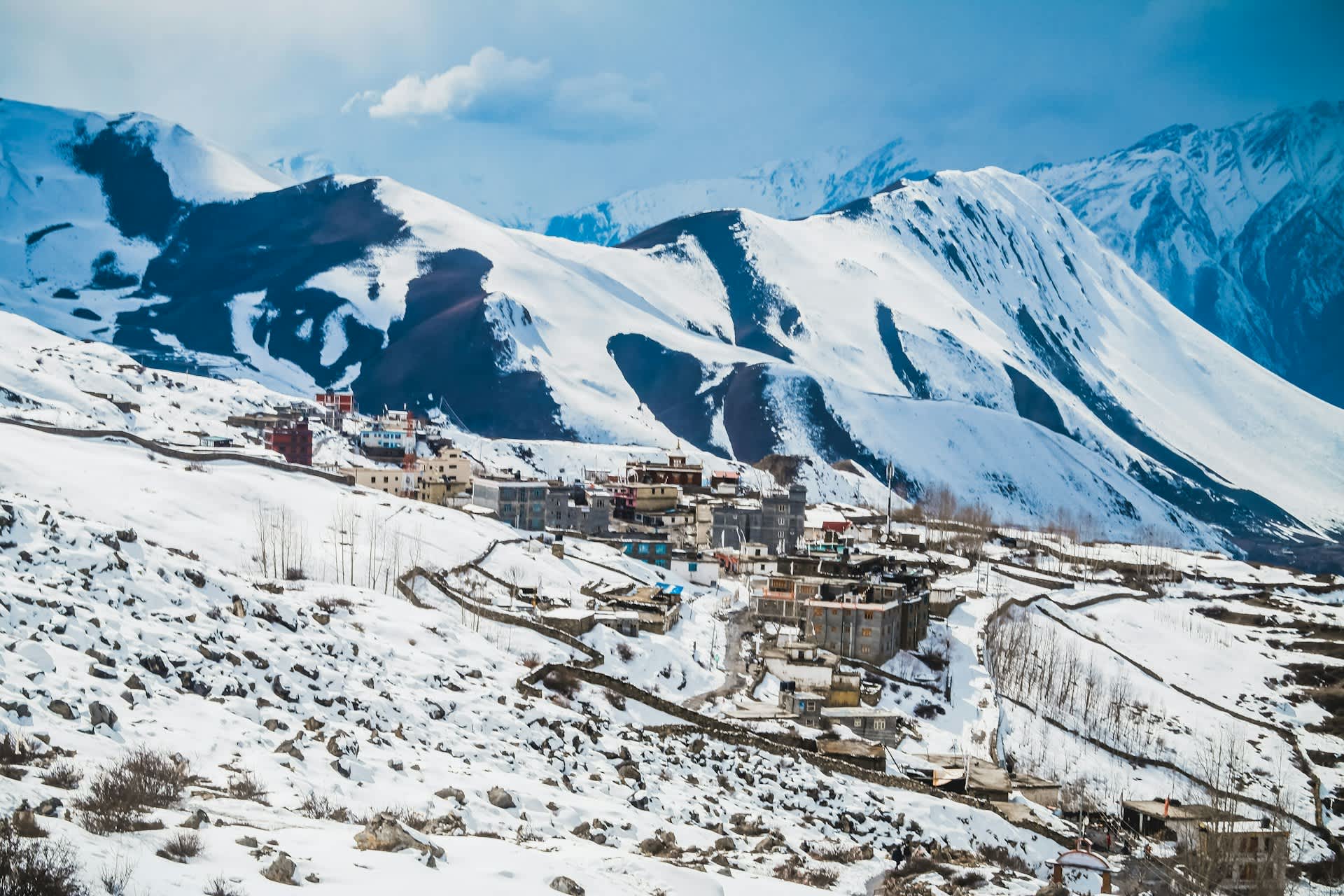
Daytime temperatures in December through February typically sit in the 3–10°C range, with nights dropping well below freezing — commonly into the -6°C to -12°C range, occasionally colder in a hard cold snap. Snowfall does occur, sometimes settling over the temple courtyard and surrounding hills in a way that’s genuinely beautiful, but it’s usually intermittent rather than constant, and precipitation totals for the season are low.
What winter actually threatens is not the visit to Muktinath itself but connecting travel: Jomsom flights face more frequent weather-related delays due to fog and cold-related visibility issues, particularly in Pokhara in the early morning, and the jeep road can occasionally require chain use or brief closures after a snowfall. Once you’re in Ranipauwa, though, reaching the temple is rarely blocked by winter conditions the way Thorong La is for circuit trekkers — that pass typically becomes unsafe or fully closed for unsupported crossings in the depths of winter, but a standalone Muktinath visit doesn’t require crossing it at all.
For travelers who prioritize solitude, clear (if cold) skies, and rock-bottom pricing on flights and accommodation, winter is one of the best-kept-secret windows on this route. It requires serious cold-weather gear and realistic expectations about flight reliability, but it is not, on its own, a season to rule out the way generic advice sometimes implies.
Best Time for Jomsom Flights Specifically
Because so many Muktinath itineraries hinge on the Pokhara–Jomsom flight, it deserves its own section separate from general weather.
Jomsom flights operate almost exclusively in the early morning, typically wrapping up by mid-to-late morning, because Mustang’s notorious afternoon winds — funneled up the Kali Gandaki gorge, the deepest gorge on Earth — make later flights unsafe. This is true in every season; it’s not a monsoon-specific quirk.
| Season | Flight Reliability | Main Risk Factor |
|---|---|---|
| Spring (Mar–May) | Good | Occasional pre-monsoon cloud buildup by late May |
| Summer/Monsoon (Jun–Aug) | Lower | Cloud cover and low visibility along the flight corridor |
| Autumn (Sep–Nov) | Best of the year | Minimal — occasional early-morning fog in Pokhara |
| Winter (Dec–Feb) | Moderate | Cold-related fog in Pokhara mornings; occasional Jomsom-side wind |
The practical takeaway across every season: book the earliest possible flight, and build at least one buffer day into your schedule if your dates aren’t flexible. Travelers who plan a same-day Pokhara–Jomsom–Muktinath–Pokhara loop with no slack are the ones most likely to have their trip disrupted by a single delayed or cancelled flight, regardless of which month they’re traveling in.
Best Time If You’re Combining Muktinath With the Annapurna Circuit
If Muktinath is one stop on a longer Annapurna Circuit trek rather than a standalone visit, the calculus changes, because you also need Thorong La Pass (5,416 m) to be safely crossable.
- Spring (March–May) and autumn (September–November) remain the strongest windows for a full circuit, offering the most reliable pass conditions alongside good Muktinath weather.
- Winter (December–February) sees Thorong La frequently closed or unsafe for unsupported crossing due to snow accumulation; circuit trekkers in winter often approach Muktinath from the Jomsom side only, without attempting the pass, or need to check current conditions and consider a guide with current pass-specific knowledge before attempting a crossing.
- Monsoon (June–August) is generally discouraged for the pass itself, independent of Muktinath’s own manageable monsoon conditions, due to poor visibility and the added risk of trail conditions on the Manang side, which sits outside Mustang’s rain shadow.
If a Thorong La crossing is part of your plan, treat “best time to visit Muktinath” and “best time to cross Thorong La” as the same question — the pass is the more restrictive factor, and your Muktinath-specific dates should be built around it, not the other way around.
Festival and Pilgrimage Calendar
Muktinath’s religious significance to both Hindus and Buddhists means the calendar isn’t only shaped by weather — certain dates draw significant pilgrim crowds regardless of season, and timing your visit around (or deliberately away from) them is worth planning for.
| Festival/Event | Approximate Timing | What to Expect |
|---|---|---|
| Ram Navami | March/April (varies by lunar calendar) | Increased Hindu pilgrim traffic, particularly from India |
| Janai Purnima (Rishi Tarpani) | July/August (varies by lunar calendar) | One of the single busiest pilgrimage days at Muktinath; large crowds bathing in the 108 spouts |
| Yartung Festival | August (Mustang region) | Horse racing and cultural celebrations, mainly around Mustang’s villages |
| Dashain | September/October (varies by lunar calendar) | Nepal’s largest festival; domestic travel and transport patterns shift as locals return home |
| Tihar | October/November (varies by lunar calendar) | Second major Nepali festival, similar effects on local services and transport |
If a large, festive pilgrimage atmosphere is part of what draws you to Muktinath, Janai Purnima and Ram Navami deliver that experience most vividly, at the cost of crowded accommodation and transport. If you’d rather have the temple grounds to yourself, deliberately avoiding these specific dates — even within a generally good month — makes a real difference.
Best Time by Traveler Type
Not every traveler is optimizing for the same thing. Here’s how the calendar looks depending on what actually matters most to you.
Elderly pilgrims and those with a fixed, short schedule:
- Best window: October, or April
- Why: Most reliable flights, most stable weather, least likely to disrupt a tight itinerary
- Avoid: Monsoon months, where flight delays are more likely to derail a short trip with no slack
Photographers seeking the clearest mountain views:
- Best window: Late October through November, and March
- Why: Cleanest post-monsoon or pre-monsoon air, sharpest visibility of the Nilgiri and Dhaulagiri ranges
- Avoid: Peak monsoon (July–August), where cloud cover regularly obscures peaks even on rain-free days
Trekkers combining Muktinath with the Annapurna Circuit:
- Best window: April–May or October–early November
- Why: Reliable Thorong La conditions alongside good Muktinath weather
- Avoid: Deep winter (pass closures) and monsoon (visibility and trail conditions)
Budget-conscious travelers:
- Best window: December–February, or June
- Why: Lowest flight and accommodation prices of the year, minimal competition for jeep seats
- Trade-off: Colder conditions (winter) or flight-delay risk (monsoon onset in June)
Travelers prioritizing solitude and a quiet spiritual experience:
- Best window: Deep winter (December–January) or mid-monsoon (July)
- Why: Lowest visitor numbers by a wide margin; the temple courtyard is dramatically emptier than in peak season
- Trade-off: Reduced flight reliability in both windows, requiring schedule flexibility
Families with young children:
- Best window: April, or late September–October
- Why: Milder temperatures reduce cold-related discomfort for kids; stable weather reduces the odds of stressful transport disruptions
- Avoid: Deep winter, where cold at 3,700+ meters is genuinely harsh for young children
Crowds and Pricing by Season
| Season | Relative Flight/Jeep Prices | Accommodation Availability | Crowd Level |
|---|---|---|---|
| Spring (Mar–May) | High, especially April | Book ahead, especially April | High |
| Summer/Monsoon (Jun–Aug) | Lower | Generally easy to find | Low to moderate |
| Autumn (Sep–Nov) | Highest of the year | Book well ahead, especially October | Very high |
| Winter (Dec–Feb) | Lowest of the year | Easy to find, some seasonal closures | Low |
A pattern worth noting: prices and crowd levels track each other almost exactly with weather quality — the best-weather months are also the most expensive and most crowded, and the cheapest, quietest months are the ones with more weather-related risk. There’s no secret “best of both worlds” month; the trade-off is real and consistent across the year.
Road and Trail Conditions by Season
| Season | Jeep Road Conditions | Trekking Trail Conditions |
|---|---|---|
| Spring | Generally good; occasional pre-monsoon showers | Good, some muddy patches after rain |
| Summer/Monsoon | Risk of landslides on lower sections (outside the rain shadow) | Slippery in mid-hill sections; upper Mustang trails stay drier |
| Autumn | Best conditions of the year | Best conditions of the year |
| Winter | Generally passable; occasional snow requiring caution on higher stretches | Cold but usually passable up to Muktinath; Thorong La itself is the exception |
What to Pack, By Season
Spring (March–May):
- Layered clothing: light base layer, fleece or light down mid-layer, windproof outer shell
- Warm hat and gloves for mornings and evenings
- Sun protection — sunglasses and high-SPF sunscreen, since UV intensity is strong at this altitude regardless of season
- A light rain layer for late-May pre-monsoon showers
Summer/Monsoon (June–August):
- A proper rain shell, especially for the lower, non-rain-shadow sections of an overland route
- Quick-dry clothing
- Warm layers for Muktinath itself — daytime can be pleasant, but wind and cool evenings still call for a fleece or light down layer
- Extra buffer time built into your schedule rather than a packing item, but arguably the single most important “thing to pack” for this season
Autumn (September–November):
- Solid mid-layer insulation (fleece or down), warmer by November
- Warm hat, gloves, and a buff or scarf for wind
- Sturdy, broken-in walking shoes for the temple approach and any side trekking
- Sunglasses and sunscreen — autumn’s clear skies mean strong daytime sun exposure
Winter (December–February):
- Heavyweight down jacket, thermal base layers, insulated gloves, and a warm hat rated for well-below-freezing temperatures
- Warm, insulated, waterproof footwear in case of snow
- A sleeping bag liner if staying in unheated teahouse rooms, which is common in this region
- Lip balm and moisturizer — cold, dry air at altitude is hard on skin
Times to Genuinely Reconsider
Being direct about the weaker windows matters as much as recommending the strong ones.
- Late July into early August, during peak monsoon, combines the highest annual flight-disruption risk with the highest annual rainfall on the lower approach routes — the least forgiving stretch for travelers with rigid schedules.
- Deep winter (mid-January) is workable for Muktinath alone but is the wrong window if a Thorong La crossing is part of your plan; the pass is genuinely unsafe for unsupported travel in this period most years.
- The days immediately around major festivals like Janai Purnima or Dashain, if your priority is quiet and low crowds rather than cultural immersion — book well ahead or deliberately shift your dates around these peaks.
What We’ve Learned Timing Trips to Muktinath
Across the itineraries we run into Mustang, the single most common planning mistake isn’t choosing a “bad” month — it’s choosing a good month and then building zero flexibility into the schedule around it. October is an excellent month, but it’s also the month where a single delayed flight in a fully booked system can genuinely unravel a tight itinerary, simply because everything downstream is at capacity too.
At Trek Trove Nepal, our standard advice is close to what this guide lands on: October and April are the strongest all-around choices, autumn slightly edging ahead for consistency and pure visibility, spring closely behind with a warmer, more comfortable edge. For travelers who can be flexible, we routinely point people toward the shoulder windows — late September, early November, or even a well-planned winter visit — where the weather is still good enough, the trip is meaningfully cheaper, and the temple courtyard isn’t shared with quite as many other travelers.
Frequently Asked Questions about Best Time to Visit Muktinath
1. What is the single best month to visit Muktinath?
October is generally considered the best month, combining stable weather, clear skies, comfortable daytime temperatures, and reliable flight conditions. April is a very close second, with warmer temperatures and similarly good visibility.
2. Is Muktinath worth visiting during monsoon season?
Yes, with caveats. Because Mustang sits in the rain shadow of Annapurna and Dhaulagiri, Muktinath itself sees far less rain than the rest of Nepal during monsoon. The main risk is flight and road disruption on the approach, not conditions at the destination itself.
3. Can Muktinath be visited in winter?
Yes. Muktinath itself remains generally accessible through winter, though it’s cold, with occasional snow and more frequent flight delays. It’s a different situation from Thorong La Pass, which is often closed or unsafe for unsupported crossing during the coldest winter months.
4. What is the coldest month at Muktinath?
January is typically the coldest month, with daytime temperatures often in the 3–8°C range and nighttime lows commonly falling to -8°C to -12°C or lower.
5. What is the warmest time to visit Muktinath?
June through August are the warmest months, with daytime temperatures often reaching the high teens to low 20s Celsius, though this period also carries the highest monsoon-related flight and road disruption risk.
6. Do I need to worry about rain if I visit Muktinath during monsoon?
Less than you’d expect for the rest of Nepal, thanks to the rain-shadow effect, but not zero — occasional showers do occur, and the lower, non-rain-shadow sections of any overland route in are genuinely affected by monsoon rainfall.
7. When are Jomsom flights most reliable?
Autumn (September–November) generally offers the most reliable flights. Regardless of season, flights only operate in the early morning before Mustang’s strong afternoon winds set in, so booking the earliest available flight improves reliability year-round.
8. Is spring or autumn better for visiting Muktinath?
Both are excellent. Autumn has a slight edge in consistency and air clarity due to clean post-monsoon conditions; spring offers warmer temperatures and comparably good visibility, with April frequently cited as one of the single best months overall.
9. What festivals should I know about when planning a Muktinath visit?
Janai Purnima (July/August) is one of the busiest pilgrimage days at Muktinath, with large crowds bathing in the 108 spouts. Ram Navami (March/April), Dashain (September/October), and Tihar (October/November) also affect crowd levels and, for the latter two, domestic transport and service availability.
10. Is it safe to combine a Muktinath visit with crossing Thorong La Pass in winter?
Generally not recommended without specific, current local guidance — the pass frequently becomes unsafe or closed due to snow accumulation in the deepest winter months, even when Muktinath itself remains accessible.
11. What should I pack differently for a winter versus autumn visit?
Winter requires heavyweight down layers, insulated waterproof footwear, and cold-rated gloves and headwear, given regular sub-freezing nights and possible snow. Autumn needs solid mid-layer insulation but not the same extreme cold-weather gear.
12. Are prices lower if I avoid autumn and spring?
Yes, noticeably. Flight, jeep, and accommodation prices are highest during the peak autumn and spring windows and drop meaningfully during monsoon and winter, alongside lower crowd levels.
13. How much does the weather differ between Ranipauwa and the temple itself?
Very little — the temple sits only around 50–90 meters higher than Ranipauwa, a short uphill walk away, so seasonal weather patterns apply essentially equally to both.
14. If I can only travel during a fixed, non-flexible week, which month minimizes my risk of disruption?
October offers the best combination of weather reliability and flight consistency for travelers who can’t build slack into their schedule, though booking well ahead is essential given how busy this month gets.
Final Word on Best Time to Visit Muktinath
There’s no single universally “correct” month to visit Muktinath — there’s a best month for your specific priorities, whether that’s guaranteed clear mountain views, warmer temperatures, festival timing, lower prices, or simple solitude. October and April sit at the top of nearly every list for good reason, but the months most guides dismiss outright — a well-planned June visit, a flexible winter trip — often deliver a genuinely rewarding experience for travelers willing to trade a little weather certainty for a lot fewer crowds and a considerably lighter budget.
Whatever window you choose, the same underlying advice holds: check the season’s specific risk (flight delays in monsoon, cold in winter, crowding in peak autumn), and build enough flexibility into your schedule to absorb it.